Bin Sfaah to Al-Siyasah: Arab states must reassess their relationship with Iran
He warned against the danger of the airlift project aimed at supplying the Houthi militia with specialized capabilities.
The attacks targeting Kuwait and Gulf countries reflect a strategy based on destabilizing the region.
Kuwait has exercised the highest degree of restraint over the past years despite the threats it has faced.
Kuwait-Yemen relations are historical and robust, grounded in developmental support and a consistent humanitarian approach.
Kuwaiti projects are spread across various Yemeni governorates, encompassing schools, hospitals, and institutes.
Yemenis hold Kuwait in high esteem for its continuous support in various humanitarian and developmental fields.
Yemen will not allow the imposition of a fait accompli that turns its airports and ports into tools to serve regional agendas.
The government has not closed Sanaa Airport and supports its continued operation for civil flights in a legal and safe manner.
The Houthi militia rejected legal initiatives and solutions, insisting on preventing the operation of air flights.
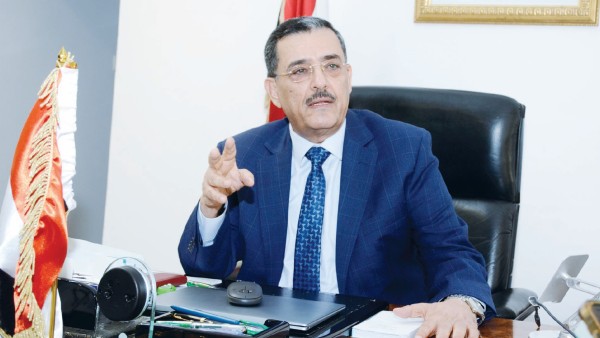
Yemeni Ambassador Dr. Ali bin Safaaf affirmed that the measures taken by the Yemeni state represent a legitimate exercise of its sovereign right to manage its airspace, airports, and ports. He noted that the management of sovereign airspace, airports, and ports is an exclusive prerogative of the state and its legitimate institutions, and no state or militia may impose aviation, security, or operational arrangements outside the authority of the Yemeni state.
“A fait accompli”...
Bin Safaaf, in statements to “Al-Siyasa,” said that Yemen will not permit the imposition of a fait accompli that infringes on its sovereignty or turns its airports and ports into instruments serving hostile regional projects. He emphasized that the Yemeni government exhausted all political, diplomatic, and legal avenues before taking sovereign measures, which came after presenting practical and legal initiatives ensuring the continuation of civil flights and safeguarding citizens’ rights and the safety of air navigation.
He pointed out that the state acted with responsibility and restraint, striving to protect civilians and public property and avoiding the escalation of confrontation. He added that the state’s actions were taken as a legitimate sovereign choice after the rejection of alternatives and possible solutions.
He affirmed that the Yemeni government did not close Sanaa Airport; rather, it supports its continued operation for civil flights in a legal and safe manner. He stated that the legal solution lies in managing and operating flights through Yemenia Airways, as the national carrier, according to the necessary technical, security, and legal guarantees. The government offered alternatives capable of facilitating the travel of patients, students, and citizens from all governorates and to them, without discrimination or selectivity. He added: “Protecting sovereignty and ensuring citizens’ right to travel are two complementary objectives that do not contradict each other.”
Rejection of all initiatives
He continued: “The Houthi militia is the party that rejected the legal initiatives and solutions presented by the government, insisting on preventing Yemenia Airways from managing and operating flights. This exacerbates the suffering of patients, students, and travelers, as it uses citizens’ suffering and humanitarian needs as a cover to achieve political and military objectives and impose arrangements outside the state’s authority.” He noted that those who besiege citizens and disrupt their travel are those who reject legal solutions and prevent state institutions from fulfilling their duties. He stressed that it is unacceptable to allow the militia to use the humanitarian file as a means to blackmail the international community or impose illegal political and military facts.
He added: “This insistence should not be viewed merely as a matter concerning civilian flights; rather, it should be seen as a potential attempt to establish a rapid and regular supply line that enhances the militia’s military capabilities and bypasses traditional maritime smuggling networks. This would grant the Iranian regime a greater capacity to transfer experts, sensitive equipment, spare parts, and military technologies within hours, representing a qualitative shift in the level of support provided to the militia.
He warned of the risks that these moves aim to bolster Houthi readiness to carry out new military operations in the Red Sea, threaten international navigation, attempt to impose a blockade, or close the Bab al-Mandab Strait. The Red Sea and the strait constitute a strategic artery for global trade and energy supplies; any threat to them does not affect only Yemen or the region, but directly impacts the international economy and security.
Missile Capabilities
He emphasized that attempts to enhance the militia’s missile, air, and naval capabilities raise concerns about the use of Yemeni territory as a platform to target fraternal and friendly countries and their vital interests, thereby threatening to expand the conflict and increase instability in the region.
He clarified that the Iranian regime’s support for the militias has not been limited to political stances; it has also included the transfer of expertise, military technology, and components for missiles, drones, and naval weapons. This makes any aerial route to Yemen a source of constant international concern. The danger of the airlift project lies in its potential to be transformed into a channel for replenishing the militia’s qualitative capabilities, enabling it to threaten commercial ships, ports, vital infrastructure, and international shipping lanes.
He called on the international community to treat the project as a threat to regional and international security and peace, rather than merely a bilateral dispute concerning airport operations or flight schedules. He urged taking a clear stance to prevent the use of civilian aviation as a cover for transferring experts, weapons, and military technologies. He stressed the importance of acting to thwart the Iranian airlift project, noting that this is not only aimed at protecting Yemeni sovereignty but also contributes to safeguarding international navigation security and the interests of the international community, while preventing Yemen from becoming a platform for threatening the security of the Red Sea and neighboring states.
Kuwait and Yemen: Historical Relations
He affirmed that the attacks targeting Kuwait and Gulf countries reflect an approach aimed at destabilizing the region. He stressed that targeting civilian and vital facilities cannot be justified under any pretext and constitutes a violation of international laws and norms.
Regarding Kuwaiti-Yemeni relations, he described them as historical and robust, based on humanitarian and developmental support. He emphasized that Kuwait was among the first countries to stand by Yemen, and its support was not tied to political or economic interests, but rather stemmed from a consistent humanitarian approach.
Attempt to Establish an Airlift
The IRGC linked to the Houthi militia
Bin Sifa’ placed full responsibility for the escalation and the continued support and empowerment of the Houthi militia by the Iranian regime, enabling it to violate the policy of the Republic of Yemen and international law. He stated that the issue is not about a single flight, but rather an attempt to establish a permanent airlift linking the Iranian regime and the Islamic Revolutionary Guard Corps (IRGC) to the terrorist Houthi militia.
He clarified that the objective of these attempts is to impose a new fait accompli, and to use Yemeni airports to serve the Iranian project outside the authority of the state. Furthermore, Iran’s insistence on direct flights reveals that the goal extends beyond transporting passengers and is linked to an effort to establish a regular logistical channel with the Houthi militia. This also raises concerns about the potential exploitation of this route to transfer military experts from the Islamic Revolutionary Guard Corps, advanced military equipment and technologies, dual-use items, and specialized weapons to the Houthi militia.
Yemen’s Suffering from Iranian Interference
The Yemeni ambassador stated that his country was among the first to suffer from Iranian interference, and therefore, what the region is witnessing today is not surprising. He considered that the policy pursued by the Iranian regime is based on preventing the establishment of stable Arab states in its vicinity.
