Kuwait's 'Industry' Sector: The Least Priority for Foreign Investors
Administrative and logistical hurdles have reduced participation to less than one percent
Najah Bilal
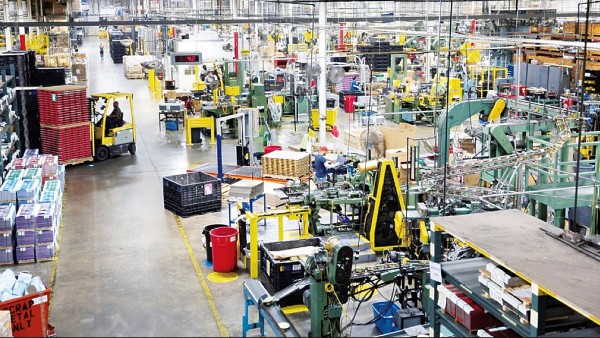
A recent government report revealed a sharp decline in the industrial sector’s position within the map of foreign direct investments in the State of Kuwait. The sector ranked last among the economic sectors attracting foreign capital, recording a negligible share of just 0.02%, valued at a mere 396,285 dinars.
These figures stand in stark contrast to the total direct investments attracted by the Direct Investment Promotion Authority, which reached a cumulative value of approximately 1.9 billion dinars.
Political Analysis
Governments
Opinion Columns
Reflecting market priorities, the information technology sector led the landscape, securing the first position with 33.87% of total investment volume. The oil and gas sector followed in second place with 27.65%, trailed by the construction and infrastructure sector in third place with 14.36%.
The energy and electricity sector ranked fourth with 5.36%, followed by the human health sector in fifth place at 4.10%, and education and training in sixth place at 3.75%. The insurance sector came in seventh at 2.76%, consulting eighth at 2.70%, and the aviation sector rounded out the top nine with 2.67%.
Challenges in Promising Sectors
Conversely, other sectors accounted for marginal shares of less than 1% each, including agriculture, market research and promotion, arts, entertainment, recreation, financial services, and scientific research and development.
This investment disparity raises fundamental questions about the country’s economic diversification plans and vision. While the lion’s share of investments flows into service, information, and oil sectors, productive and industrial sectors suffer from a noticeable weakness in attracting foreign partners. According to a statement by a knowledgeable official source to "Al-Siyasah," this reluctance by foreign investors toward the industrial sector is largely attributed to structural challenges in the local business environment, citing several main obstacles facing investors.
The source emphasized that the state is currently working to overcome these hurdles, such as addressing the shortage of industrial land, including the scarcity and delays in allocating plots and equipped industrial zones for major companies. Furthermore, the state is currently working to resolve bureaucratic administrative issues to alleviate the length of documentation cycles and the complexity of business licensing procedures and approvals.
Not wanting to stand idly by in the face of these figures, the source stated that there are government initiatives to resolve the crisis and create an attractive environment for industry. Economic and legislative bodies recognize the necessity of implementing radical reforms to steer investment through efforts to improve the legislative environment and implement several prominent reform steps, such as long-term residency permits. Kuwait has begun applying new facilitations that allow qualified foreign investors to benefit. Through the "Direct Investment Promotion Authority" and in cooperation with relevant authorities, the state aims to automate all its services and shorten the documentation cycle for establishing foreign companies via a single window, creating a flexible business environment characterized by transparency and exceptional speed.
The source noted that transforming Kuwait into a regional financial and commercial hub necessarily requires redefining the industrial strategy and opening the door to international partnerships in advanced manufacturing sectors, rather than relying solely on digital and service growth to achieve genuine sustainability for the national economy.
He concluded his remarks by stating that raising the industrial sector’s contribution to the country’s gross domestic product has become a crucial imperative. At the same time, he called for enhancing the value added by national industries and attracting both domestic and foreign direct investment, given that industry serves as a strategic engine for sustainable development. However, he emphasized that all of this requires transitioning from simple manufacturing industries to high-tech, high-yield sectors such as advanced petrochemicals, food processing, and pharmaceuticals. He also stressed the need to further streamline customs procedures and provide greater incentives and credit facilities for both foreign and domestic investors, thereby ensuring a steady inflow of foreign and domestic capital into the vital arteries of the economy.
