'Al-Adba' Celebrates 'Kuwaiti Poetry... The Diwan of Resilience and Resistance'
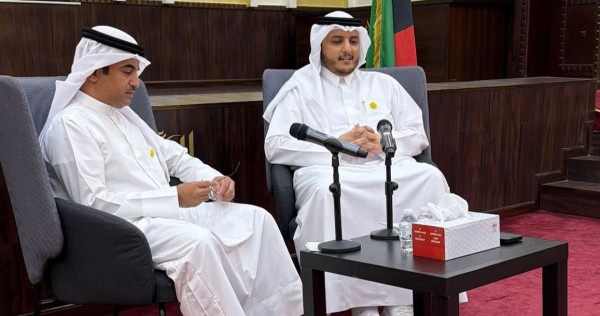
The session included a review of poetic examples immortalized by history.
The Kuwait Writers Association organized a series of virtual literary activities and lectures, aimed at enriching the cultural landscape and engaging with creative expression in all its forms. The House of Poetry hosted a dialogue session titled “Kuwaiti Poetry... A Diwan of Resilience and Resistance,” featuring Hamid Al-Bahiri, President of the House of Poetry, and poet and academic researcher Dr. Saad bin Thaqil Al-Ajmi.
At the outset, Al-Bahiri emphasized that Kuwaiti poetry represents a space for free expression of the Kuwaiti human sentiment, reflecting engagement with national and pan-Arab issues. He affirmed that the poem has always served, and continues to serve, as a platform for expressing hope and defiance. Dr. Al-Ajmi, for his part, discussed the role of Kuwaiti poets in documenting national stances through their verses, which have over time formed a living record reflecting love for the homeland and a spirit of belonging. His remarks also highlighted themes of resilience and social cohesion in the face of challenges, noting that Kuwaiti poetry was not merely a literary expression but an effective means of strengthening national identity and consolidating shared values among members of society. The session also featured a review of poetic works that history has immortalized as symbols of strength and steadfastness.
Additionally, a dialogue session titled “Writing in Various Literary Genres” was organized, presented by writer and poet Asma Al-Ibrahim and moderated by Dr. Rasmiya Al-Anzi, President of the Creators Forum. This event was part of cultural activities aimed at supporting young literary talents and fostering the exchange of creative experiences. At the beginning of the session, Al-Ibrahim outlined the key features of her literary journey. She then highlighted the issue of transitioning between literary genres, explaining that such a shift remains possible and accessible to any creator who possesses the fundamental tools of writing. She clarified that a writer, equipped with a refined language, a high degree of creative sensibility, and familiarity with the techniques of each literary art form, can confidently and competently navigate multiple genres.
She added that writing poetry, for example, requires knowledge of prosody (‘arud), while short stories have their own specific conditions, artistic structure, and essential components that must be mastered. She stressed that every literary art is built upon a set of rules and foundations, and understanding these elements constitutes the true gateway to mastering writing in that genre. At the same time, she emphasized that creativity and linguistic proficiency remain the most crucial factors in a writer’s success, regardless of the diversity of fields in which they write.
