2026 World Cup Highlights Cape Verde as a Promising Tourism Destination
Cape Verde’s gains from its historic participation in the 2026 FIFA World Cup extended beyond the pitch, boosting the tourism sector as this small archipelago nation captured the attention of millions of fans worldwide.
Translated by Qiyas from السياسة — Original source
Cape Verde’s gains from its historic participation in the 2026 FIFA World Cup extended beyond the pitch, boosting the tourism sector as this small archipelago nation captured the attention of millions of fans worldwide. Rising indicators suggest growing interest in traveling to the country, in a scenario reminiscent of past experiences where national teams successfully converted sporting achievements into economic benefits.
According to a report published by Skift, a website specializing in travel and tourism news and analysis, the Expedia platform recorded a search increase of over 800 percent from the United States for travel to Cape Verde. Meanwhile, the British tour operator TUI noted a significant rise in interest in the destination since the national team’s World Cup campaign began, reinforcing expectations of increased tourism in the near future.
In parallel, some websites and social media platforms circulated figures indicating a search surge for travel to Cape Verde of up to 5,000 percent. However, these figures were not issued by an official body or a verified source.
Positive expectations are grounded in previous experiences showing that sporting success can positively impact the tourism sector. In Croatia, reaching the 2018 World Cup final enhanced the country’s global presence as a tourist destination, coinciding with continued sector growth. Morocco also emerged as a recent example following the 2022 World Cup in Qatar; the global momentum achieved by the Moroccan national team was one of the factors that strengthened the Kingdom’s tourism appeal, alongside the recovery of international travel, the expansion of flight networks, and promotional campaigns. Consequently, the country recorded record tourism revenues of approximately $10.5 billion in 2023, welcoming 14.5 million tourists.
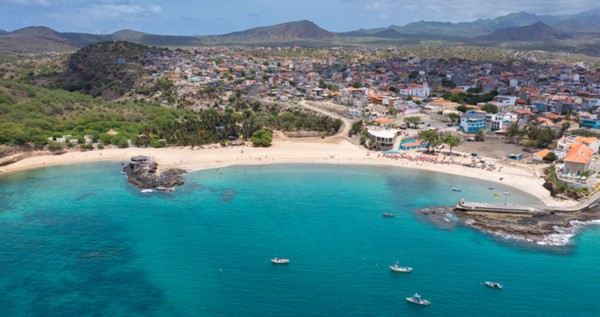
Located in the Atlantic Ocean about 570 kilometers off the coast of Senegal, Cape Verde (Cabo Verde) consists of 10 volcanic islands and nine islets. It is characterized by a mild climate year-round, sandy beaches, mountainous terrain, and a unique cultural blend of African and Portuguese influences.
With a population of approximately 525,000 people according to the latest World Bank data, the tourism sector accounts for about a quarter of the country’s GDP, making it the primary driver of the national economy.
The islands of Sal and Boa Vista are the most popular among tourists thanks to their beaches, resorts, and water sports, while Santo Antão is renowned for its hiking trails and mountain views. Fogo attracts visitors with its active volcano, and Santiago Island hosts the capital, Praia, and Cidade Velha, the first European settlement in the tropics, listed as a UNESCO World Heritage Site.
Latest data from Cape Verde’s National Institute of Statistics also shows the sector’s continued prosperity, with hotels accommodating more than 1.24 million guests in 2025, a 6 percent increase compared to 2024, with growth continuing into the first quarter of 2026.
Although it is still too early to conclude that the World Cup achievement will lead to a tourism boom similar to that experienced by other countries, current indicators confirm that the tournament has provided Cape Verde with global publicity that is difficult to purchase through traditional marketing campaigns. If the authorities succeed in leveraging this momentum by improving air connectivity, expanding hotel investments, and promoting the destination intelligently, the football surprise could transform into a long-term economic benefit.
