Kuwaiti Women's Representation in Listed Companies... 'Government Support is Key'
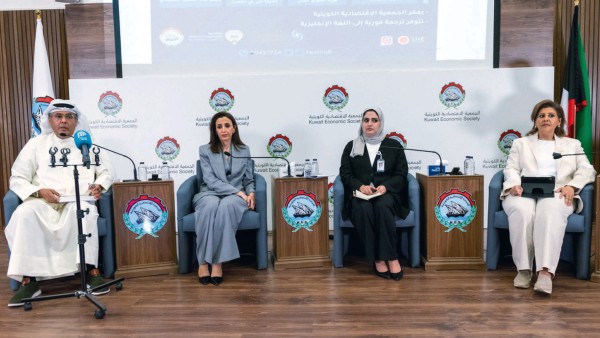
Data from the Economic Association seminar revealed the scarcity of women's representation on the boards of listed companies at the Kuwait Stock Exchange, while their representation in the Capital Markets Authority reached 40%. Sheikh Jawaher Al-Sabah emphasized the importance of investing in women for development, praising the role of the government.
Translated by Alqyas from Al-Seyassah — Original source
871 men on their boards of directors versus only 63 women, representing less than 7%
While figures from a seminar by the Economic Association highlighted the near absence of women on the boards of listed companies at the Kuwait Stock Exchange, with their representation standing at just 6.7% compared to the global average of 30%, data from the Capital Markets Authority revealed that the proportion of women in leadership positions within the “governmental” authority reaches 40%. It was noted that several female members of the boards of listed companies represent government entities that hold shares in these companies, making “the government the refuge for Kuwaiti women” in corporate leadership representation.
Sheikh Jawahir Al-Sabah, speaking at a panel discussion organized by the Economic Association under the theme “Empowerment and Representation of Women in Listed Companies,” expressed her pleasure in participating in the session, which sheds light on a highly important topic, given its role as a fundamental pillar in supporting economic development and enhancing investment in national talent.
She added that women’s economic empowerment underscores the irrefutable fact that women are a key partner in the journey of development and progress. She pointed out that World Bank studies indicate that increasing women’s participation in the labor market and their assumption of decision-making roles directly contribute to strengthening economic growth and enhancing the competitiveness of economies.
She clarified that Kuwaiti women have proven their competence across various sectors, successfully establishing their presence in the judiciary, diplomacy, and security fields. Their contributions have also emerged prominently in economic sectors, particularly banking, telecommunications, aviation, and oil, reflecting their efficiency, capacity to bear responsibility, and ability to support the national economy and enhance the competitiveness of its institutions.
She noted that these achievements align with Kuwait’s Vision 2035 and the Sustainable Development Goals for 2030. However, the next phase requires moving from celebrating achievements to consolidating them through the development of policies and initiatives that enhance and expand women’s economic participation.
She praised the efforts made by various entities and companies, as well as individual initiatives in data collection and indicator monitoring, which have enriched the knowledge landscape and laid the foundation for a better understanding of women’s participation across different sectors.
Sheikh Jawahir Al-Sabah highlighted three main priorities. The first is transitioning to a sustainable institutional framework by establishing a unified, official, and updated national database that monitors women’s participation in various economic sectors. This would provide accurate indicators to support policy formulation, measure the impact of initiatives, and enhance data-driven decision-making.
She stated that the second priority is expanding monitoring in economic sectors where data on women’s participation remains incomplete, with the tourism sector being a prime example. Indicators show a noticeable female presence, necessitating the documentation of this participation through official data that reflects women’s actual contributions to this sector.
She added that the third priority is ensuring that economic empowerment encompasses all women, particularly women with disabilities, by removing barriers that may limit their participation in the labor market and providing accessible work environments consistent with the principles of equality and non-discrimination, thereby fostering a more inclusive and sustainable economy.
She clarified that the progress achieved in women’s empowerment is due to the strong support provided by the wise leadership of Kuwait, headed by His Highness the Amir Sheikh Meshal Al-Ahmad Al-Jaber Al-Sabah and His Highness the Crown Prince Sheikh Sabah Khaled Al-Hamad Al-Sabah, and their keen interest in enhancing women’s roles and their full participation in the development process.
Sheikha Jawaher Al-Sabah expressed her gratitude to the Kuwait Economic Association for organizing the panel, emphasizing that “investing in women is an investment in the nation’s future, and their economic empowerment constitutes a fundamental pillar for enhancing the competitiveness of the national economy and achieving sustainable development, in line with the aspirations of the State of Kuwait and its future vision.”
For her part, Amina Al-Mohammed, Director of the Human Resources Department at the Capital Markets Authority, outlined the differences between the concepts of women’s representation and empowerment, stating that the term “representation” refers to the presence of women in the workplace, whereas “empowerment” means providing them with opportunities within the work environment to develop their capabilities in terms of influence, leadership, and decision-making.
Al-Mohammed noted that the Capital Markets Authority employs 426 staff members, 44 percent of whom are women, while women hold 40 percent of the seats on the Authority’s Board of Commissioners.
For her part, Shaima Al-Hussain, Chief Executive Officer of Shehi Invest, presented her study titled “Women on Boards of Listed Companies,” which highlighted the level of women’s participation on the boards of listed companies at the Kuwait Stock Exchange, analyzed its evolution, and compared it with international practices.
She pointed out that the total number of board members in these companies amounts to 933 (871 men and 63 women), meaning that women’s participation rate is 6.75 percent, compared to the international benchmark of 30 percent. She noted the existence of supervisory, executive, and developmental recommendations aimed at enhancing gender diversity.
