'Electricity': Ready for Summer... Despite the Aftermath of the Wicked Iranian Aggression
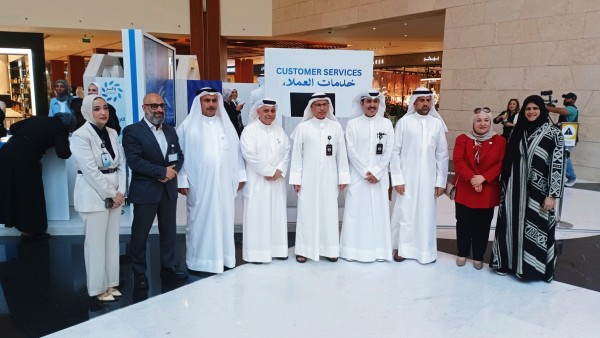
Adel Al-Zamil affirmed the ministry's readiness for summer with the implementation of renewable energy projects and smart meters, despite the impact of the Iranian aggression on the electrical grid.
Translated by Alqyas from Al-Seyassah — Original source
We aim to cover approximately 90% of the smart meters project by the end of the year
Deputy Minister of Electricity, Water, and Renewable Energy, Dr. Adel Al-Zamil, confirmed that the ministry continues to implement its operational and preparatory plans to cope with peak summer loads, noting that matters are proceeding well despite the repercussions of the unjust Iranian aggression and its targeting of certain components of Kuwait’s electricity network, which had a limited impact on the maintenance schedule for production units.
Al-Zamil said during his visit yesterday to the “Wafar” campaign booth – the national campaign for conserving energy and water – at the 360 Complex, that the ministry hastened to take more effective measures to deal with developments, indicating that current indicators for the summer season remain positive.
He added that summer represents an annual challenge as a peak consumption period, but the ministry is optimistic about its ability to overcome the current season, provided no exceptional circumstances or incidents occur.
He clarified that the ministry has worked this year to increase the capacity of the transmission line with the Gulf Cooperation Council (GCC) Interconnection Authority, in addition to benefiting from the results of the conservation campaign implemented last year, and developing load management mechanisms in the industrial and agricultural sectors, thereby contributing to enhancing the stability of the electricity grid.
Regarding smart meters, he confirmed that the ministry has achieved significant progress in the smart meters project, noting that the pace of installation is accelerating across various facilities, with an ambition to exceed the project’s specified timeline. He expects the completion rate to surpass 90% by the end of this year.
He mentioned that the ministry continues to coordinate with all government and private entities to manage loads and provide practical solutions that yield sustainable benefits over the years, relying on the positive indicators achieved last year.
Regarding maintenance works, Al-Zamil clarified that the ministry had prepared a comprehensive program since the end of last summer, and implementation was proceeding according to the approved schedule. However, the repercussions of targeting certain components of the electrical system affected the timeline for some works. He emphasized, however, that technical teams are keeping pace with developments rapidly, and maintenance works continue according to plans that ensure the readiness of production units.
On the water situation, he confirmed that water reserves are in a good and reassuring state, calling on citizens, residents, and various residential, commercial, and industrial sectors to consider water conservation a national responsibility and a trust upon their shoulders, by adopting conservation behaviors.
He said that reducing the average individual consumption from about 450 liters per day to just 250 liters, which is close to the per capita consumption in the Kingdom of Saudi Arabia, would save approximately half of the consumed quantities, positively reflecting on the state’s natural, financial, and environmental resources.
Regarding future projects, Al-Zamil revealed that the bidding for the first phase of the Khiran project closed yesterday, with two bids submitted. Meanwhile, the winning investor for the Shagaya Renewable Energy Project (Phase III – Project 1), with a capacity of 1,100 megawatts, is expected to be announced within the next two months. As for the Shagaya Project (Phase III – Project 2) with a capacity of 500 megawatts, the submission period has been extended to the end of July of this year.
Deputy Minister of Electricity, Water and Renewable Energy, Dr. Adel Al-Zamil, indicated that the second and third phases of the South Al-Zour power plant project, with a generation capacity of 2,700 megawatts and a water production capacity of 120 million gallons per day, are currently in the implementation phase. He expects these projects to begin yielding results and for their output to be gradually utilized starting from 2029.
He emphasized that the ministry continues to work on achieving a balance between supply and demand through a series of interim solutions for the current year and the next two years. These include energy storage battery projects, conservation initiatives, the expansion of residential solar energy use, and several other projects supporting the electrical grid.
Dr. Adel Al-Zamil predicted that the peak electricity load during the summer of the current year would reach approximately 18,200 megawatts, noting that this figure remains an initial estimate contingent on temperature levels, the timing of heatwaves, and whether they coincide with official working days or holidays.
