New US Sanctions Shake Lebanon's Interior... Pro-Hezbollah MPs and Security Officials on the 'List'
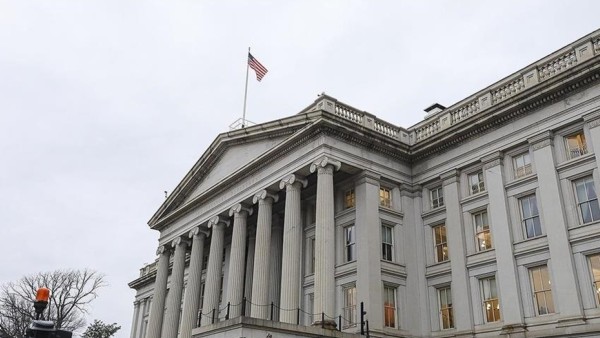
US imposes sanctions on 9 individuals loyal to Hezbollah in Lebanon.
Translated by Alqyas from Al-Seyassah — Original source
At a highly sensitive time on the eve of Washington-mediated negotiations between Lebanon and Israel, and in a strongly worded message to the Shia duo and those aligned with them, extending to official Lebanese military institutions, the US Department of Treasury, through the Office of Foreign Assets Control (OFAC), announced sanctions against nine individuals in Lebanon, accusing them of obstructing the peace process and hindering efforts aimed at disarming Hezbollah. This step reflects a clear US escalation against the party and its political and security networks within Lebanese institutions.
According to a statement from the US Treasury, the sanctions target officials loyal to Hezbollah. Washington stated that these individuals are involved in Lebanon’s political, military, and security sectors and seek to maintain the party’s Iran-backed influence within Lebanese state institutions.
US Treasury Secretary Scott Bessent stated that “Hezbollah is a terrorist organization and must be completely disarmed,” emphasizing that the Treasury Department will continue to take action against officials who, in his words, “have infiltrated the Lebanese government and enable Hezbollah to continue its reckless campaign of violence against the Lebanese people and obstruct lasting peace.”
The US Treasury clarified that this measure was taken under Executive Order 13224, as amended, relating to anti-terrorism authorities. It noted that the US Department of State had designated Hezbollah as a “Specially Designated Global Terrorist” on October 31, 2001, and as a “Foreign Terrorist Organization” under the Immigration and Nationality Act on October 8, 1997.
The sanctions included Mohammad Abdel Mottaleb Fannish, whom the Treasury described as leading Hezbollah’s Executive Council and responsible for reorganizing the party’s administrative and institutional structure to serve the preservation of its armed presence in Lebanon. The statement noted that Fannish has been a member of Hezbollah since its founding, held several leadership positions, was elected as a deputy within the Loyalty to the Resistance bloc in 1992, and was later appointed Minister of Youth and Sports.
The sanctions also targeted MP Hassan Fadelallah, whom the Treasury stated has represented Hezbollah in parliament since 2005, contributed to the founding of Al-Nour Radio, which is designated by the US, and served as a senior executive at Al-Manar Television, also designated by the US.
The sanctions further affected MP Ibrahim al-Mousawi, described by the Treasury as a veteran Hezbollah official, head of the party’s Media Committee, and one of its representatives in parliament, as well as MP Hussein al-Hajj Hassan, whom the Treasury stated has been a member of Hezbollah since 1982 and has represented the party in parliament since 1996, considering him a key figure opposing the disarmament of the party.
According to the statement, Fannish, Fadelallah, al-Mousawi, and al-Hajj Hassan were listed under Executive Order 13224 because, in the Treasury’s view, they were subject to Hezbollah’s control or direction, or acted on its behalf directly or indirectly.
In another aspect of the sanctions, Washington targeted Mohammad Reza Sheibani, the Iranian ambassador appointed to Lebanon, noting that the Lebanese Ministry of Foreign Affairs had declared him a persona non grata after withdrawing its approval of his nomination and requesting his departure from Beirut. The statement linked this move to what it described as Iran’s violation of diplomatic norms and the activities of the Iranian Revolutionary Guard Corps in supporting Hezbollah’s military operations.
The sanctions also included Ahmad Asaad Baalbaki and Ali Ahmad Safavi, whom the US Treasury described as security officials in Amal Movement, which it characterized as a political ally and security partner of Hezbollah.
The Treasury said that Baalbeki holds the position of security director in Amal Movement, and coordinated public displays of force with Hezbollah’s leadership to intimidate the party’s political opponents in Lebanon. As for Safawi, he was described as a commander of the Amal Movement militia in southern Lebanon, and accused of coordinating with Hezbollah and receiving its directives regarding attacks against Israel, as well as leading Amal Movement forces in joint operations with Hezbollah against Israel.
The sanctions also targeted Major General Khatir Nasser al-Din, head of the National Security Department at the General Security Directorate, and Colonel Samir Hamadi, head of the Suburb Branch of the Lebanese Army Intelligence Directorate, as the Treasury stated that they shared important intelligence with Hezbollah during the ongoing conflict last year.
The ministry clarified that Shabani, Baalbeki, Safawi, Nasser al-Din, and Hamadi were listed under Executive Order 13224, for providing, according to the statement, material or financial support, or technical assistance, or goods and services, to Hezbollah or in support of it.
According to the U.S. Treasury, the sanctions entail blocking all property and interests in property of designated persons within the United States or under U.S. control, which must be reported to the Office of Foreign Assets Control (OFAC). The restrictions also extend to any entities owned, directly or indirectly, 50 percent or more by the listed individuals.
The Treasury emphasized that U.S. regulations generally prohibit all transactions conducted by U.S. persons or taking place within the United States, or passing through it, that involve property or interests in property of prohibited persons, unless licensed or exempted by OFAC.
It noted that violations of U.S. sanctions may result in civil or criminal penalties, and may also expose foreign financial institutions to secondary sanctions if they engage in significant transactions with designated individuals.
