Two Academics to 'Al-Siyasa' on War Lessons: Alternatives to Oil Exports and Gulf Integration
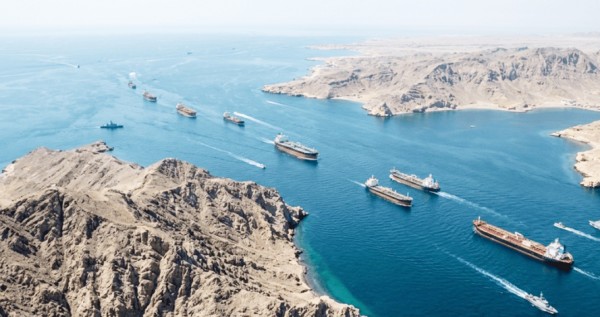
Two academics propose diversifying income and Gulf integration to counter countries' reliance on oil
Translated by Alqyas from Al-Seyassah — Original source
Kuwait officials and experts in the local and Gulf economies answered these questions and others for "Al-Siyasa," emphasizing the necessity of diversifying revenue sources so that Kuwait’s economy does not remain dependent on oil revenues indefinitely. They stressed the importance of expanding medium-sized industries and achieving Gulf economic integration. The details follow:
Initially, Dr. Sadiq Al-Bassam, head of the Accounting Department at Kuwait University, estimated Kuwait’s oil sector losses resulting from the closure of the Strait of Hormuz throughout the 40-day war between the US and Israel against Iran at approximately $7.176 billion. He based this calculation on the fact that Kuwait was exporting about 2.6 million barrels of oil daily before the war, according to its OPEC+ quota, totaling 104 million barrels over the 40-day period. This is particularly significant given that the price of a barrel of Kuwaiti oil was around $69 shortly before the war broke out on February 28. He clarified that losses would not stop there but would continue even after the war ends, as Kuwait may need several months to reach its production capacity of 2.6 million barrels daily, according to statements from the Kuwait Petroleum Corporation.
Regarding the impact of these oil sector losses on the state budget, Dr. Al-Bassam stated that these losses are substantial and will undoubtedly increase the current budget deficit. When asked whether it is better to withdraw from the Generations Fund or through public debt, he replied that although the Kuwaiti Sovereign Wealth Fund remains ranked fifth globally, its returns will undoubtedly decline this year, along with other global sovereign wealth funds, due to the economic crisis triggered by the closure of the Strait of Hormuz during the recently suspended war. Therefore, it is better to address the current budget deficit through public debt to preserve the assets of the Kuwaiti Sovereign Wealth Fund.
Dr. Al-Bassam emphasized that the solution to prevent a recurrence of the Strait of Hormuz closure crisis under any circumstances requires a serious pause to diversify revenue sources. He noted that the state, in the current reform era, is working toward economic revival by increasing non-oil revenues so that the Kuwaiti economy is not dependent on a single primary commodity indefinitely. At the same time, he pointed out that diversifying revenue sources should be achieved through implementing medium and large industrial projects, especially since Kuwait possesses the prerequisites for industrial expansion and exporting its products. He added that the Port of Mubarak will expand the export rates of Kuwaiti products, and there is a need to expand agricultural investments to secure the country’s food security in case of future disruptions to food supply chains.
Dr. Al-Bassam stressed the necessity of economic cooperation and coordination among Gulf states to face any future economic conditions. He noted that Gulf economic integration is no longer just hopes and aspirations but has become an urgent necessity to strengthen the common Gulf market by increasing intra-regional trade volumes and establishing joint projects that support Gulf economies. He also emphasized the need to provide alternatives for continued oil exports, especially since the closure of the Strait of Hormuz created signs of a food crisis in the region. He praised the role of Saudi Arabia alongside Kuwait, noting that food supply chains through Saudi Arabia were unaffected, and that it opened its airspace for the return of stranded individuals from other countries during the war after the suspension of flights at Kuwait International Airport.
For his part, Dr. Ibrahim Al-Shukri, Director General of the Gulf Center for Information and Documents, called for Kuwait to benefit from the experience of the war that lasted 40 days and led to the halt of Kuwaiti oil exports, which inflicted severe financial losses on the local oil sector. He stressed the need to swiftly seek alternative export routes after the crisis ends, so that Kuwaiti oil exports are not left at the mercy of geopolitical tensions in the region. He noted that the solution to maintaining the continued export of Kuwaiti and Gulf oil, in the event of the closure of the Strait of Hormuz, lies in creating a joint oil pipeline network encompassing all Gulf Cooperation Council (GCC) states. This network would enable the export of Gulf oil via the Arabian Sea off the coast of the Sultanate of Oman or through the sea by passing through the Kingdom of Saudi Arabia, in the event of future geopolitical tensions in the Strait of Hormuz or the Bab al-Mandab.
Dr. Al-Shukri added that Gulf economic integration has become a strategic imperative to strengthen the GCC framework, particularly because economic integration will inevitably facilitate the exchange of expertise and diversify revenue sources, preventing Gulf economies from remaining dependent on oil as their primary income source. He commended the efforts of the Kuwaiti government, which is striving to diversify revenue sources to enhance non-oil income.
