Gulf support for direct talks between Lebanon and Israel to halt the war
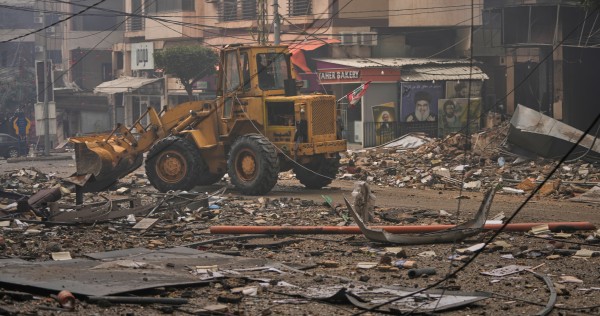
President Aoun receives support from Guterres to hold talks with Israel, while Hezbollah refuses to negotiate, and military tensions in the south escalate.
Translated by Alqyas from Al-Seyassah — Original source
As Lebanese President Joseph Aoun insists on pursuing a path of talks to halt the Israeli aggression against Lebanon, a presidential source told "Al-Siyasa" that President Aoun has received strong support from UN Secretary-General António Guterres for the option of direct negotiations with Israel. The Gulf Cooperation Council (GCC) countries have also expressed their welcome and support for Lebanon’s decision to hold talks with the Israeli side, aiming to extricate Lebanon from the quagmire of war and to reinforce its authority over its entire territory. Meanwhile, widespread dissatisfaction prevails within Lebanese presidential and government circles over the repercussions of Hezbollah’s disastrous military adventure, which has entangled Lebanese citizens in a conflict with Israel.
Amid this climate, diplomatic activity between Beirut and Paris is intensifying to expedite a resolution on the negotiation file, with the goal of securing Israeli approval to proceed with this option in the coming days. It is understood that Israel and the United States are reviewing a French proposal, which Paris has denied, reportedly calling for the initiation of talks aimed at reaching a political declaration within a month. Under this proposal, Israel would withdraw from the areas it recently occupied, while the Lebanese army would redeploy south of the Litani River. The next phase of the initiative would involve demarcating the final borders between Lebanon and Israel, as well as between Lebanon and Syria, by the end of 2026.
While Lebanese President Joseph Aoun and Prime Minister Nawaf Salam have so far failed to persuade Speaker of the Parliament Nabih Berri to accept Lebanon’s participation in sitting at the negotiating table with Israel, and consequently to appoint a representative from the Shia component to the Lebanese negotiating team, Al-Siyasa has learned that there is now consensus that the delegation will be headed by Ambassador Simon Karam, with Secretary General of the Ministry of Foreign Affairs Abdul Sattar Issa, former ambassador to Moscow Shawqi Abu Nasar, and Dr. Paul Salameh as members. Meanwhile, information indicated that Hezbollah informed its ally Berri of its refusal to engage in any talks with Israel, following General Secretary Sheikh Naim Qassem’s clear statement in his recent speech that the field holds the key, deliberately avoiding any reference to the option of negotiations. Berri was also informed that he would not accept any form of talks before a ceasefire is achieved and displaced persons return, a stance that the Israeli side is ignoring amid growing information about the completion of military preparations by the Israeli army for an incursion into Lebanese territory. Moreover, leaked information suggests that Israel is preparing to increase its military pressure in the coming days to impose a fait accompli on the ground, forcing Lebanon to meet Israeli conditions if there is any move toward holding talks. In a sign reflecting its unwillingness to engage in any form of negotiations, Hezbollah, according to Al-Siyasa’s information, circulated directives to all its officials not to refer, directly or indirectly, to rumors of talks with Israel, considering itself entirely uninterested in the issue. This comes amid reports that Hezbollah is mobilizing thousands of fighters along the southern front, preparing for a protracted war with Israel that could last months if Israel decides to launch a large-scale ground incursion into Lebanese territory. Meanwhile, rapidly unfolding facts on the ground indicate that the situation is deteriorating, opening up to all possibilities. Israeli warnings to residents of the remaining Christian border towns to evacuate point to an Israeli plan, no longer hidden, to advance into wide areas south of the Litani River. Lebanon does not rule out that the occupation may establish a buffer zone in the south, covering extensive areas, to protect its settlements from Hezbollah’s rockets, a matter being discussed at the highest levels within Israeli decision-making circles.
For his part, Fares Saeed, a prominent Lebanese opposition figure and leader of the “Lady of the Mountain” gathering who opposes Hezbollah, told Al-Siyasa that now that the principle of negotiating with Israel has become nationally acceptable, the timing of talks remains contingent on developments on the ground. He said, “I do not believe Israel will agree to sit at the negotiating table before it establishes a military and operational fait accompli, after which it will consent to negotiations. Meanwhile, Lebanon is present and fully aware that the time has come to end its status as a battleground and transform it into a sovereign state, a process that should have begun in 1969 and continues to this day.”
He added that Israel’s primary objective in any talks with Lebanon is to reach a peace treaty. He continued, “The current war is unlike any we have known. The majority of Arabs are against Iran, as evidenced by the absence of any political or popular protests. Moreover, Arab states are in the same trench as Israel, based on the principle that ‘your brother is forced upon you, not a hero,’ following Iran’s missile strikes on their capitals.”
Saeed stressed that “Hezbollah is determined, through its actions, to drag Lebanon into the region’s cycle of violence in Iran’s interest, not Lebanon’s.” He pointed out that Hezbollah is in a serious predicament, as the Tehran-Beirut route is closed, leaving it unable to obtain additional weapons. At the same time, Syria has sealed all its borders against it, placing Hezbollah in a dire position for which it bears full responsibility, quoting the proverb, “He who sows the wind reaps the whirlwind.”
He concluded, “The war will end with the demise of Hezbollah’s military and security wing, and possibly its political wing as well, and Lebanon will enter a new phase of domestic reconciliation. In my view, the existence of the state, even with modest objectives, is far better than statelessness. Therefore, we consider the presence of the President of the Republic, the government, the cabinet, and even the extended term of the Parliament, as a guarantee that Lebanon can absorb regional changes and the consequences of the war.”
