Morocco: We Stand with Gulf States to Defend Their Sovereignty and Protect Their Security
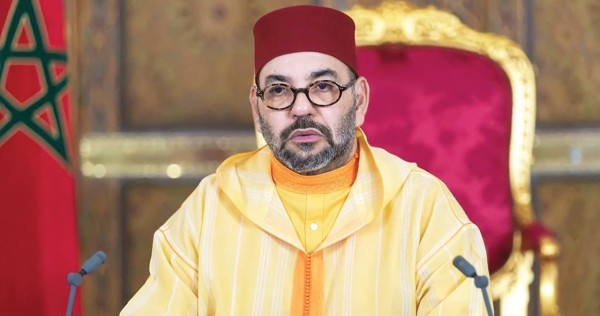
Nasser Bourita affirmed Morocco's support for Gulf states in facing Iranian aggression, emphasizing security and economic solidarity.
Translated by Alqyas from Al-Seyassah — Original source
Rabat, Capitals – Agencies: Foreign Minister and Minister of African Cooperation and Moroccans Resident Abroad Nasser Bourita affirmed that the phone calls conducted by Moroccan King Mohammed VI with several leaders of the Gulf Cooperation Council (GCC) countries following the Iranian aggression reflect the solid bonds of solidarity uniting the Kingdom of Morocco with these nations. The Moroccan Ministry of Foreign Affairs stated in a press release that Bourita clarified during the eighth joint ministerial meeting between Morocco and the GCC, held via video conferencing, that these royal communications embody the depth of fraternal relations and entrenched solidarity linking Morocco to the Gulf states. The statement added that the Moroccan minister reiterated his country’s full support and strong backing for the GCC states in the face of the attacks they suffered, expressing the Kingdom’s steadfastness alongside them in all measures taken to defend their sovereignty, protect their security, and ensure the safety of their citizens and residents on their territories.
Bourita pointed out that this stance aligns with what King Mohammed VI previously affirmed in his speech before the Morocco-Gulf Summit held in Saudi Arabia on April 20, 2016, where he stressed that relations between Morocco and the Gulf states are based on strong ties that transcend geographical boundaries and are rooted in shared language, religion, and civilization, as well as shared values and challenges, particularly in the security sector. The statement clarified that the Moroccan Foreign Minister considered that the challenges facing the region necessitate elevating the strategic partnership between Morocco and the GCC countries to higher levels of integration, highlighting that the concept of national security is no longer limited to the military dimension alone but now also encompasses the capacity for economic and social resilience and securing basic needs for peoples during crises.
He affirmed Morocco’s determination, under the directives of King Mohammed VI, to continue strengthening the strategic partnership and expanding its horizons in a manner that keeps pace with international transformations and serves the interests of the countries and the aspirations of their peoples toward development and prosperity. He also commended the decision to extend the joint action plan between the two sides for the period 2025–2030, calling for enhanced involvement of economic actors from both sides and encouraging communication among them, alongside stimulating sovereign wealth funds to support investments and develop business activity. In this context, he praised the continuous support provided by the GCC countries to Morocco regarding the issue of its territorial integrity.
Regarding the Palestinian issue, Bourita stressed that achieving a just settlement for it represents the key to realizing security and stability in the region. He recalled King Mohammed VI’s efforts, in his capacity as Chairman of the Jerusalem Committee, to call for intensifying international and regional efforts to find a just and permanent solution based on the two-state solution, ensuring that the Palestinian people establish their independent state on the borders of June 4, 1967, with East Jerusalem as its capital.
Bourita emphasized the need to unite ranks and prepare politically and economically for the post-event era, ensuring strong participation in shaping new equations. He stressed the necessity of translating the directives of the Morocco-Gulf Summit held in Saudi Arabia on April 20, 2016, into concrete programs across various fields, taking into account the significant developments witnessed by Morocco and Gulf countries thanks to ambitious development models aimed at adapting to and benefiting from the economic and technological transformations the world is undergoing. He highlighted the decision to extend the joint action plan to cover the period 2025–2030, as well as the measures adopted to focus cooperation over the next two years, stressing the need for greater integration of private economic actors from both sides and encouraging communication among them, as well as active involvement of sovereign wealth funds, particularly in investment and business mobility.
For their part, the foreign ministers of the Gulf Cooperation Council (GCC) countries commended the deep relations between Morocco and the Gulf states, and the continuous efforts of Morocco under the wise leadership of King Mohammed VI to enhance Arab solidarity and elevate the strategic partnership with Gulf countries to the highest levels. They expressed their sincere gratitude and appreciation to King Mohammed VI, praising the strong support and clear solidarity demonstrated by Morocco toward the GCC states in the face of repeated Iranian aggression. The Gulf ministers agreed in their statements that Morocco’s honorable positions under the leadership of King Mohammed VI reflect the unique nature of the historical and strong fraternal ties binding Rabat with Gulf capitals. The meeting highlighted the strategic importance of the royal initiatives from the very first moments of the Iranian escalation; the Moroccan monarch conducted a series of intensive phone calls with the leaders of the GCC states, including UAE President Sheikh Mohammed bin Zayed, Bahraini King Hamad bin Isa Al Khalifa, Saudi Crown Prince Mohammed bin Salman, and Qatari Emir Sheikh Tamim bin Hamad Al Thani. During these communications, King Mohammed VI reiterated Morocco’s strong condemnation of the blatant aggressions targeting the sovereignty of Gulf states, affirming the Kingdom’s full support for the legitimate measures taken by these countries to safeguard their security and the well-being of their citizens against any external threat.
