Al-Yousef: New Citizenship Law to Be Enacted Before End of This Month
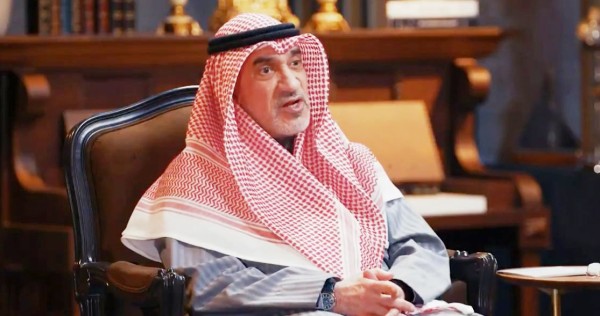
Sheikh Fahad Al-Yousef confirmed that the new citizenship law will be issued in February, alongside closing the files of document forgers and exploited workers, and strengthening the fight against corruption and drugs.
Translated by Alqyas from Al-Seyassah — Original source
In a televised interview, he stated, “There is no such thing as ‘without’ becoming Kuwaiti; this is a matter we have concluded.”
Regarding forgeries, I do not believe the issue will be resolved in the near future. Every week, we discover new cases. From a single family or a single name, we reached 650 cases within a week, and within two months, we will reach 1,060 cases, all of which are fictitious affiliations.
There are no ‘meritorious acts’ in the new Nationality Law. There is no such thing as a meritorious act except for the “Martyr.”
We have more than five or six countries that promised us goodwill regarding the Bedoon file, but I do not wish to mention them now.
A large segment of money launderers are in prison, and we are discussing amounts ranging from 20, 30, 40, to 100 million.
We have eliminated 90% of smuggling from outside Kuwait and installed a new security system on the borders.
Unfortunately, we are discovering cases of bribery and misconduct involving the liabilities of some employees.
The opposition abroad does not exceed five or six individuals, and they live abroad.
In an interview characterized by frankness and clarity, the First Deputy Prime Minister and Minister of Interior, Sheikh Fahad Al-Yousif, outlined a roadmap for addressing issues of nationality, development, and the fight against corruption and drugs. He emphasized that the state is proceeding with the implementation of the law and that “no one is above the law in Kuwait,” in accordance with the directives of His Highness the Amir, Sheikh Meshal Al-Ahmad, which stressed that the law must be applied to everyone without exception.
Al-Yousif revealed during his appearance on the program “Masrah Al-Hayat” on Al-Rai Channel that the files concerning “Article Eight” and “Meritorious Acts” have been fully closed. He noted that more than 60% of those naturalized under Article Eight have reverted to their original nationalities while retaining all their living rights in Kuwait, including permanent residency. Meanwhile, the file on meritorious acts was concluded with the last emiri decree issued last week. He confirmed that under the new Nationality Law, “there is no such thing as a meritorious act,” except for the category of the Martyr, which will have a specific provision.
Al-Yousif stressed that the issue of forgeries is ongoing and has no time limit, stating, “I do not have a date for concluding the process of identifying forgers.” This is in light of the discovery of new cases at every meeting of the Supreme Committee for Nationality, which held more than 33 meetings over two years, making it one of the largest gatherings in Kuwait’s history. He clarified that “the numbers are not simple” and that all decrees revoking nationality are published in the Official Gazette.
Al-Yousif confirmed that the new Nationality Law is expected to be issued in February, noting that it will resolve the status of several currently existing categories. Regarding the file of illegal residents, he clarified that “there is no such thing as ‘without’ becoming Kuwaiti” under the new formulation.
He also addressed the development file, emphasizing that the wheel of projects has resumed turning strongly, with a plan to resurface all roads in Kuwait within three years, weekly monitoring of stalled projects, and progress on major projects. In the file of corruption and money laundering, he stressed that campaigns are ongoing and that “no one is above Kuwait.” Meanwhile, drug cases are facing unprecedented tightening following the issuance of a law described as one of the “most difficult and severe,” which enhances deterrence and protects society.
Al-Yousif said: “We are investigating two major corruption cases, with senior and junior officials implicated. These cases are of interest to His Highness and to me personally. We have discovered cases of bribery and misconduct involving the liabilities of some employees working for the state.” The following are the details of the interview:
What is the number of nationality revocation decrees from last year and this year?
• We have concluded the matter of Article 8, which pertained to the wives of Kuwaiti men, individuals granted citizenship for meritorious service, and document forgers. Last year, by God’s grace, we finished dealing with Article 8 cases, and a significant portion—more than 60%—returned to their original nationalities. His Highness’s directives and orders were clear: those who held Kuwaiti nationality under Article 8 and subsequently reverted to their original nationalities retain all the rights they enjoyed while holding Kuwaiti citizenship. They may continue residing in Kuwait under permanent residency for life, as long as they wish to live there.
Al-Yousef stated that the issue of meritorious service cases has also been concluded. These individuals similarly enjoy certain privileges. It is undeniable that Article 8 differs from the category of meritorious service. This phase has been completed, as confirmed in the latest Emir’s Decree issued last week.
Regarding document forgers, Al-Yousef expressed doubt that the issue will be resolved in the near future. Every week, we uncover new cases. The High Committee for Citizenship convenes every two to three weeks, and no session passes without addressing forgery-related activities. It is the forgeries themselves that lead to their exposure and downfall. Many have fled Kuwait upon realizing they were being investigated. In some cases, half of their families have left Kuwait, while others remain in the country. Ultimately, he stated he has no timeline for concluding the fight against document forgers.
Al-Yousef clarified that the numbers are not trivial. At the outset of our work as the Citizenship Committee, we published figures, but we later limited our disclosures to cases where citizenship had been revoked. The full numbers are available in the official Kuwait Al-Yaum newspaper. We do not revoke anyone’s citizenship without announcing names or numbers, but to prevent the issue from becoming a matter of public opinion, we include all categories in Emir’s Decrees published in the official Kuwait Gazette.
Al-Yousef noted that from a single family with one name, we identified 650 cases within a week, and within two months, the number reached 1,060 individuals linked to one person. All these affiliations were fictitious. He explained that while the primary name was genuine and the man had six or seven wives, only one wife had legitimate children. The others were fabricated identities used to secure Kuwaiti nationality for children who did not qualify. In the past, Kuwaiti nationality procedures did not scrutinize such situations as rigorously as they do now.
Al-Yousef added that over approximately two years—roughly per month—we have held two committee meetings, totaling more than 33 sessions of the High Committee for Citizenship. Never before in Kuwait’s history has this occurred for a single reason: the widespread discovery of document forgeries. He emphasized that if these forgery cases were made into films, they would seem unbelievable due to the sheer audacity of the methods used.
Al-Yousef clarified that the new Kuwaiti Nationality Law no longer includes “meritorious service” as a category. The only exception is “martyrs,” for whom a dedicated legal provision will be established. However, as a general category, there is no such thing as meritorious service other than martyrdom. Everyone who worked in Kuwait did so for compensation; no one worked without pay.
When asked about the current status of those whose citizenship was revoked, particularly if they hold no other nationality, and whether they would be expelled from Kuwait, Al-Yousef responded that many of those granted citizenship for meritorious service—such as doctors and engineers—already held other nationalities. When they acquired Kuwaiti citizenship, they surrendered their original passports and obtained Kuwaiti ones. Many quickly regularized their status within a week. As for those residing illegally, Kuwait and the government are making concerted efforts in multiple countries to help them obtain nationality. Their residence and work in Kuwait remain protected. He reiterated His Highness’s statement that all rights previously enjoyed in Kuwait will continue to be respected, regardless of any other nationality they may acquire.
Al-Yousef concluded that in every country, sensitive positions are reserved for nationals. Even in Kuwait, meritorious service individuals or non-native Kuwaitis do not occupy sensitive roles. It is the children of Kuwaitis who hold such positions, not only in Kuwait but everywhere.
Al-Yousef confirmed that, after a prolonged period and extensive deliberations among committees and presentation to the Council of Ministers, with some observations noted, the nationality law will, God willing, be ready this February.
Regarding the stateless persons (Bidun) file, is it included within the nationality law as part of a comprehensive approach to their status, ensuring their file is not forgotten?
As for the Bidun law, there is no such thing as “stateless”; they will become Kuwaiti citizens. This matter has been concluded through the new nationality law, which has abolished several categories of nationality currently in existence. The Bidun file has been closed for a long time. To those listening from among the Bidun community: we are actively striving, and Kuwait is not content with people living without identity documents, unable to travel or work. God willing, this week and next, the Foreign Minister will travel to several countries that have expressed their readiness to provide us with quotas.
I cannot name these countries, but we have assurances from more than five or six countries, and I do not wish to discuss them now. God willing, this will be resolved. Bidun communities exist in all our Gulf countries, and each country has its own approach to resolving their status. May God guide us, and may we find a solution that suits both Kuwait and the Bidun themselves.
In recent periods, there has been discussion about development, given your role as First Deputy Prime Minister and Minister of Interior. The Kuwaiti public, both domestically and abroad, has commented on the National Assembly’s deliberations and the revocation of nationalities, and whether this has had a negative impact on development in Kuwait. What is your personal view? How many projects have you revived?
I challenge any Kuwaiti to say that they have not noticed development with their own eyes. We all felt the deterioration of roads, with potholes everywhere. Today, we have implemented a three-year plan: every meter of road in Kuwait has been repaved, so that Kuwait’s streets regain the respect they deserve, comparable to those in advanced countries. Two years ago, walking on Kuwait’s streets was worse than walking in the desert. Regarding projects, personally, I meet with the Prime Minister every Thursday to review the status of all stalled projects. In the Ministry of Interior, we had projects stalled due to contractors, but today they are closely monitored. Some projects have been completed; for example, the Justice Palace, which was a stalled project a year ago, was inaugurated in the presence of the Crown Prince. The Mubarak Port project, one of Kuwait’s largest developmental initiatives, saw the government sign contracts with a major Chinese company last month, and work will begin in the coming fourth month. Residential buildings have also been constructed.
Previously, Kuwait International Airport had no known opening date; today, a specific date has been set, and it is not far off. In the Ministry of Health, we have opened the Maternity and Childbirth Hospital in Adan and the Cancer Hospital, one of the largest in the Middle East, with a substantial number of beds. For the Cancer Hospital, an agreement was signed with one of France’s leading cancer treatment centers, in the presence of His Highness the Amir during his visit to France, where he personally met with them and showed keen interest in this field.
Every Kuwaiti can observe the improvements in roads. Previously, we suffered 100 percent from road conditions; now, we suffer only 50 percent, and every day sees further repairs to roads and underground utilities.
Al-Yousef stated, “I believe Kuwait is clearly committed to combating corruption. We do not have a Ritz hotel in Kuwait, but we do have a central prison that houses celebrities. A large number of these individuals have been summoned, and we are currently reviewing their files. The Financial Investigations Unit is among the best units for detecting money laundering. We uncover three to five money laundering cases per week involving substantial sums, and a significant portion of those involved are already in prison. We are talking about money laundering operations involving 20, 30, 40, and even 100 million, and all of them are in prison. Those who are detained remain detained, and those who have been sentenced are serving their sentences.”
“Corruption exists in Kuwait, but it is different. It involves bribes paid to certain government employees. By the time this Ramadan episode airs, we will have concluded two major corruption cases in Kuwait. These cases are of great concern to His Highness the Emir and to me personally. Unfortunately, we are uncovering instances of bribery and misconduct by some state employees. However, these cases are still under investigation, although the guilt is established. Regrettably, some individuals, including senior and junior former officials, are still at large, and some have fled. Anyone who knows they are corrupt has fled Kuwait. This is not just one or two or three individuals; we will not remain silent. We are filing cases against them and will request Interpol Red Notices. God delays but does not neglect. Everyone knows themselves, and the law is applied. As His Highness said, ‘First, apply the law to my sons, and then to the people.’”
Al-Yousef added, “Go to His Highness the Emir and tell him: ‘One great man says there is no one greater than Kuwait.’ This encourages every officer in the Ministry of Interior. I am unable to express enough gratitude to these individuals who bear the burden with me. I have clear instructions: no door will be opened [to corruption]. My officers needed only encouragement and support, and they are receiving it from the highest authority in the country, His Highness. This is what motivates all of us, who work 24 hours a day, racing against time to cleanse Kuwait of such elements.”
“By the grace of God Almighty, a new drug law was issued, which is arguably the harshest and most unique in the world. Its impact has been evident within a month. The Ministry of Interior feels the weight of applying this strict law. Mothers call me, asking me to send someone to take their sons for treatment, as we have facilities available. Kuwait is not the only country suffering from drugs; we previously struggled with drug smuggling from abroad, and I can say we have eliminated 90% of external smuggling. We have implemented a new, modern security system along the borders to help eradicate drugs. If a smuggler is caught, it means execution. There is no longer the old practice of smugglers eating, drinking, and sleeping in prison. Now, the law is applied more swiftly. With the help of the first cases, which previously took a long time, the Minister of Justice is active, and the Judicial Council assists in accelerating cases. All efforts are aimed at speeding up judgments against criminals, making penalties more deterrent.”
Al-Yousef concluded, “Raids are almost daily. Unfortunately, government lands and plots designated as parks are sometimes inadvertently given to individuals who use them for drug activities or indecent acts. We are taking action against them. We are raiding large warehouses of all kinds of drugs. Today, drugs are entirely synthetic; in the past, they were natural, such as plants. Today, all drugs are chemical substances. We in the Gulf countries have been blessed with this grace and favor.”
We are certain that we have reached advanced stages in combating drugs. With the new Drugs Law, parents are assisting us at this level; they contact the Narcotics Control Department, saying, “Come, take our son. We do not want to punish him; we want to treat him.” She continued, “I have personally followed cases for many years. I have seen children whose mothers had not seen them for years. I brought their father to the hospital. Addiction struck three days before the previous Eid. On the first day of Eid afternoon, I saw the interview. We have methods for treating addiction and monitoring addicts. I personally oversee a rehabilitation center in Surra. They listen to me; I treat them. We monitor them in Surra; they visit the hospital three days a week for two months. The withdrawal symptoms have subsided, and they have reintegrated into society. I am grateful for his cooperation. He was not dismissed from his job; his salary was maintained, and today, praise be to God.”
Regarding my observation over the past two years, the opposition abroad does not exceed five or six individuals. Those living abroad do so only because they have cases or problems within the country. The second category consists of Kuwaitis residing illegally. The Prophet, peace and blessings be upon him, was not pleased with everyone. Do you expect a person to live a day without making mistakes? No one can live such that everyone is pleased with them; this is impossible. We strive, and if we err, we acknowledge our mistakes and rectify them. It is not a disgrace for a human to make mistakes and correct them. The opposition has existed in Kuwait since ancient times, and in the Gulf states; all Gulf countries have their own opposition. Did I pay attention to 1% to label them as opposition? I focused on those who are causing trouble and have problems. Believe me, if they did not have problems, they would not live outside Kuwait.
Some believe that the culture of criticism in Kuwait has diminished?
Freedom still exists in Kuwait, but within a framework. When we first had freedom, we had chaos and behaviors that were unacceptable. The entire world was criticizing Kuwait. There is freedom with respect. Is there a newspaper that has been censored to prevent writers from publishing what they wish? However, people have become more aware. Chaos and indifference have been organized; nothing more, nothing less. Public opinion has been directed toward respecting people. It is not permissible to insult any of the people residing in Kuwait or the countries with which we have relations.
