Gaza Moves to Phase Two... Amid Warnings of Potential Obstacles
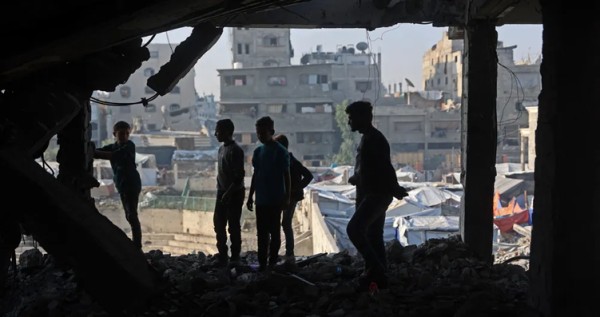
Phase two of the US President's plan to resolve the conflict in Gaza has been announced.
Translated by Alqyas from Al-Seyassah — Original source
Ramallah, Capitals - Agencies: As the US peace plan for Gaza moves into its second phase and Ali Shuaa leads the technocrats’ committee tasked with administering the Palestinian sector under international supervision, urgent questions have surfaced regarding the obstacles that could hinder this process.
Egyptian military and strategic experts have warned of these obstacles. Major General Osama Kabeer, senior lecturer at the Command and Staff College of the Higher Military Academy for Studies, stated that the committee consists of 15 prominent figures, technical experts in international administration, agreed upon by consensus among all parties, including the Palestinian Authority and Hamas.
Kabeer clarified that the committee’s mandate is to manage Gaza in all aspects, with its term ending within two years according to US President Donald Trump’s plan, under his direct and personal supervision via the International Peace Council. However, he warned of a series of challenges that could disrupt the committee’s path, foremost among which is Israel’s rejection of some committee members or its president, aimed at obstructing the commencement of their duties.
He further noted that other potential obstacles include continued Israeli breaches, the deployment of drones, and intermittent aerial bombardment under flimsy pretexts, as well as the possibility of regional instability, particularly regarding the Iran file, which could distract Washington, the “most significant actor,” from following up on the Palestinian situation.
Among other potential obstacles, Kabeer cited Israel’s rigidity toward Turkish mediation, especially if Ankara participates in the “International Temporary Force,” and Israel’s parallel efforts to gradually separate the West Bank from Gaza, which poses a dilemma for a comprehensive solution.
For his part, Major General Dr. Wael Rabie, a specialist in regional and Israeli affairs, believed that the committee’s primary task over the next two years is to oversee the distribution of aid and manage daily life affairs, separate from traditional political relations.
Meanwhile, following the announcement of an agreement on the names of 15 members of the technocrats’ committee that will administer the Gaza Strip under US President Donald Trump’s plan, agreed upon last year, Dr. Mahmoud Al-Habbash, advisor to the Palestinian President for religious affairs, revealed the mechanisms for managing the sector in the coming phase.
Al-Habbash confirmed that Hamas announced it would relinquish its rule over Gaza and hand everything over to this committee, expressing his hope that this would be implemented “so that Palestinians do not find themselves facing internal crises again,” as he put it.
He also emphasized that the committee’s role is purely executive and technical, concerning the management of humanitarian and service files such as relief, water, electricity, shelter, housing, and basic services, firmly denying any involvement in political matters.
For his part, US envoy Steve Witkoff announced that the plan to end the war in the Gaza Strip is now moving to its second phase, aimed at disarming Hamas.
Witkoff wrote on the “X” platform, coinciding with the formation of the committee tasked with managing Gaza: “We announce the launch of the second phase of the President’s 20-point plan to end the conflict in Gaza, which moves from a ceasefire to disarmament, technocratic governance, and reconstruction.”
Witkoff added that Washington “expects Hamas to fully honor its commitments,” noting that America is waiting for Hamas to immediately return the body of the last remaining captive, “otherwise, severe consequences will follow.”
For her part, Fatah and the Palestinian Presidency welcomed the formation of the administrative committee that will oversee the management of the Gaza Strip during the transitional phase, confirming that the Authority was a key partner in selecting the names.
Munther al-Hayek, spokesperson for Fatah, said that the movement and the Palestinian Presidency are forming an administrative committee that will oversee the governance of the Gaza Strip during the transitional phase, noting that the Palestinian Authority was a key partner in selecting names and following up on the reference framework and operational mechanisms with mediators in Egypt, Qatar, and Turkey, as well as with the U.S. administration.
Meanwhile, Axios revealed that Hamas had sent secret signals indicating its acceptance of Trump’s plan for its gradual disarmament, amid hesitation among several countries to send peacekeeping forces to Gaza.
The U.S. Axios website reported that, following the launch of the second phase of the Gaza ceasefire agreement, two U.S. officials confirmed in a press briefing that Hamas had privately indicated its readiness to accept the U.S. disarmament plan and begin disarming itself.
In a related development, the Israeli website Ynet stated that with the start of the second phase of the Gaza agreement, it has become clear that Hamas has not been defeated and still possesses tens of thousands of fighters and a wide infrastructure of tunnels and rockets.
