Our ambassador to Qatar signs final documents of the International Telecommunication Union conference in Doha
Press coverage 1 newspapers covered this event: KUNA →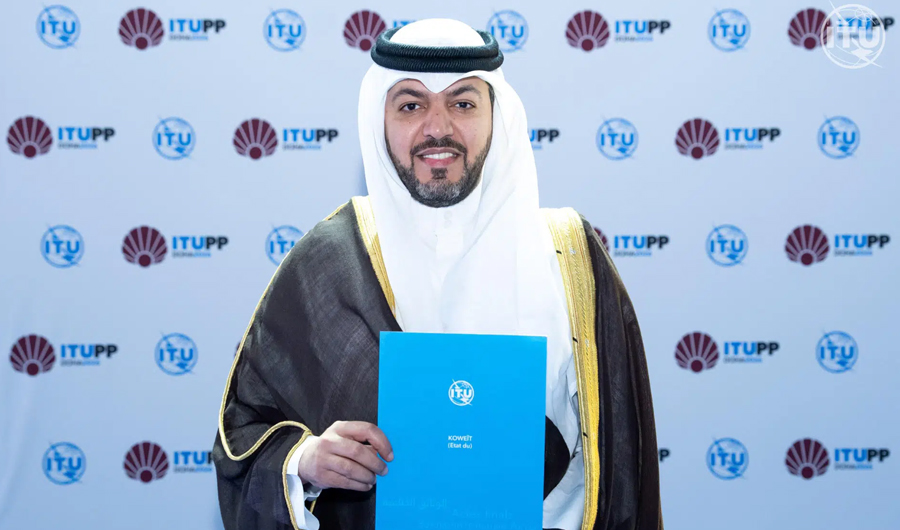
Ambassador Ahmed Al-Sharim signed the final documents of the International Telecommunication Union conference in Doha, in the presence of Manal Al-Mutairi.
Translated by Alqyas from Sarmad — Original source
Kuwait’s Ambassador to Qatar, Ahmed Al-Sharim, signed the final documents of the International Telecommunication Union (ITU) Plenipotentiary Conference today, Friday.
The final documents of the conference, which concluded its proceedings in the Qatari capital Doha, included a number of resolutions and decisions aimed at enhancing universal connectivity, promoting sustainable digital transformation, developing telecommunications infrastructure, and expanding the utilization of modern technologies.
Ambassador Al-Sharim signed the documents in the presence of Eng. Manal Al-Mutairi, Vice Chairman of the Board of Directors of the Kuwait Public Authority for Communications and Information Technology, and Ahmed Al-Nuaimi, Marketing Coordinator in the Authority’s External Communications Department.
Among the key outcomes of the conference was the adoption of the ITU’s Strategic Plan for the period 2028–2031 and the approval of the corresponding financial framework, which enhances resource efficiency, transparency, and financial oversight, while linking expenditures to priorities and targeted results.
The decisions also emphasized strengthening the use of artificial intelligence in the telecommunications and information technology sector, supporting capacity and skills building, and facilitating knowledge exchange, alongside developing the Internet of Things, digital twins, and sustainable smart cities and communities.
The documents underscored the importance of bridging the digital divide and supporting developing countries in developing their networks and services, expanding access to telecommunications, and enabling women, youth, and persons with disabilities to benefit from digital transformation. They also highlighted the need to strengthen online child protection and safeguard telecommunications service consumers.
Regarding infrastructure, the documents included measures to enhance the resilience of submarine cables, terrestrial networks, and satellite systems, expand international cooperation, and exchange best practices to ensure service continuity. They also supported the use of telecommunications for early warning, emergency response, and disaster management.
The documents also addressed the role of digital technologies in addressing climate change and protecting the environment, improving the efficiency of processing satellite network requests, and supporting aspects related to radio spectrum and orbits in lunar exploration activities.
Member states of the International Telecommunication Union agreed that India will host the next ITU Plenipotentiary Conference in 2030. They also accepted Uzbekistan’s offer to host the 2028 edition of the ITU Plenipotentiary Conference for Technical Standards.
It is worth noting that Kuwait won a seat on the ITU Council for Region E during elections held at the ITU Plenipotentiary Conference hosted in Doha from November 9 to 27. The Kuwaiti delegation was led by State Minister for Communications and Information Technology Affairs and Acting Minister of Media and Culture, Omar Al-Omar.
The ITU Plenipotentiary Conference is the highest policy-making body of the International Telecommunication Union, responsible for setting its strategic direction, adopting its plans, and electing its leadership.
