Saudi Finance Minister: We handled the Hormuz crisis in 48 hours
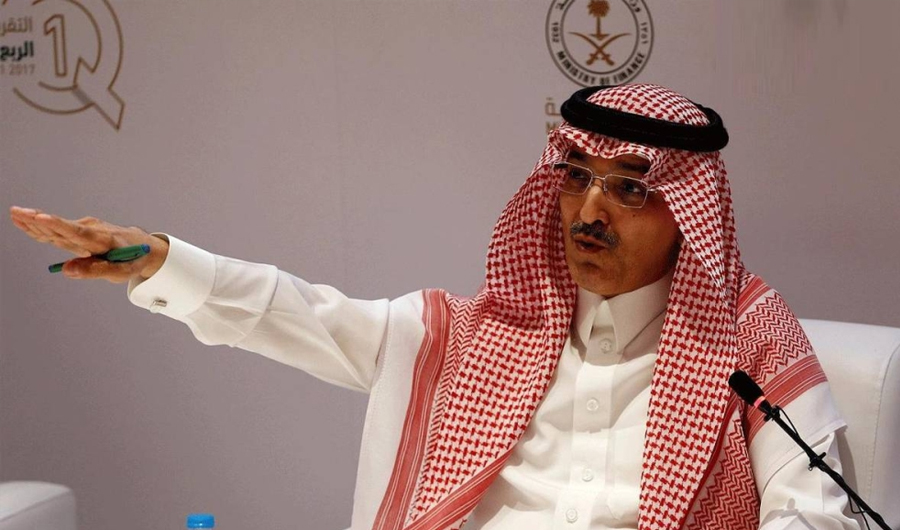
Saudi Finance Minister Mohammed Al-Jadaan affirmed the Kingdom's ability to handle the Hormuz crisis quickly, with rising reserves and oil exports.
Translated by Alqyas from Sarmad — Original source
Saudi Finance Minister Mohammed Al-Jadaan affirmed that the Kingdom does not set a ceiling on meeting the needs of defense sectors to safeguard its security, noting that there is currently no need to utilize financial reserves.
Speaking at the 2027 Budget Forum, Al-Jadaan stated that the Saudi economy has overcome challenges far greater than the current crisis and emerged stronger, reaffirming the Kingdom’s capacity to manage current developments while maintaining the continuity of essential services and meeting the requirements of various sectors.
He added that the government has no desire to use financial reserves, but rather seeks to strengthen them, pointing out that reserves have risen by approximately 20% since 2022 to date, and that the general debt-to-GDP ratio remains well below the average of the G20 countries.
Regarding revenues, Al-Jadaan clarified that oil revenues exceeded expectations despite the Strait of Hormuz crisis. He noted that the government responded swiftly to the crisis’s repercussions, relocating logistical capacities within 48 hours in collaboration with the private sector to provide alternative channels and ensure the continued flow of supplies.
He highlighted that the number of empty trucks entering the Port of Jeddah alone increased from an average of 2,000 trucks before February last year to 10,000 daily currently, indicating the speed of rerouting logistical capacities and adapting to changes.
Data from the Saudi General Authority for Statistics earlier today showed that Saudi oil exports reached a six-month high in September at 87.1 billion riyals (approximately $23.22 billion).
