Kuwaiti researcher at Oxford: Space opens path to treatments for aging, cancer and diabetes
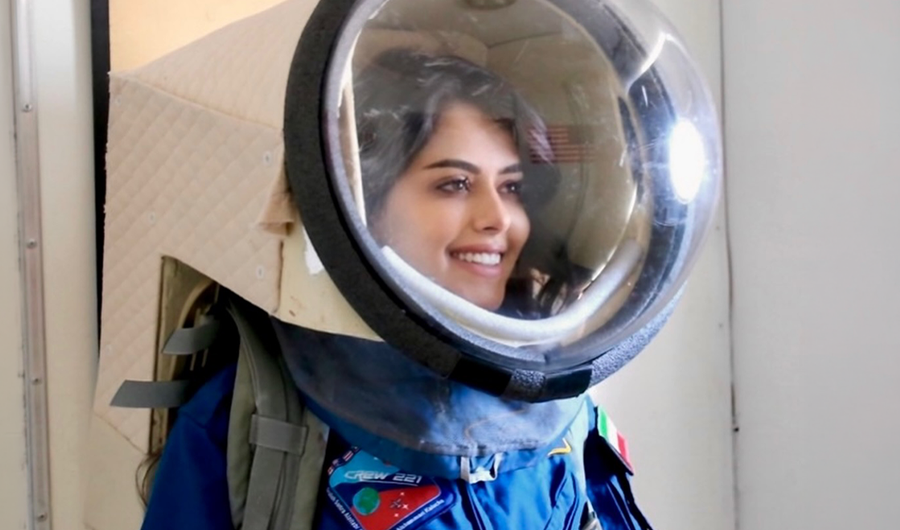
Dr Rawan Al-Shamari explains how microgravity research can contribute to developing treatments for stubborn diseases such as cancer, diabetes and aging by studying the effects of space on the human body
Translated by Alqyas from Sarmad — Original source
As space companies race to reach Mars and expand human travel beyond Earth, space medicine poses a question more closely tied to human life: Can the health risks faced by astronauts be turned into an opportunity to understand incurable diseases and develop new treatments on Earth?
In this context, Dr. Rawan Al-Shammari, a Kuwaiti physician and researcher in space medicine at the University of Oxford, explained that microgravity research could help scientists understand aging, cancer, diabetes, and immune disorders, as well as develop drugs and medical technologies that benefit both astronauts and people on Earth.
Speaking to Arabi.net during a visit to London, Al-Shammari said that the human body undergoes physiological and psychological changes when outside Earth, including muscle and bone weakness, circulatory disturbances, vision changes, as well as the effects of isolation, sleep disruption, and cosmic radiation.
The Kuwaiti researcher noted that the absence of gravity causes fluids to shift toward the chest and head, potentially affecting the eyes and vision, alongside a decline in muscle mass and bone density due to the lack of the natural resistance imposed by Earth’s gravity.
To mitigate these effects, astronauts exercise for about two hours daily. However, these rapid changes also provide scientists with an opportunity to study processes that resemble certain aspects of aging over a matter of months, rather than observing them over decades.
Al-Shammari explained, “Instead of studying a patient over 20, 30, or 40 years, some changes associated with aging can be studied in a shorter period in space.”
Furthermore, comparing astronauts’ conditions before and after long-duration missions could help develop methods to reduce muscle and bone loss in the elderly, improving their mobility and independence.
