Kuwaiti charity work: Balancing 'immediate relief' and 'building the future'
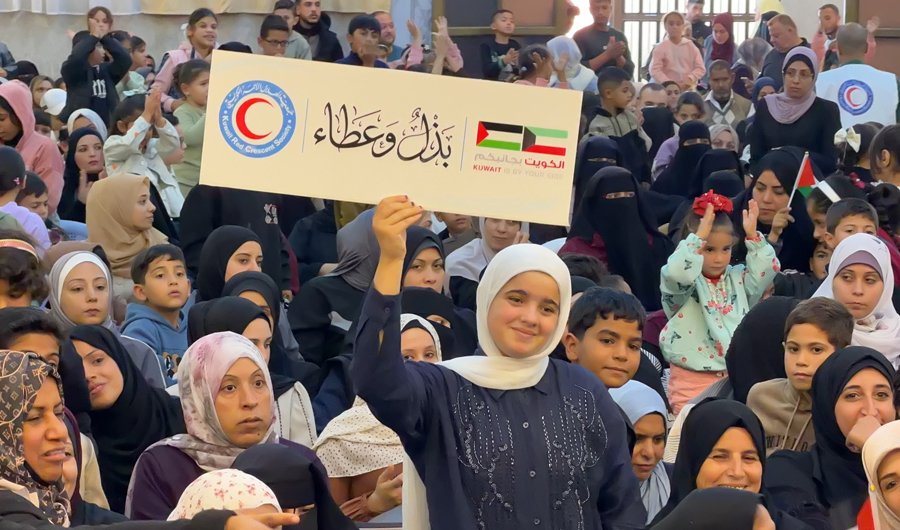
Kuwaiti charitable associations and institutions continue to expand their projects in Palestine, Indonesia, Tunisia, and Mauritania, combining emergency relief with healthcare and education.
Translated by Alqyas from Sarmad — Original source
In a humanitarian scene where the repercussions of crises and challenges intertwine, Kuwaiti humanitarian efforts have been renewed across four countries through initiatives and approaches that combine rapid relief intervention with sustainable development projects, transcending direct aid to revive hope, preserve human dignity, and create conditions that enable people to continue their lives.
Amidst a child who has lost a provider, a family burdened by displacement, a student seeking an opportunity to learn, and a patient awaiting the restoration of sight, the contours of a Kuwaiti charitable message emerge, with humanity as its core and alleviating suffering and building a more stable future as its goal.
Under high directives within the "Kuwait is by Your Side" campaign, Kuwaiti charitable associations and institutions continue to expand the scope of their projects, relying on the generosity of benefactors and their commitment to supporting the most vulnerable groups, while delivering diverse humanitarian responses that integrate emergency relief, healthcare, education, and community development; thereby enhancing Kuwait’s humanitarian presence and embodying values of solidarity and compassion.
Recent initiatives highlight the diversity of Kuwait’s charitable pathways, spanning from Palestine to Indonesia, Tunisia, and Mauritania. These efforts include orphan sponsorship, providing food and winter supplies, establishing educational and health facilities, conducting medical operations, and caring for sick children, reflecting a shift in charitable work from meeting immediate needs to providing the foundations for a safer and more stable life.
As part of its commitment to caring for children who have lost their providers due to the war in the Gaza Strip, the Kuwait Red Crescent Society announced the funding of sponsorship for 540 orphans as part of the first batch of the "Support for Orphan Sponsorship" project. This was announced during an informational event held in Gaza City, attended by hundreds of orphaned children and their families. The initiative aims to support this vulnerable group and alleviate the living burdens on their families amid the dire humanitarian conditions in the Strip.
Khaled Al-Mugams, Chairman of the Board of Directors of the Society, stated that the project stems from the Society’s dedication to supporting children who have lost their providers and assisting their families in securing their basic needs. He explained that the sponsorships provide monthly financial support to beneficiary families for a period of four months, helping to alleviate living burdens and enabling them to meet their children’s daily requirements.
Al-Mugams added that orphan care is a priority in the Society’s humanitarian programs, given the challenges faced by families who have lost their providers in securing food and basic necessities for their children. He emphasized that sponsorship programs help provide consistent support to these families, granting children a degree of stability and care amid the exceptional circumstances prevailing in the Strip.
He praised the high leadership of the State of Kuwait for its support of humanitarian and relief efforts directed toward the Palestinian people, alongside the continuous contributions of Kuwaitis in supporting their brothers in the Gaza Strip. He also expressed his appreciation for the efforts of the Wafa Foundation for Development and Capacity Building in implementing the project on the ground and delivering the first batch of sponsorships to beneficiary families, thereby strengthening humanitarian partnerships and ensuring that aid reaches its intended recipients.
In a path that combines human capacity building with emergency response, the International Islamic Relief Organization continued implementing its educational and relief projects in several countries. This included the inauguration of the “Ibrahim Al-Asfour and his wife Mariam Al-Asfour” Charity Village in West Java, Indonesia, coinciding with humanitarian interventions in Palestine that provided bread, clothing, and blankets to affected and displaced families, reflecting the diversity of its programs between sustainable projects and urgent aid.
The Organization’s General Manager, Engineer Badr Al-Samit, emphasized during the village’s inauguration at the Bayt Al-Quran Institute in Cibirata, that the project represents a significant addition to efforts supporting education and student welfare, providing a comprehensive environment for learning, accommodation, and healthcare. He noted that the village was built on an area of approximately 2,100 square meters, serving 1,338 students, and includes a two-story mosque, a school with four classrooms, orphan housing, a teacher’s residence, a central kitchen, a dining hall, a health clinic, a water well, and a waqf shop.
Al-Samit explained that the Organization views investment in education as one of the most important pathways for sustainable development and empowering generations with knowledge. He pointed out that between 2023 and September 2026, the Organization implemented approximately 475 educational projects in 34 countries, with a total cost of around $35.6 million USD, benefiting over 125,000 students, in collaboration with 82 local and international entities.
Al-Samit expressed his appreciation to the generous Asfour family for their support and contribution to realizing this educational and humanitarian landmark, praising the role of the Bayt Al-Quran Institute and the Kuwaiti-Indonesian Charity Association in cooperation and coordination for its implementation. This enhances partnerships between charitable institutions and donors, transforming initiatives into projects that serve generations and provide better opportunities for learning and stability.
On the relief side, the “Charity Organization” implemented projects to provide winter clothing, blankets, and essential supplies in the Gaza Strip, the West Bank, and Jerusalem, at a cost exceeding $118,000 USD, benefiting approximately 6,000 people. Additionally, it supported a project to prepare and distribute local bread in northern Gaza, targeting over 13,000 displaced families for a month, contributing to securing food needs and alleviating the burdens of affected families as winter approaches.
For its part, Al-Najah Charity Association implemented an emergency response project in the Gaza Strip, targeting 2,500 affected and displaced families, as part of its relief efforts aimed at providing basic needs and supporting families whose homes and camps were damaged by harsh weather conditions, including heavy rains and winds that exacerbated their humanitarian suffering.
Talal Fakher, Assistant General Manager of Resources at the Association, stated that the project responded to urgent humanitarian appeals launched by affected individuals in the sector following a weather low that damaged tents and displacement camps, directly impacting family lives, especially patients, the elderly, women, children, and infants.
Fakher clarified that the aid included the distribution of tents and tarps designed to protect against rain and wind, along with blankets and food baskets, aiming to provide the minimum essentials for affected families and help them cope with difficult weather conditions. He noted that distribution operations began in Al-Najah camps, which were established in three phases under the names “Al-Najah 1,” “Al-Najah 2,” and “Al-Najah 3,” and then extended to the most needy areas based on humanitarian priorities and field needs.
He noted that the project helped alleviate some of the suffering of displaced persons and provided them with urgent needs, but emphasized that the scale of needs still exceeds the aid provided, given the expanding scope of damage and the continuation of harsh living conditions. He explained that the Association is working to provide more tents, blankets, food baskets, infant formula, medicines, treatments, and winter clothing to support the most vulnerable groups.
Fakher renewed his call for people of goodwill and benefactors in the country to continue supporting their brothers in Gaza. He stressed that humanitarian contributions, regardless of their value, represent new hope for affected families and help meet their essential needs. He expressed his gratitude to the supporters who contributed to the implementation of the project and assisted displaced families during these exceptional circumstances.
In a model combining relief, healthcare, and community development, the Al-Isalah Social Association, represented by Namaa Charity, continues to implement humanitarian projects in Palestine, Tunisia, and Mauritania. These initiatives have targeted thousands of beneficiaries, including providing food for displaced persons and needy families, conducting medical surgeries, caring for orphans and sick children, and supporting health services through the opening of a new medical center serving tens of thousands of residents.
Khaled Al-Shammari, Head of the Programs and Initiatives Sector at Namaa Charity, stated that the Association’s projects in Palestine included distributing bread to over 15,000 displaced persons in camps, as well as providing 240 food baskets benefiting approximately 1,200 people. This was done in partnership with the Palestine Tomorrow Association, chaired by Dr. Manal Sayyam. He noted that these initiatives helped meet the basic food needs of more than 16,000 beneficiaries and supported affected families in facing living burdens.
Al-Shammari clarified that the Association implemented a package of health, relief, and social projects in Tunisia, including performing 300 eye surgeries, distributing 250 food baskets, and providing clothing for 150 orphans in collaboration with the Olive Branch Network for Development Associations. He pointed out that these initiatives aim to meet the needs of various segments and enhance their access to healthcare and essential assistance.
He added that attention to the humanitarian and psychological aspects formed part of the projects implemented in Tunisia. The Association organized a visit for children with cancer at the Hedi Chaker University Hospital, providing gifts and clothing to 20 children. He emphasized that the message of charitable work is not limited to providing material needs but extends to supporting patients and children, bringing joy to their hearts during their treatment journey.
He noted that the Association’s projects also extended to Mauritania through the opening of a health center targeting the service of approximately 39,000 people. This step reflects Namaa Charity’s orientation toward supporting health facilities and expanding the scope of benefiting from medical services. He explained that such projects represent a long-term investment in human health and contribute to improving the quality of life in beneficiary communities.
He affirmed Namaa Charity’s commitment to diversifying its projects and monitoring their implementation on the ground in cooperation with local partners, ensuring that aid reaches its rightful recipients and achieves the desired impact. He expressed his appreciation for the people of goodwill and benefactors in Kuwait for their continuous support, which contributed to the implementation of these initiatives and assisted thousands of beneficiaries in various humanitarian and developmental fields.
Collectively, these projects reflect the expanding scope of Kuwaiti charitable work and the diversity of its tools in addressing humanitarian needs, ranging from urgent relief that protects families from hunger and cold, to initiatives that support orphans and sick children, as well as educational and health projects that open new horizons for beneficiary communities.
These efforts also highlight the importance of humanitarian partnerships with local institutions in recipient countries, which enhances the efficiency of project implementation, ensures that aid reaches the intended beneficiaries, and allows for monitoring the real-world impact of these initiatives. This ensures that the contributions of Kuwait’s philanthropists and benefactors remain a vital presence in the lives of thousands of families, students, and patients around the world.
