China tests 19-passenger electric plane ahead of commercial operation
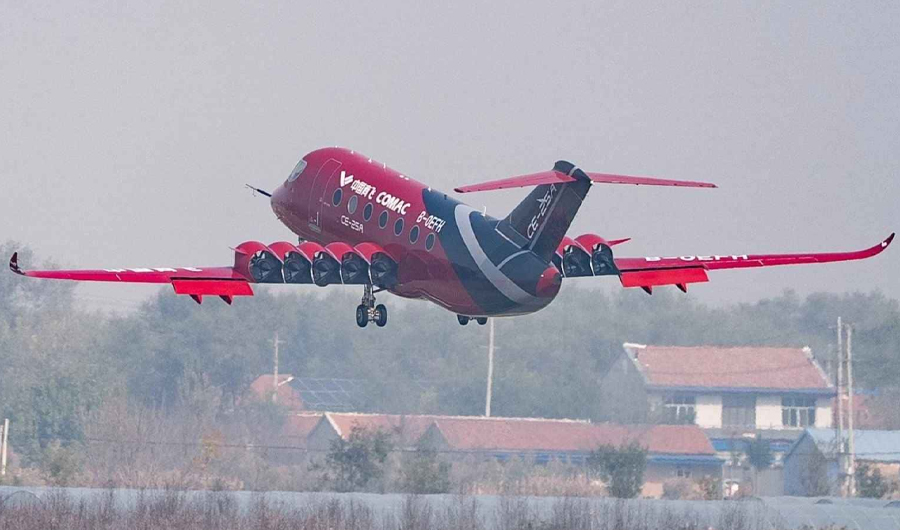
Chinese COMAC completes first manned flight of CE-25A electric plane in Pinzhuo, a step toward commercial approval following civil aviation authority consent.
Translated by Alqyas from Sarmad — Original source
China’s CE-25A electric passenger aircraft completed its first manned test flight on the 14th of this month, flying a distance of 60.4 kilometers over the city of Binxu in Shandong Province, eastern China. The 16-minute and 38-second flight marked a significant milestone for the aircraft, developed by Commercial Aircraft Corporation of China (COMAC), as the first commercial electric plane produced by the company under a project aimed at using electric power for short intercity flights.
The flight involved two pilots and an aerospace test engineer. COMAC announced that the aircraft’s systems operated normally and that performance indicators matched expectations. However, the flight does not mark the beginning of commercial operations, as the aircraft is still undergoing testing and necessary certification procedures for passenger transport.
The CE-25A is designed to accommodate 19 passengers, with a maximum takeoff weight of 10 tons, a flight speed of 300 kilometers per hour, an operational ceiling of approximately 2,400 meters, and a design range of up to 400 kilometers. These specifications target short regional flights, which require smaller aircraft than those used on medium and long-haul commercial routes.
The aircraft relies on a distributed electric propulsion system featuring ten electric fans housed in ducts mounted above the wings, with five fans on each wing, replacing traditional jet or turboprop engines.
This design aims to distribute thrust across multiple units, potentially reducing noise and facilitating takeoff and landing on shorter runways, according to the project’s stated objectives. However, the November test did not provide independent results measuring the extent of noise reduction or the takeoff distance required compared to conventional aircraft.
The November 14 flight was not the CE-25A’s first flight. The aircraft conducted its first unmanned autonomous flight on February 2, 2026, before completing a series of tests to verify system performance and reliability.
According to COMAC, the aircraft carried out 19 unmanned verification flights before transitioning to tests with pilots, enabling a new phase of flight and control system evaluation. The project involves several Chinese entities, including CATL, a battery manufacturer, and Shanghai Jiao Tong University, along with other partners. This collaboration integrates aircraft manufacturing, energy storage technologies, and engineering research. The project’s operational capabilities depend on achieving a balance between battery weight, available energy, safety requirements, and range. Published information about the flight has not disclosed full details of the batteries used, their actual capacity, or the time required for recharging—data essential for assessing the feasibility of regular route operations.
Energy storage represents one of the main challenges in developing electric aircraft, as the aircraft must carry sufficient energy without increasing weight to the point of compromising passenger capacity or the required range.
These requirements differ from battery applications in electric vehicles, given the critical importance of weight in aviation and the need to meet strict safety and reliability standards.
Despite a stated design range of 400 kilometers, the recent manned flight covered only about 60 kilometers and did not include commercial passenger transport or testing the aircraft at its full declared capacity. Therefore, its capabilities under normal operating conditions remain subject to further verification.
In a regulatory move, China’s Civil Aviation Administration approved COMAC’s application for an aircraft type certification, paving the way for the necessary technical evaluation procedures before commercial operations can be authorized.
Acceptance of the application does not constitute final approval, as the certification process requires design review and testing to verify compliance with airworthiness and safety requirements.
The CE-25A trial is part of international efforts to develop electric aircraft capable of serving short-haul routes, but it is not the world’s first electric passenger aircraft to fly. In September 2022, Eviation’s Alice, a nine-passenger aircraft designed by the US company, conducted its first test flight, several years ahead of the Chinese project.
The new Chinese aircraft’s distinguishing features include its announced capacity of 19 passengers, its use of a distributed propulsion system with ten electric propellers, and the involvement of specialized aerospace and battery companies within a single project.
COMAC undertakes this trial following the entry of its conventional C919 aircraft into commercial service in 2023, but developing an electric aircraft imposes different requirements related to energy storage, propulsion systems, and operational infrastructure.
The company has not yet announced a date for beginning passenger operations on the CE-25A, while upcoming tests and certification procedures will determine the aircraft’s readiness to transition from test flights to short-haul commercial operations.
