Epstein's Autopsy Photos Raise New Doubts About His Death and Forensic Expert: Homicide, Not Suicide
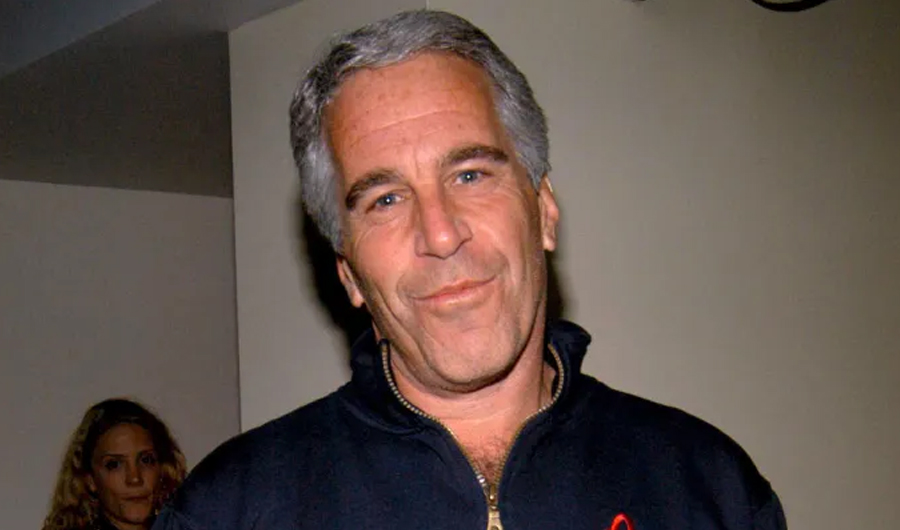
Michael Freeman suggests Epstein was strangled based on autopsy photos
Translated by Alqyas from Sarmad — Original source
American forensic expert Michael Freeman suggested that billionaire Jeffrey Epstein may have been strangled in his cell in 2019, based on a new analysis of autopsy images that challenges the official narrative of his suicide.
The New York Times reported that Freeman spent a year studying the autopsy file he obtained from Mark Epstein, the victim’s brother, and presented his findings on Monday, November 16, during a lecture at London’s Middle Temple legal society.
Freeman stated that the mark on Epstein’s neck did not resemble typical hanging injuries, appearing instead as deep, irregular, and branching in a Y-shape, rather than the oblique, continuous line characteristic of hanging cases. He added, “The pattern, distribution, and multiplicity of the injuries cannot be explained by suicidal hanging.”
The expert relied on three-dimensional computer models that reconstructed the body’s position, based on autopsy images and testimony from the prison employee who discovered the body. He concluded that the injuries were more consistent with Epstein being strangled from behind.
He pointed to scratch-like marks resembling fingernail scratches above the ligature site, a scrape below the neck, and fresh, deep bleeding in the left shoulder muscle, suggesting physical resistance during the assault. He criticized the failure to examine Epstein’s fingernails for traces of DNA.
In an interview with CBS News published on Monday, Freeman said that a knotted cloth cord visible in cell surveillance footage could explain the nature of the injuries, noting that it had not been sent to the medical examiner for examination.
In response, the New York City Chief Medical Examiner’s office reaffirmed its conclusion that Epstein’s death was a suicide. Dr. Christine Roman, who performed the autopsy, stated there were no signs of resistance or bruises indicating assault.
Multiple federal investigations have also failed to find evidence implicating another person in Epstein’s death. He was found dead on August 10, 2019, while in custody awaiting trial on sex trafficking charges.
Experts who reviewed some of the autopsy images acknowledged that the neck marks were atypical, but maintained that the images alone were insufficient to determine the cause of death.
Freeman collaborated on the study with forensic scientist Anders Eriksson and cognitive neuroscientist Itiel Dror, and the results have not yet been published in a peer-reviewed scientific journal.
The lecture was originally scheduled at University College London before being moved to Middle Temple after it was canceled due to concerns about student safety and well-being. Mark Epstein released the autopsy images prior to the lecture to make them publicly available.
Freeman emphasized that he does not know who may have killed Epstein and that his goal is to expose flaws in the investigation, not to identify a suspect.
