"Red Crescent": Proactive Readiness and Capacity Building Enhance Disaster Response Efficiency
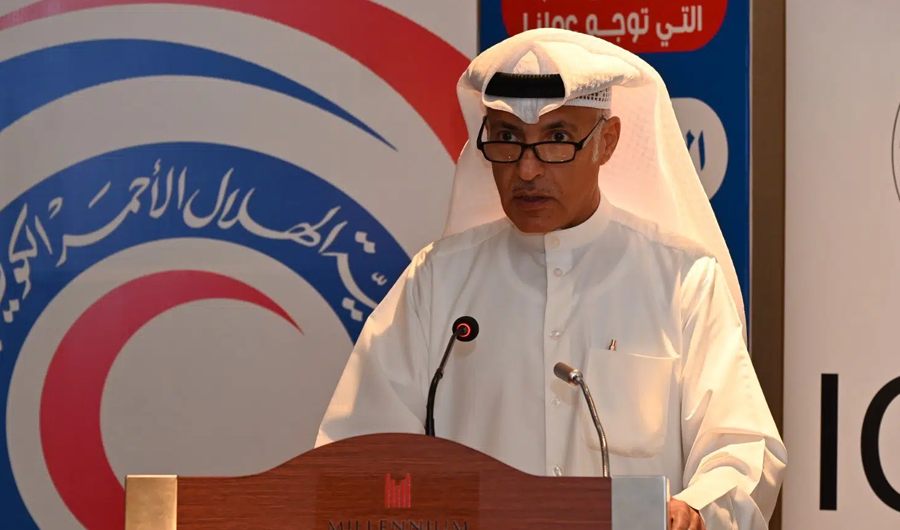
The Kuwait Red Crescent Society and the International Committee of the Red Cross organize a workshop on disaster preparedness
Translated by Alqyas from Sarmad — Original source
The Kuwait Red Crescent Society (KRCS) confirmed on Monday that advance preparedness, effective planning, and human capacity building are fundamental pillars for mitigating disaster risks, enhancing the efficiency of crisis and emergency response, and protecting lives and property.
Yousef Al-Zubaidi, a member of the society’s board of directors, told the Kuwait News Agency (KUNA) during the opening of a workshop titled “Preparedness and Disaster Management for Effective Response,” organized by the KRCS in collaboration with the International Committee of the Red Cross (ICRC), that humanitarian response does not begin when a disaster strikes, but is preceded by stages of planning, training, and readiness-raising to ensure swift handling of its repercussions.
Al-Zubaidi added that since its establishment, the society has played a national and humanitarian role in responding to crises and disasters within Kuwait and abroad, through implementing relief operations, providing basic necessities to those affected, and supporting shelter and humanitarian care efforts in cooperation with national societies and relief organizations.
He clarified that the society places great emphasis on qualifying its staff and volunteers and developing their field capabilities, considering human resources the cornerstone of the humanitarian response system. He stressed that training and the exchange of expertise enhance teams’ ability to handle exceptional circumstances and make appropriate decisions.
He noted that the three-day workshop covers specialized topics, including the basic principles of preparedness and disaster management, safe access, and the protection of workers and volunteers during humanitarian missions, alongside international humanitarian law, risks associated with severe weather phenomena, and mechanisms for managing shelters and accommodation centers.
Al-Zubaidi appreciated the cooperation with the ICRC and the participation of experts and specialists, particularly from the Public Authority for Civil Aviation, emphasizing that the exchange of experiences and international practices enhances integration between humanitarian institutions and technical entities, raising the level of coordination and readiness to face emergencies.
He stressed the importance of leveraging the workshop’s outcomes to consolidate a culture of preventive work and advance planning, and to develop the capabilities of field teams, thereby supporting the construction of a more efficient and effective humanitarian response system in the face of disasters and crises.
For his part, Hassan Idris, Director of the Cooperation Department at the ICRC, told KUNA that the committee’s participation in organizing the workshop is part of its cooperation with the Kuwait Red Crescent Society to exchange technical expertise and enhance the readiness of humanitarian personnel to deal with disasters and emergency situations.
Idris added that the committee contributes to delivering several training modules covering the understanding of disaster management, initial assessment of emergency needs, and aid distribution mechanisms, thereby enhancing the capacity of response teams to handle various humanitarian situations.
He explained that field assessment represents a crucial step in identifying urgent needs, monitoring the conditions of those affected, and directing aid to the most vulnerable groups according to humanitarian priorities, ensuring optimal use of available resources.
He further stated that training in these aspects would contribute to developing the skills of workers and volunteers, empowering them to make appropriate decisions during crises, and dealing with field changes efficiently and swiftly.
Idris praised the efforts of the Kuwait Red Crescent Society in responding to crises and disasters within Kuwait and abroad, commending its commitment to qualifying its staff and volunteers and enhancing cooperation with relevant authorities.
He emphasized the importance of continuing partnerships and exchanging expertise among humanitarian organizations, which contributes to enhancing preparedness, improving response mechanisms, and delivering humanitarian aid to those affected more effectively.
