Iran Threatens to Target US Bases in Europe if Used to Attack It - Sarmad
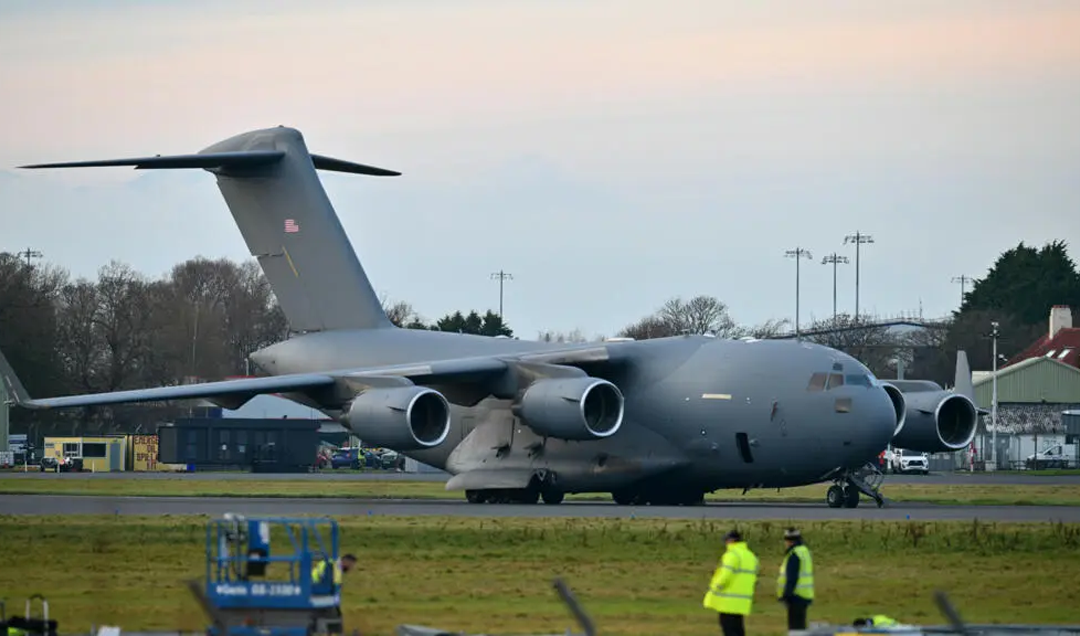
Iranian threats to target US bases outside the Middle East.
Translated by Qiyas from سرمد — Original source
(AFP) – Iran threatened on Wednesday to target US bases outside the Middle East if they are used to launch attacks against the Islamic Republic, despite Washington’s announcement the previous day that it saw no need for new strikes.
Over recent weeks, Washington and Israel have hinted at resuming large-scale strikes against the Islamic Republic, which has vowed that its response would have no “geographical restrictions.” However, US President Donald Trump has scaled back his threats in recent days, following his Republican Party’s defeat in the midterm elections, which he partly attributed to the war.
Mohsen Rezaei, secretary of Iran’s Supreme National Security Council, told Al-Mayadeen TV in an interview: “If US aircraft take off from a US military base, even if it is located in a European country or in another distant region, to bomb Iran, we will also target those bases.”
He warned that any response to new attacks would involve targeting “US military facilities far away geographically, including those we have not yet attacked... We may bomb some islands that they believe are beyond the range of our missiles.”
The war erupted with US-Israeli strikes on Iran on February 28. Tehran responded by launching missiles and drones toward countries across the region and by closing the vital Strait of Hormuz, a key artery for oil and gas supplies.
Hostilities have de-escalated in recent months. Despite the collapse of a memorandum of understanding signed between Washington and Tehran in June and occasional exchanges of strikes, large-scale combat operations have not resumed.
While Iranian responses during the war targeted Israel and US allies in the Middle East, Tehran has threatened to broaden the scope of its retaliation if escalation resumes.
Several countries have announced in recent weeks that they have detected Iranian threats.
US Treasury Secretary Scott Bessent moved from his home in Washington to reside at a military base “for his safety,” according to an official source familiar with the matter.
Bessent leads US efforts to “choke” the Iranian economy by tightening sanctions on the Islamic Republic. He is the third senior official in the Trump administration to relocate to military sites, according to reports, following Secretary of State Marco Rubio and Defense Secretary Pete Hegseth.
A Treasury Department spokesperson said Bessent “will not be deterred by threats from the Iranian regime” and will continue implementing measures that lead to the “collapse of the Iranian economy.”
Threats also targeted two military bases in Britain used by Washington, forcing the withdrawal of military aircraft from them.
The US military announced on Tuesday that it was taking “coordinated and appropriate” security measures, after the US Wall Street Journal reported that Washington had withdrawn refueling aircraft from RAF Mildenhall in eastern England following an Iranian threat.
Washington previously withdrew strategic bombers from a base in the UK, also amid suspicions of Iranian involvement in a plot.
On Tuesday, US authorities announced charges against three “Iranian agents” suspected of involvement in the Fairford plot.
Nuclear file off the table
US Secretary of State Marco Rubio said on Tuesday that his country currently sees no need for major military operations against Iran, describing the economic campaign against it as “devastatingly destructive.”
Meanwhile, diplomatic efforts led by Qatar and Pakistan continue to seek a settlement.
Since the outbreak of the war, Tehran has imposed strict restrictions on navigation in the Strait of Hormuz. In response, the United States imposed a naval blockade on Iranian ports and assisted oil tankers in transiting the strait.
Iran, through intermediaries, has proposed reopening the Strait of Hormuz within two days of reaching an agreement, contingent on Washington’s acceptance of its conditions: ending the war in the Middle East on all fronts, releasing frozen Iranian funds, lifting sanctions, and ending the naval blockade.
Razaei stressed that the nuclear file is “not currently” part of the discussions with Washington.
Tehran reiterated its refusal to “transfer, even a minimal amount, of enriched uranium material out of Iran.”
Israel and the United States have long accused Iran of seeking to develop a nuclear weapon, allegations that Tehran consistently denies while simultaneously emphasizing its right to possess this technology for peaceful purposes.
On Friday, the U.S. military announced a reward of up to $20 million for information regarding this program.
Iranian Foreign Minister Abbas Araghchi condemned the reward on Wednesday, describing the move as “disgusting and regrettable.”
On Wednesday, the Iranian Navy announced that a fire broke out on an oil tanker in the strait, where Tehran targets vessels attempting to cross the waterway without its permission.
