Health Ministry: Committed to Enhancing Arab Cooperation to Develop National Workforce - Sarmad
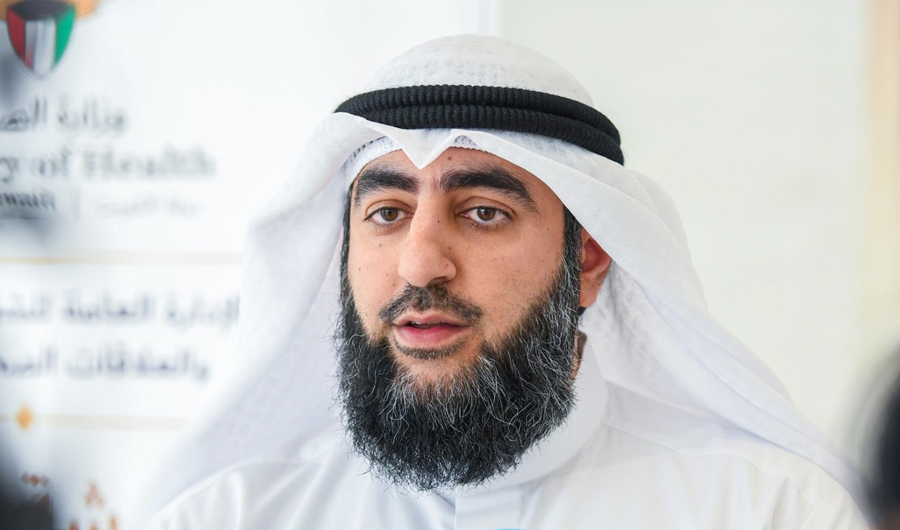
Assistant Undersecretary of the Ministry of Health, Dr. Hisham Kalander, emphasized Kuwait's commitment to enhancing Arab cooperation and adopting the latest AI applications to develop national health workforce during his participation in the Second Arab Conference in Cairo.
Translated by Qiyas from سرمد — Original source
Dr. Hisham Kalander, Assistant Undersecretary for Foreign Health Services at the Ministry of Health, affirmed Kuwait’s commitment to strengthening Arab cooperation and adopting the latest artificial intelligence applications and competency-based medical education to develop national cadres.
Kalander made these remarks during his participation in the “Second Arab Conference on the Role of Migrant Arab Health Professionals in Supporting Health Systems in Arab Countries,” which kicked off on Wednesday at the headquarters of the Arab League.
He expressed his pride in taking part in the Second Arab Conference in Cairo, emphasizing that migrant Arab health professionals “represent an invaluable scientific and professional asset.”
He noted that this forum serves as a strategic platform for building effective bridges of communication with medical minds abroad and translating their expertise into actionable programs that support our health systems.
He highlighted the importance of the conference’s outcomes in bridging the gap between planning and implementation, and in opening sustainable pathways to leverage the skills of migrant professionals to support scientific research and training.
He thanked the Arab Republic of Egypt and the Arab League for their excellent organization, expressing his hope that the sessions would yield practical recommendations that enhance the quality of healthcare across the Arab world.
The conference aims to explore ways to harness the scientific and professional expertise of migrant Arab health professionals to support and develop health systems in Arab countries, strengthen Arab cooperation to address challenges facing the health sector, and establish practical mechanisms for utilizing medical expertise abroad.
It seeks to enhance partnerships between Arab health institutions and medical professionals working overseas, and to open new horizons for leveraging their expertise to elevate healthcare services and develop training and qualification programs.
