Kuwait Showcases Its AI Experience in Developing Healthcare Before the Arab Ministers of Health Council - Sarmad
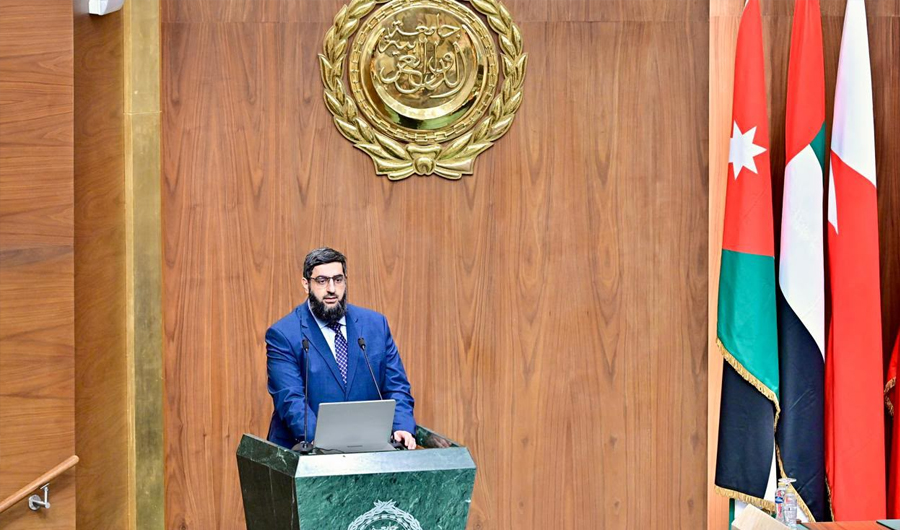
Assistant Undersecretary of Health Dr. Hisham Kalander presents Kuwait's experience in developing digital healthcare and artificial intelligence before the Arab Ministers of Health Council
Translated by Qiyas from سرمد — Original source
Kuwait showcased its experience in developing a digital healthcare system by leveraging artificial intelligence and launching smart applications that enable citizens to complete their health-related transactions, access their medical records, and monitor their treatment needs both within and outside the country.
This presentation was delivered by Dr. Hisham Kalander, Assistant Undersecretary for External Health Services at the Ministry of Health, during the 65th session of the Arab Ministers of Health Council, held today, Tuesday, at the headquarters of the Arab League.
The presentation covered three main pillars: digital empowerment of healthcare service beneficiaries, enhancing the use of artificial intelligence in the healthcare sector, and external health services through the Virtual Health Office.
Regarding digital empowerment, Dr. Kalander presented the "Salim" application as an interactive platform for beneficiaries that consolidates healthcare services in one place and provides a medical record linked to all Ministry of Health systems. It also offers approximately 100 electronic services, including electronic payment and the aggregation of data from eight separate systems covering hospital appointments, outpatient clinics, primary healthcare, and radiology.
On the topic of healthcare artificial intelligence, Dr. Kalander highlighted several existing initiatives, including "Salim Bot," an intelligent health assistant that helps users understand and analyze their health information, while emphasizing that it does not replace a doctor's consultation.
He added that these initiatives also include the "Rapid AI" system, which uses artificial intelligence to assist in diagnosing ischemic strokes through non-contrast CT scans, as well as the use of AI techniques in colonoscopy for the immediate detection of tissue abnormalities. These latter applications are currently undergoing advanced testing and clinical evaluation in Kuwait.
He also pointed to the use of the medical version of ChatGPT to help users access, communicate about, summarize, and translate their health records, as well as clarify prescriptions, medications, usage methods, and provide health guidance and advice. He stressed that these services are intended for awareness and information purposes and do not replace consultations with doctors or pharmacists.
In the area of external health services, Dr. Kalander presented the experience of the Virtual Health Office for emergency cases, which aims to provide more efficient and sustainable services for Kuwaiti citizens abroad, addressing challenges related to time zone differences, geographical distance, multiple healthcare providers, and the need for rapid decision-making.
He explained that the office relies on transmitting information to relevant authorities, organizing correspondence and follow-ups, and coordinating roles among the patient, their companion, the treating hospital, Ministry of Health authorities, and embassies and diplomatic missions.
He noted that the service development process began with the formation of a technical committee in October 2023, followed by a pilot launch in March 2024, the official announcement of the service launch in September of the same year, the start of digital transformation in December 2025, and the eventual rollout of the emergency cases platform in November 2026.
He mentioned that statistics on "medical evacuations" between 2020 and 2025 showed the transport of more than 350 medical cases via "medical evacuation aircraft," and over 1,000 patients traveling to and from Kuwait accompanied by medical crews, involving more than 30 countries, operating 24/7 throughout the year.
He added that handling emergency cases and covering treatment costs for citizens abroad involved more than 50 countries over the past five years.
Kalandar emphasized that the virtual health office contributes to enhancing financial efficiency by reducing the need for additional external facilities and resources, accelerating decision-making by the central team, and improving service quality, governance, meticulous follow-up, and the timely provision of therapeutic requirements.
He pointed to quality and governance indicators, which include response time from the completion of a request to its resolution, the completion of follow-up, patient experience, and service cost.
In conclusion, Kalandar outlined future initiatives aimed at expanding access to healthcare services within Kuwait while maintaining care quality through virtual clinics and telemedicine, and strengthening electronic integration with healthcare institutions.
