Kuwait participates in ITU conference in Doha, chaired by Al-Omar - Sarmad
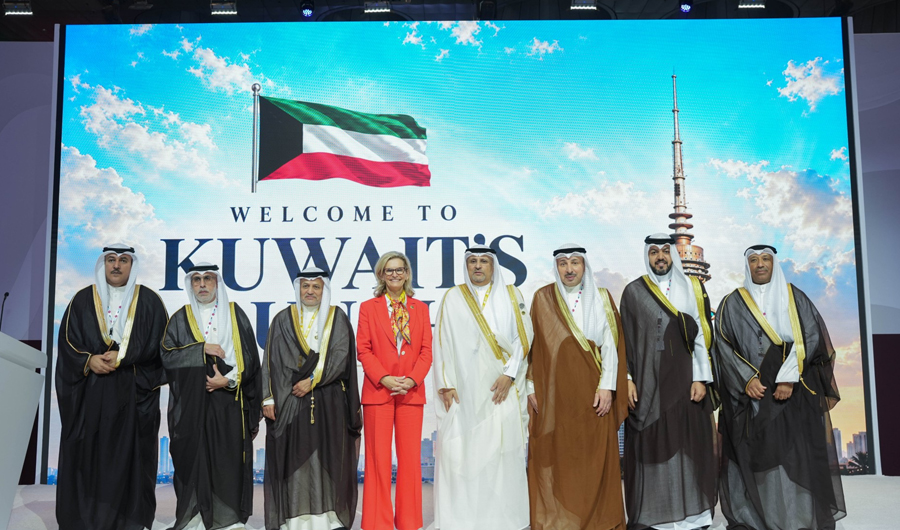
Prominent Kuwaiti participation in the ITU Plenipotentiary Conference in Doha to discuss digital policies
Translated by Qiyas from سرمد — Original source
A Kuwaiti delegation, led by the Minister of State for Communications and Information Technology Affairs and Acting Minister of Media and Culture, Omar Al-Omar, participated in the 2026 ITU Plenipotentiary Conference, which opened today, Monday, in the Qatari capital, Doha, and will continue until November 27.
The Kuwaiti delegation, attending the conference which serves as the highest policy-making body of the International Telecommunication Union (ITU), includes Kuwait’s Permanent Representative to the United Nations and other international organizations in Geneva, Ambassador Nasser Al-Hin; Kuwait’s Ambassador to Qatar, Ahmed Al-Sharim; Dr. Khaled Al-Zamil, Chairman of the Board of Directors of the Public Authority for Communications and Information Technology (PACIT); and Engineer Meshal Al-Zaid, Acting Deputy Minister of Transport.
In his opening address, Qatari Minister of Communications and Information Technology, Mohammed Al-Munaesi, emphasized that Qatar’s hosting of the conference reflects its commitment to supporting international cooperation and contributing to shaping the future of the communications and information technology sector, while enhancing opportunities for universal, inclusive, and sustainable digital connectivity for all.
He noted that participating ministers held a meeting on the eve of the conference’s launch, during which they issued the Doha Ministerial Declaration, conveying a shared message that digital connectivity should provide real opportunities for everyone and contribute to building a more inclusive and sustainable digital future.
He clarified that the ITU has, for over a century and a half, brought the world’s nations together around a common goal of enhancing cross-border communication and collaboration, and that the current conference continues this mission in an era where digital technology is present in all aspects of daily life.
He pointed out that the decisions issued by the conference will not be confined to meeting rooms but will directly impact the lives of individuals and communities, including students who lack network access, communities still lacking telecommunications services, and entrepreneurs awaiting opportunities to access the internet.
He stressed that the path forward still requires more effort, given that more than two billion people worldwide remain offline, alongside a large number of users who are still unable to fully benefit from the potential and advantages of digital connectivity.
He emphasized that the shared goal is to bridge the digital divide and ensure that connectivity delivers tangible and real benefits to people everywhere, noting that the rapid advancement of artificial intelligence technologies presents new challenges requiring collective action.
He also noted that digital infrastructure has become a fundamental necessity for every individual, as essential services, economies, education, and healthcare depend on it. He affirmed that building secure, resilient, and inclusive digital infrastructure is a shared responsibility that cannot be delayed.
The Qatari Minister expressed his hope that the conference’s deliberations and decisions would enhance international cooperation and build an interconnected digital future that offers broader opportunities for all.
For her part, ITU Secretary-General Doreen Bogdan-Martin praised Qatar’s experience in digital transformation, affirming that Qatar represents a model of what can be achieved through sustained commitment to digital development that places human beings at the core of its priorities.
She stated that 99 percent of Qatar’s population is connected to the internet, thanks to the widespread deployment of fiber optic networks and advanced mobile telecommunications networks, alongside the state’s support for the digital development journey.
She emphasized that the world is witnessing an exceptional stage of digital progress, driven by the growing reliance on technology across various sectors, economies, and public services, stressing the importance of strengthening international cooperation to ensure a connected, secure, and inclusive digital future.
She noted that the conference is being held at a time when the pace of digital transformation is accelerating, fueled by the ongoing development of artificial intelligence technologies. However, countries are entering this phase from varying levels of readiness and capacity, underscoring the need for joint efforts to ensure that everyone benefits from the opportunities offered by technology.
The Plenipotentiary Conference is the highest policy-making body of the International Telecommunication Union (ITU), responsible for setting its strategic direction, approving its plans, and electing its leadership.
The 2026 Plenipotentiary Conference includes several key milestones, foremost among them the elections to fill senior leadership positions within the ITU, scheduled to begin on November 12. Member states will elect the Secretary-General, Deputy Secretary-General, and Directors of the Radiocommunication, Telecommunication Standardization, and Telecommunication Development Bureaus.
Following the election of senior leadership, the Conference will vote to elect the 12 members of the ITU Radio Regulations Board, which is responsible for implementing and interpreting the Radio Regulations, the international treaty governing the use of the radio frequency spectrum.
The Conference will also elect 48 countries to serve on the ITU Council, which manages the Union’s operations and oversees its work during intervals between Plenipotentiary Conferences.
