Moroccan Adnan Rhamal wins UNESCO Life Sciences Award for research on antibiotic resistance
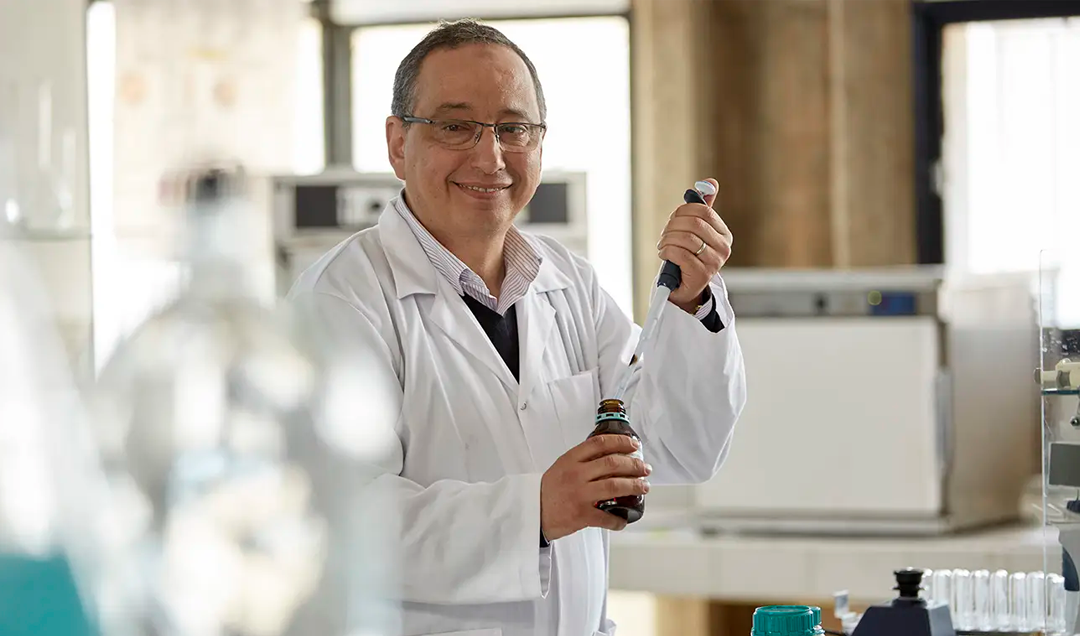
Moroccan scientist Adnan Rhamal received the 2026 UNESCO-Equatorial Guinea International Prize for Research in the Life Sciences in recognition of his work on combating antimicrobial resistance and developing a new drug.
Translated by Alqyas from Sarmad — Original source
When antibiotics lose their effectiveness against bacteria, can a plant-based compound enhance the efficacy of a drug already used by doctors? This question led Moroccan scientist Adnan Rimal, a professor at Sidi Mohamed Ben Abdellah University in Fez, to develop a medication that is manufactured and used in Morocco.
On the evening of Friday, November 6, Rimal received the UNESCO-Equatorial Guinea International Prize for Research in the Life Sciences for 2026 in Paris, in recognition of his research on combating antimicrobial resistance, according to CNBC Arabic.
Rimal shared the prize, which has a total value of $300,000 in its tenth edition, with Chinese neuroscientist Nancy Youyou Ip, whose research contributed to the development of blood tests for the early detection of Alzheimer’s disease, and Spanish researcher Carlos Martin Montañes, who contributed to the development of a tuberculosis vaccine that reached Phase III clinical trials, according to UNESCO.
From a Fez laboratory to a drug manufactured in Morocco
Rimal’s scientific journey combines pharmacology with the study of the bacteria targeted by the drug. After earning his PhD in molecular pharmacology from Paris-Sud University (University of Paris XI) in 1987, he returned to Morocco and obtained a second doctorate in microbiology from the University of Fez in 1994.
In 2017, he won the Public Prize at the European Inventor Award for his research on enhancing the efficacy of antibiotics using components from essential oils, according to his university and the European Patent Office.
The idea took shape as a drug named “Olipen” (OLIPEN). Rimal added “cineole,” a compound found in plant essential oils, to a well-known formulation combining the antibiotic amoxicillin and clavulanic acid.
The Moroccan authorities approved the new formulation in 2021, according to a study published in the journal *Frontiers in Pharmacology*.
The Moroccan company “Sotima” is responsible for manufacturing and distributing the drug, according to the University of Fez.
What do the data from 936 patients reveal?
The study, published in May 2025 with support from “Sotima,” followed 936 adult patients in Morocco who received “Olipen” to treat lower respiratory tract infections.
Researchers recorded clinical recovery in 94.9% of participants, treatment failure in 2.8%, and inconclusive results in 2.3%.
These figures describe what happened to patients in clinics, but the extent of the benefit added by cineole remains an open question, as the study did not include a control group receiving the traditional formulation without it.
Furthermore, the recovery rate applies specifically to patients with respiratory tract infections included in the follow-up and cannot be generalized to cases of multidrug-resistant infections.
Why did the honor include research on livestock?
UNESCO highlighted another aspect of Rimal’s work in its citation: in human medicine, the researcher sought to enhance the efficacy of an existing antibiotic.
In livestock farming, he developed natural feed additives aimed at reducing the use of antibiotics.
According to his university, Rimal co-founded a Moroccan veterinary laboratory in 2016 that manufactures and distributes these alternatives.
Data from the World Health Organization illustrate the scale of the problem that gives Rimal’s research its importance: the WHO estimated in its 2025 report that one in six confirmed common bacterial infections worldwide in 2023 showed resistance to antibiotic treatment.
In the Eastern Mediterranean region, the estimate was approximately one in three reported cases.
