"Insha'Allah" and "Alhamdulillah" Spark Widespread Debate After Senator Abdulrahman Al-Sayed's Victory - Sarmad
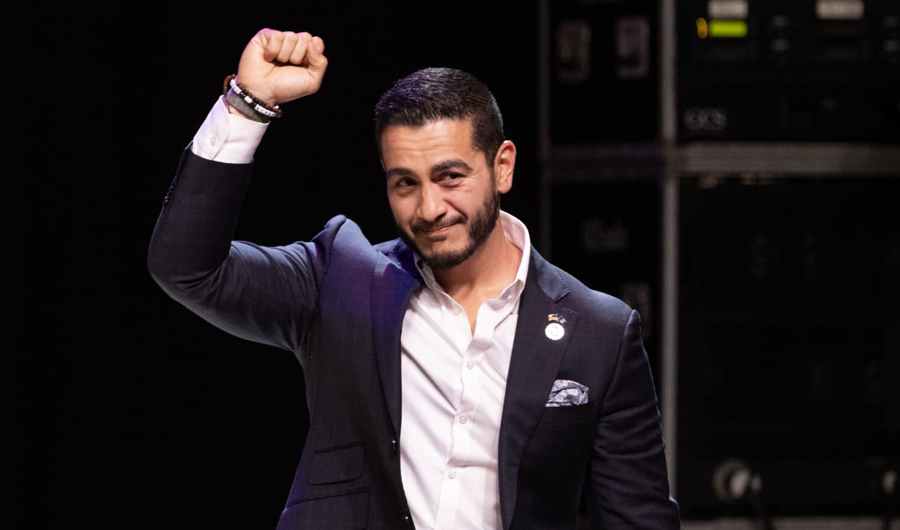
Senator Abdulrahman Al-Sayed's victory sparked debate over religious victory phrases and identity
Translated by Qiyas from سرمد — Original source
The British newspaper The Telegraph reported that Muslim Senator Abdul Rahman El-Sayed’s victory speech sparked outrage among conservatives and reignited debates over identity and religion.
The newspaper stated that El-Sayed, who defeated Republican Mike Rogers in Michigan, chose to celebrate his victory using Arabic phrases with religious invocations (“Insha’Allah” – God willing, and “Alhamdulillah” – Praise be to God) following an election campaign in which he was accused of sympathizing with extremist groups and belonging to the Muslim Brotherhood, allegations he denied and which lacked evidentiary support.
Addressing his supporters on Wednesday morning, El-Sayed said, “You may have noticed that I always said ‘Insha’Allah’ whenever we discussed the outcome of these elections, but tonight we can replace ‘Insha’Allah’ with ‘Alhamdulillah.’”
The newspaper suggested that his use of Arabic appeared to be a message directed at his political opponents, while Joel Pollak, opinion editor at the California Post, criticized the speech’s opening, which featured a religiously toned message aimed at his Muslim supporters.
El-Sayed’s victory came despite the previous Democratic primary candidate, Haley Stevens, endorsing Republican candidate Rogers on the eve of the election.
Reuters confirmed that the 42-year-old El-Sayed retained the seat for Democrats following the retirement of Senator Gary Peters, and that his campaign platform focused on reducing the cost of living, expanding health insurance coverage, and limiting corporate influence in politics.
The Telegraph observed that Democrats, who have taken control of both the House and Senate, risk turning their victories into cultural confrontations that could provide the pro-Trump MAGA movement with an opportunity to revive its traditional rhetoric.
It cited comments by Democratic Representative Rashida Tlaib, who declared that “diversity, equity, and inclusion” policies had returned to the forefront, praising the election of the first Muslim senator and the first openly gay senator, alongside electoral successes by candidates from other minority groups.
The newspaper highlighted the Democratic victory of James Tallarico in the Texas Senate race against Republican Ken Paxton, and Amy Acton’s win over Vivek Ramaswamy in the Ohio gubernatorial election, as examples of candidates who did not center their campaigns on cultural conflicts.
It also quoted commentator Mehdi Hasan expressing joy over El-Sayed’s victory and attacking Donald Trump, Elon Musk, and JD Vance, while noting a heated exchange between the elected senator and Sky News reporter James Matthews.
The Telegraph concluded that Democrats face a political test ahead of the 2028 elections, warning that a return to the identity battles that characterized their previous campaigns could undermine the gains they achieved in the 2026 elections.
