End-of-the-world obsession sweeps the internet amid wave of predictions of societal collapse - Sarmad
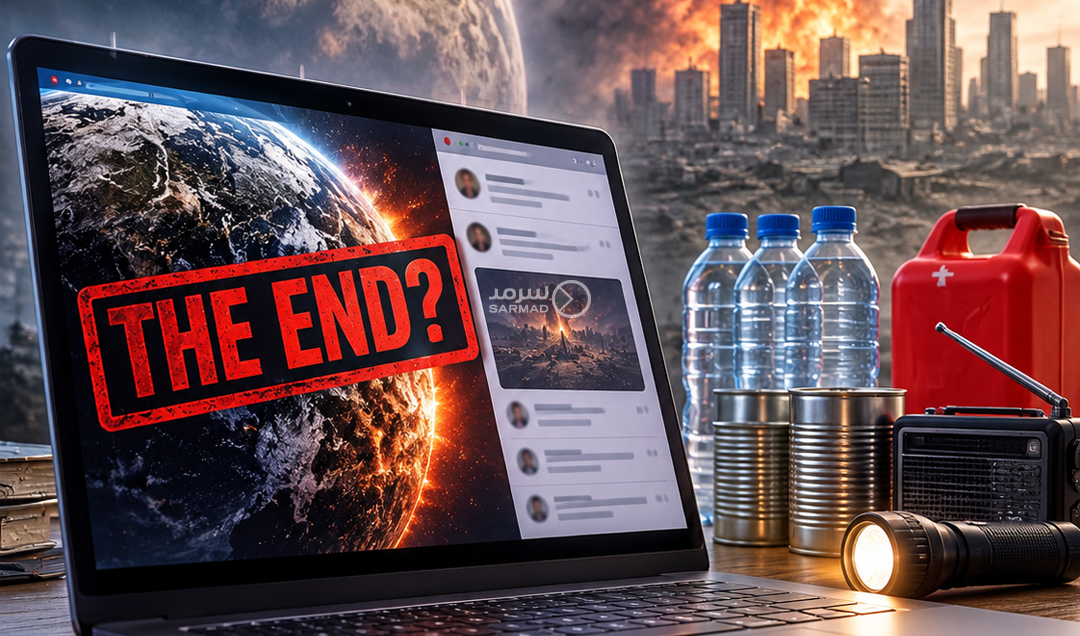
Axios report analyzes end-of-the-world obsession and Carlson's political escalation, citing Michael Mills' concerns
Translated by Qiyas from سرمد — Original source
The end of the world has become an obsession among social media users, amid a wave of predictions of societal collapse and calls to stockpile food, water, fuel, and generators in anticipation of an impending disaster.
The American website Axios, in a report by journalist Josephine Walker, notes that the escalation of this rhetoric reflects widespread anxiety about the future, fueled by several factors including wars, geopolitical tensions, climate change, and the rapid advancement of technology.
The report follows the publication of a lengthy post by conservative commentator Tucker Carlson, in which he claimed that Israeli Prime Minister Benjamin Netanyahu is pressuring U.S. President Donald Trump to resume attacks on Iran after the midterm elections, an escalation that could reach the use of nuclear weapons, according to his assessment.
The post garnered more than 15 million views within a short time of its publication, reflecting the scale of fears and the broad political and public resonance generated by the commentator’s statements.
Multifaceted Anxiety
Axios quotes Michael Mills, a researcher at Kent University and a specialist in disaster preparedness studies for over a decade, noting that today’s concerns differ from those that dominated during the Cold War, when anxiety focused on the possibility of a nuclear war.
The modern mindset reflects “multifaceted anxiety about a general state of uncertainty,” according to the researcher, with fears distributed among terrorism, climate disasters, international wars, and emerging technologies.
In this context, the report highlights warnings issued by several governments, alongside calls spread on social media urging people to stockpile food, water, and basic necessities in preparation for the worst.
It is worth noting that the British government urged its citizens on October 22 to keep a three-day supply, a move aimed at enhancing the population’s ability to cope with exceptional circumstances, not to incite panic or warn of an imminent war, according to the government.
Confusion and Doubt
According to the report, the causes of anxiety are not limited to politics and wars but extend to economic pressures, such as inflation, rising healthcare costs, declining savings, and the difficulty of homeownership, along with fears that artificial intelligence could lead to job losses, facilitate cyberattacks, or contribute to the development of serious diseases.
Mills believes that election seasons exacerbate these fears, as political competition makes segments of the public feel that the entire future of the country is at stake, referring to the U.S. midterm elections.
In conclusion, the researcher says that no one knows the nature of the next crisis or whether it will occur at all, but keeping supplies for a few days may give people a greater sense of security.
