Deputy Minister of Health: Necessity of integrating specialties and modern technologies in obesity treatment - Sarmad
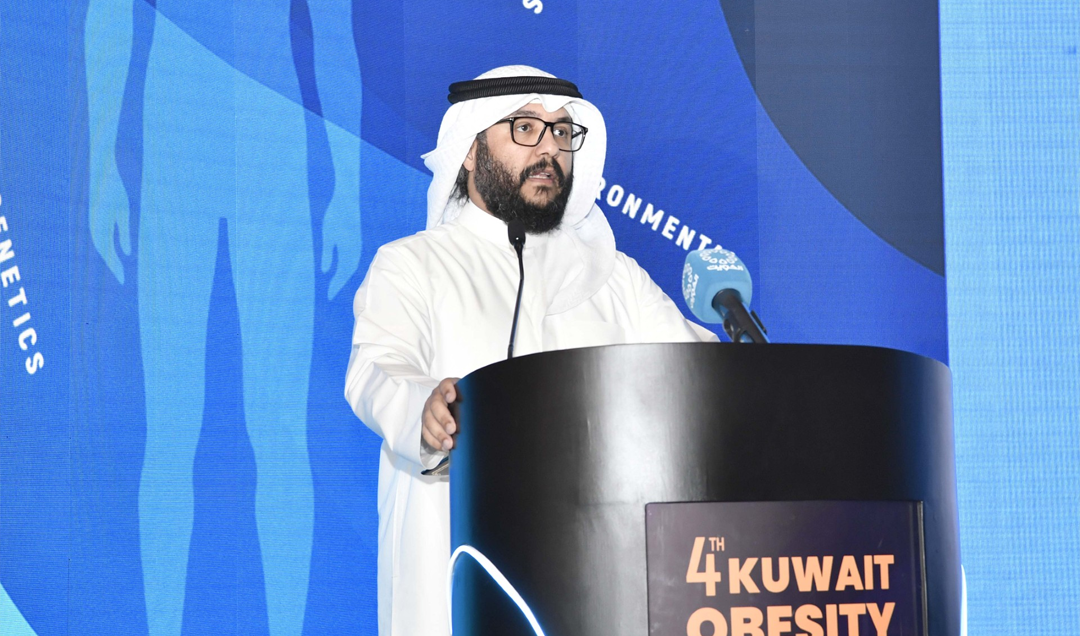
The Deputy Minister of Health emphasized the importance of integrating technologies and medical specialties in treating obesity
Translated by Qiyas from سرمد — Original source
(KUNA) – Kuwait’s Undersecretary of Health, Sheikh Dr. Salman Khalifa Al-Sabah, stressed on Monday the importance of leveraging the latest medical technologies and modern pharmacological treatments to achieve the highest safety standards in obesity care, noting that the obesity treatment pathway is based on a comprehensive plan that goes beyond surgical intervention.
These remarks were made by the Undersecretary during his speech at the opening of the Fourth Kuwait Obesity Conference, under the theme “Recent Medical and Surgical Advances in Obesity Treatment,” which is scheduled to last two days. The event is attended by a select group of surgeons, physicians, nutritionists, mental health specialists, and family medicine experts from within Kuwait and abroad.
Sheikh Dr. Salman Al-Sabah clarified that the obesity treatment pathway does not begin in the operating room, nor does it end with discharge from it. Rather, it starts with a precise and comprehensive assessment of the patient’s condition, leading to the selection of the most appropriate treatment and long-term follow-up.
He pointed out that bariatric surgery represents a vital and suitable option for those whose health conditions warrant it, while noting that modern pharmacological treatments, particularly those based on the GLP-1 pathway, have added new options to a comprehensive plan that integrates follow-up care, nutrition, and physical activity. The ultimate measure of success remains patient safety and sustained improvement.
He noted that estimates by the World Health Organization highlight the scale of shared responsibility, as one in seven people worldwide lives with obesity, with approximately 940 million adults affected, representing nearly 16 percent of the global adult population.
Undersecretary Al-Sabah expressed his appreciation to the conference chairman, the organizing committees, and the staff responsible for the event for their efforts in organizing this scientific forum, which discusses recent medical and surgical advances, training on modern bariatric staplers, the safe use of medications, and dialogue on the standards and regulations governing bariatric surgeries and prescription treatments.
For his part, Conference Chairman Dr. Shihab Kurof, in a similar address, stated that obesity treatment is a shared responsibility involving the integration of various medical specialties, including nutrition, internal medicine, family medicine, and mental health, alongside surgery.
He explained that the Nutrition and Feeding Department has a monitoring program through which an annual report indicates that approximately 75 percent of Kuwait’s population suffers from overweight and obesity (30 percent among men and 35 percent among women).
Dr. Kurof proposed launching a national campaign via the unified government electronic services application (Sahel) to collect height and weight indicators, accurately determine Body Mass Index (BMI), and map them geographically. This would contribute to redrawing the map of primary health centers and specialized clinics, thereby reducing expected future financial burdens.
Kurof praised the pioneering role of Undersecretary of Health Sheikh Dr. Salman Al-Sabah in establishing the first national registry for bariatric surgery cases in 2018, during his tenure as president of the Kuwait Surgical Society, which has since become a reference for scientific research and government hospitals.
