Kuwait: Committed to Enhancing International Cooperation in Peaceful Uses of Nuclear Energy - Sarmad
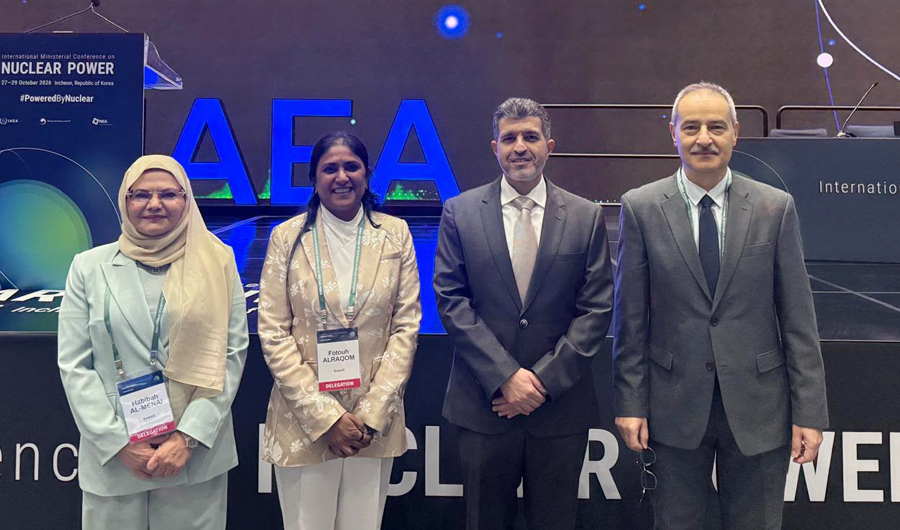
Dr. Faisal Al-Humaidan, Director General of the Kuwait Institute for Scientific Research, reaffirmed Kuwait's commitment to active participation in the International Atomic Energy Agency's work and enhancing international cooperation in the peaceful uses of nuclear energy during the...
Translated by Qiyas from سرمد — Original source
Dr. Faisal Al-Humaidan, Director General of the Kuwait Institute for Scientific Research (KISR), affirmed Kuwait’s commitment to active participation in the work of the International Atomic Energy Agency (IAEA) and to strengthening international cooperation in the peaceful uses of nuclear energy.
This statement was made in a speech delivered by Al-Humaidan at the 2026 International Nuclear Energy Ministerial Conference, held in Incheon, Republic of Korea, and running until tomorrow, Thursday, according to a statement issued by the Institute on Wednesday.
Al-Humaidan clarified that Kuwait’s participation in the conference coincides with its membership on the IAEA Board of Governors for the period 2026–2028, emphasizing the importance of enhancing international cooperation and exchanging information and expertise in this field.
He noted that the energy sector is witnessing rapid developments as countries strive to enhance energy security, meet growing demand, reduce emissions, and support sustainable development. He pointed out that each country has its own choices based on its needs, resources, and national priorities.
He highlighted the link between energy security and water security in Kuwait, explaining that the increasing demand for electricity and reliance on water desalination, which requires intensive energy consumption, underscore the importance of long-term planning for this sector.
He added that Kuwait is monitoring developments in nuclear energy technology, particularly small modular reactors and their potential applications in electricity generation and water desalination.
He affirmed that any future assessment of these technologies would be based on national needs, safety and security requirements, nuclear safeguards, economic viability, and sustainability.
Al-Humaidan pointed to Kuwait’s support for the pivotal role of the IAEA, through its contributions to the three phases of the program to develop the Agency’s laboratories in Seibersdorf, the Initiative on Peaceful Uses, and its Nuclear Fuel Bank.
He explained that the framework of the Fourth Country Programme for Technical Cooperation for the period 2026–2035, signed on September 15, 2025, defines priorities for technical cooperation with the Agency and guides efforts to transfer nuclear technology and build capacity to support national development goals.
He mentioned that Kuwaiti institutions are participating in IAEA-coordinated research projects in the fields of sustainable energy and hybrid energy systems that combine nuclear and renewable energy, contributing to building a scientific foundation for understanding and evaluating future energy options.
He noted that cooperation also covers areas such as health, water and food security, environmental monitoring, nuclear and radiation safety and security, national capacity building, and support for regional cooperation.
Al-Humaidan stressed the importance of countries possessing the necessary capabilities to understand and evaluate technology before making decisions on its adoption.
He expressed his gratitude to the Republic of Korea for hosting the conference, and to the IAEA and its Director General, Rafael Mariano Grossi, for their efforts in bringing member states together to discuss the future of nuclear energy and enhance international cooperation, while thanking Kuwaiti diplomatic missions in Vienna and Korea for coordinating and facilitating the delegation’s participation.
For her part, Dr. Fathoun Al-Rumaih, Acting Chief Executive Officer of the Energy and Building Research Center at the Institute, said in the statement that most participating countries called for assessing their energy needs and the peaceful uses of nuclear technologies, including in medicine and agriculture, within a vision encompassing the entire value chain, from waste management to safe decommissioning.
Al-Raqem added that this vision is based on enhancing transparency and complying with nuclear safety and security requirements and IAEA safeguards, emphasizing the importance of adopting a gradual approach to institution-building, developing legislation, oversight, governance, and entrenching a culture of safety and security.
She underscored the importance of developing competencies through long-term international partnerships, knowledge exchange, sustainable financing, and reliable supply chains, noting that building these capabilities requires years of sustained effort.
She clarified that technological progress does not replace the need for prevention, oversight, and emergency preparedness to mitigate accidents and their impacts, which may transcend national borders.
For her part, Dr. Habiba Al-Muneef, Kuwait’s National Contact Officer to the International Atomic Energy Agency (IAEA), emphasized the importance of leveraging technical cooperation programs and exchanging expertise and scientific knowledge to develop national competencies, and of harnessing peaceful nuclear technologies to serve vital sectors and support sustainable development.
Al-Muneef added that national efforts would continue to strengthen scientific and technical cooperation and expand opportunities for regional and international collaboration, in line with Kuwait’s developmental priorities and to enhance its contribution to the peaceful uses of nuclear energy.
