National Council for Culture Honors the Lady of the Gulf Screen, Haya Al-Fahad
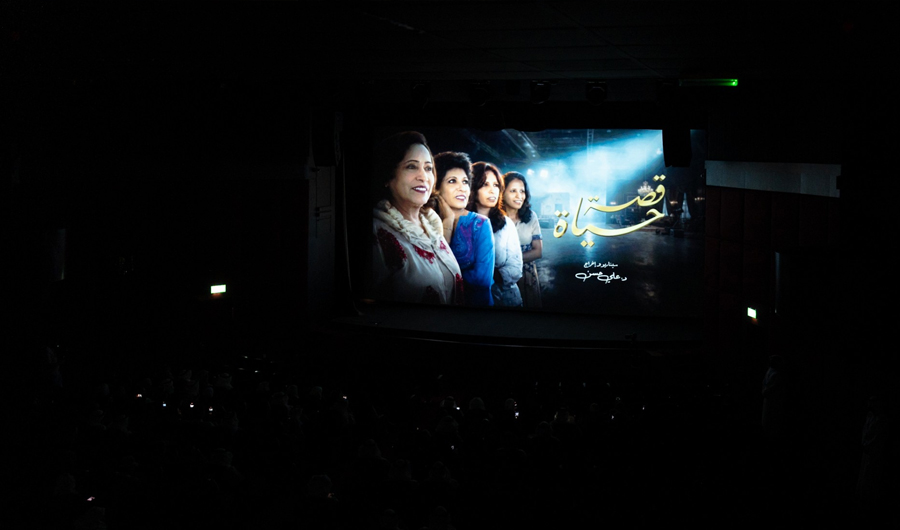
The National Council honors Haya Al-Fahad and reopens the Dasma Theater.
Translated by Qiyas from سرمد — Original source
(KUNA) — The National Council for Culture, Arts and Letters commemorated the anniversary of the late Kuwaiti artist Haya Al-Fahad, known as the “Lady of the Gulf Screen,” on Monday evening with the screening of the documentary “A Life Story.” The film recalls more than six decades of her artistic and humanitarian contributions, coinciding with the reopening of the Dasma Theater following comprehensive development and maintenance works.
The event featured the screening of the documentary, produced by the National Council under the patronage of its Secretary-General, Dr. Mohammed Al-Jassar, with general vision and supervision by the Assistant Secretary-General for Financial, Administrative, and Supporting Artistic Affairs, Muassad Al-Zamil. The film was directed by Dr. Ali Hassan and prepared by Badr Al-Jazzaf.
In a speech delivered at the event, Dr. Al-Jassar emphasized that honoring the late artist Haya Al-Fahad is an act of gratitude toward an artistic stature that left an indelible mark on the hearts of Kuwaiti and Gulf audiences. He noted that she contributed for decades to enriching the artistic movement and consolidating Kuwait’s status as a beacon of cultural and artistic creativity.
He stated that the late artist was not merely a performer who appeared on screens and stages, but a model of artistic commitment and a sincere voice that expressed society’s concerns and issues. She carried the message of purposeful art with utmost sincerity, touching the hearts of millions and leaving a creative legacy that will remain present in the memory of generations.
He clarified that the 50-minute documentary does not merely highlight the artistic and humanitarian milestones in the late artist’s life, but through her rich experience, offers a visual testimony to the emergence and development of Kuwaiti and Gulf art, as well as the artistic and cultural transformations it witnessed over the decades.
He added that the work retraces the artist’s journey from her early beginnings, through the challenges and successes that accompanied her career, drawing on testimonies from a select group of her colleagues, pioneers of the artistic movement, and archival materials documenting her most prominent works and contributions to shaping collective consciousness and reinforcing authentic values in society.
Dr. Al-Jassar pointed out that this commemoration coincides with an important cultural occasion: the reopening of the Dasma Theater, one of Kuwait’s most prestigious theatrical institutions, after completing comprehensive development and maintenance works for its facilities. This step reflects a commitment to preserving cultural infrastructure and enhancing the role of theaters in nurturing creativity and artists.
He praised the strategic partnership between the public and private sectors that contributed to the project’s completion, commending the efforts of the implementing company, Al-Salam Group One, in rehabilitating the theater and presenting it in a modern architectural and artistic style befitting its historical significance and role in the trajectory of Kuwait’s theatrical movement.
He affirmed that combining the honoring of one of the pioneers of Kuwaiti art with the reopening of the Dasma Theater embodies gratitude toward the symbols of the artistic movement and a commitment to safeguarding their cultural legacy, while simultaneously developing institutions and facilities that have historically served as incubators for talent and creativity.
For his part, Muassad Al-Zamil stated in his speech that the screening of the documentary “A Life Story” about the esteemed artist Haya Al-Fahad represents an act of gratitude and appreciation for her prolific career and the indelible mark she left on the hearts of Kuwaiti and Gulf audiences.
He described Haya Al-Fahad as a pillar of art in Kuwait and the Gulf, noting that the film captures a sense of love and loyalty toward this great artistic figure through testimonies from her contemporaries who accompanied her creative journey.
He added that pioneering artists have contributed immensely to the artistic and cultural movement, and no matter how much we honor and celebrate them, it will never be enough to do them justice. He expressed his gratitude and appreciation to the family of the late artist Haya Al-Fahad for their presence and cooperation in ensuring the success of this documentary project.
In a separate context, Al-Zamil clarified that the National Council for Culture, Arts and Letters has adopted a new strategy in recent years aimed at revitalizing theaters and enhancing the role of the private sector in operating and investing in cultural facilities, in collaboration with the Council’s Secretary-General, Dr. Mohammed Al-Jassar.
He noted that offering the Dasma Theater for investment represents a first-of-its-kind initiative for the National Council for Culture, Arts and Letters, with the Al-Salam Global Group, led by Dr. Abdulaziz Al-Muslem, winning the bid. Dr. Al-Muslem contributed to the theater’s rehabilitation and the development of its facilities to meet international standards.
The documentary “A Life Story” highlights the key milestones that shaped the presence of artist Haya Al-Hashem in Gulf drama, shedding light on the diversity of her experience in acting and writing, and the characters and artistic works she presented that have become embedded in the public’s memory across generations.
The film also combines personal testimonies from artists and critics who witnessed different stages of her career with archival materials documenting the evolution of her artistic journey, presenting a comprehensive human and artistic portrait of one of the most prominent figures who contributed to shaping the contours of Kuwaiti and Gulf drama.
The production of the film comes within the framework of the National Council for Culture, Arts and Letters’ efforts to document pioneering creative experiences, preserve Kuwait’s artistic heritage, highlight the contributions of its pioneers, and pass on their cultural and artistic legacy to future generations.
