Kuwait: UN Anniversary Coincides with Dangerous Developments in the Region - Sarmad
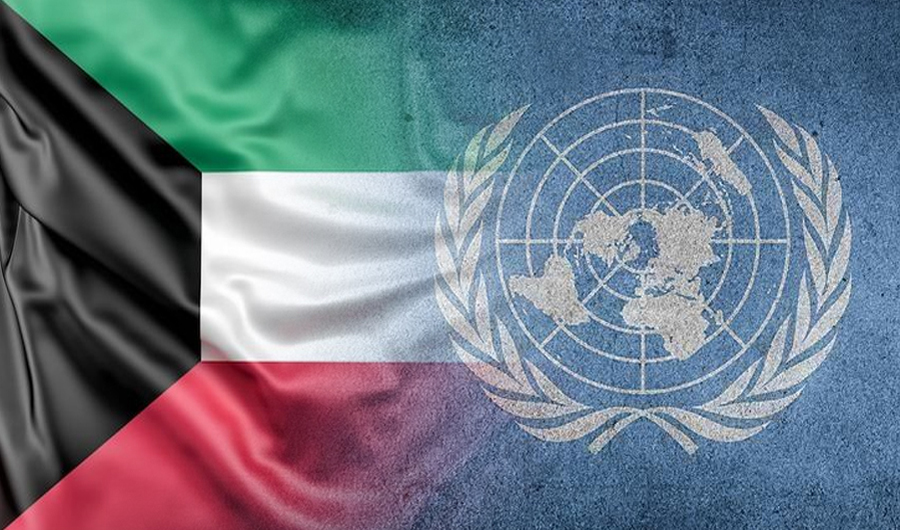
Kuwait's envoy calls for Security Council reform and Iran to stop attacks on the Gulf
Translated by Qiyas from سرمد — Original source
Kuwait confirmed on Saturday that this year’s anniversary of the founding of the United Nations coincides with dangerous developments in the Middle East, stressing that the Organization’s effectiveness is linked to its ability to apply its principles consistently and fairly, free from double standards.
This statement was made by Kuwait’s Permanent Representative to the United Nations, Ambassador Tariq Al-Banna, on the occasion of United Nations Day, observed annually on October 24, which this year coincides with the 81st anniversary of the establishment of the UN.
In this context, the Kuwaiti envoy called for the importance of continuing the reform of the United Nations, including the Security Council, to ensure more equitable and effective representation, and to enhance its capacity to respond to contemporary crises and challenges.
Ambassador Al-Banna emphasized that strengthening the role of the United Nations requires maintaining a balance among its pillars of work in the fields of peace and security, development, and human rights, and giving due attention to the priorities of developing countries.
He stressed that the effectiveness of the United Nations is linked to its ability to apply its principles consistently and fairly, without double standards, noting that the protection of civilians, respect for state sovereignty, and enforcement of international law are responsibilities that require clear positions and concrete measures, thereby enhancing public trust in the Organization.
He pointed out that this year’s UN anniversary comes amid dangerous developments in the Middle East that have cast a shadow on the security, stability, and prospects of the region’s peoples.
In this regard, he drew attention to the malicious Iranian attacks on Kuwait and sister states, which constituted a violation of their sovereignty and territorial integrity, targeted their security and civilian facilities, and represented a blatant violation of international law and the principles of the UN Charter.
Kuwait reiterated its condemnation of these attacks and its rejection of any excuses offered to justify them, affirming that respect for state sovereignty, safeguarding security, and protecting peoples are international obligations that allow for no selectivity or compromise.
He also stressed the importance of the full implementation of Security Council Resolution 2817 (2026), which calls on Iran to immediately and unconditionally cease all attacks and provocations against Gulf states and Jordan, and to fully comply with its international obligations.
He affirmed the necessity of the Council assuming its responsibilities to ensure compliance with its resolutions, halt attacks, and prevent their recurrence, thereby preserving peace and security in the region.
He expressed Kuwait’s commitment to continuing support for diplomatic efforts aimed at de-escalation and resolving conflicts through peaceful means, based on the conviction that regional stability requires respect for the principles of good neighborliness, non-interference in the internal affairs of states, and refraining from the use or threat of force.
He called for translating these commitments into practical actions that build trust and lay the foundation for relations based on mutual respect.
On the Palestinian issue, Ambassador Al-Banna stressed that the Palestinian cause remains at the forefront of Kuwait’s concerns, stemming from its principled and steadfast position supporting the inalienable rights of the Palestinian people, foremost among which is their right to self-determination and the establishment of an independent state on the borders of June 4, 1967, with East Jerusalem as its capital.
He emphasized the need to put an end to the suffering of the Palestinian people, protect civilians, reject forced displacement, and ensure the safe, sustainable, and unhindered delivery of humanitarian aid, while continuing to support the United Nations Relief and Works Agency for Palestine Refugees in the Near East (UNRWA) to enable it to carry out its mandate.
Ambassador Al-Bunai reaffirmed Kuwait’s belief in the pivotal role of the United Nations as the overarching framework for addressing shared challenges, and its firm commitment to supporting the Organization’s efforts and enabling it to fulfill its responsibilities.
He stressed that Kuwait’s foreign policy, since its accession to the United Nations in 1963, has been based on respecting the sovereignty of states, non-interference in their internal affairs, settling disputes by peaceful means, and building bridges of cooperation and dialogue among countries and peoples.
He expressed the country’s pride in its steadfast partnership with the United Nations and its specialized agencies, as well as its contributions to supporting humanitarian and development work and aiding peoples affected by conflicts and disasters.
He emphasized that Kuwait will continue to support efforts aimed at alleviating suffering, enhancing resilience, and achieving the Sustainable Development Goals, thereby contributing to the building of more secure and stable societies.
Ambassador Al-Bunai reiterated Kuwait’s commitment to continuing work with member states to promote multilateralism and defend the purposes and principles of the UN Charter, noting that fulfilling the Organization’s mission is a shared responsibility that requires genuine political will and collective action to translate principles into reality, safeguarding state sovereignty and preserving human dignity.
United Nations Day, observed annually on October 24, commemorates the entry into force of its Charter in 1945. Kuwait joined the Organization on May 14, 1963, becoming its 111th member.
