Al-Faleh: Necessity of rationalizing water consumption for sustainability of agricultural and greening projects - Sarmad
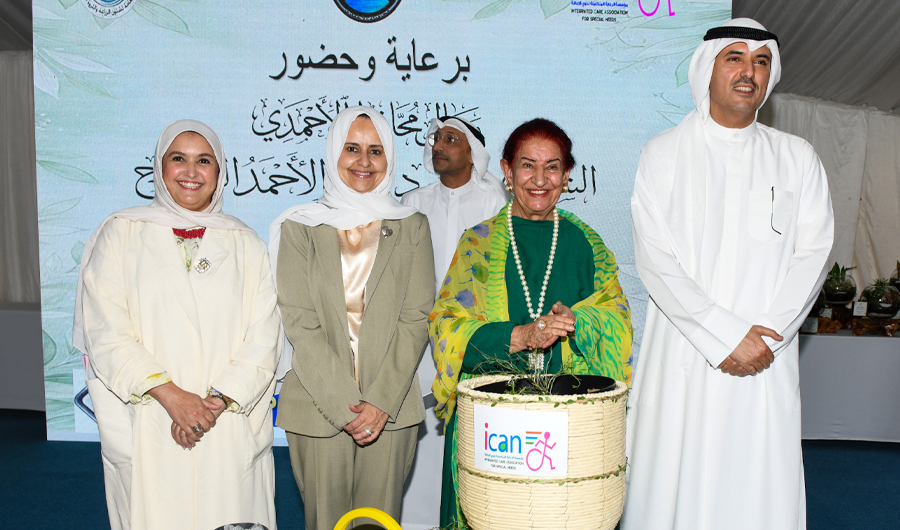
Al-Faleh and Sheikh Hamad Jaber Al-Sabah praise the role of people with disabilities in environmental initiatives
Translated by Qiyas from سرمد — Original source
State Minister for Development and Sustainability, Dr. Reem Al-Faleh, stated that the creativity of persons with disabilities and their participation in environmental initiatives reflect their capacity to contribute to serving society and enhancing the culture of sustainability.
This comment was made during the “Greening Day and ‘Made by Hand 9’ Exhibition” event, organized by the Integrated Care Foundation for Persons with Disabilities (ICAN), in collaboration with the Public Authority for Agriculture Affairs and Fish Resources and the Ahmadi Governorate. The event was attended and sponsored by Ahmadi Governor Sheikh Hamad Jaber Al-Ahmad Al-Sabah, along with a number of officials and stakeholders interested in the affairs of persons with disabilities.
Al-Faleh added that the exhibition represents an outstanding model for harnessing creative energies and highlighting the talents and skills possessed by persons with disabilities, as well as their ability to transform their ideas into works and products that reflect a spirit of determination and productivity. She praised the role of parents, teachers, and supervisors in discovering and nurturing these talents.
She emphasized that the Ministry pays special attention to environmental, agricultural, and food security issues, considering them key pillars of sustainable development. She underscored the importance of integrating government and community initiatives to address environmental challenges and raise awareness about the significance of protecting natural resources.
She pointed out the importance of rationalizing water consumption to ensure the sustainability of agricultural and greening projects, stressing the need to instill a culture of responsible resource use to guarantee their continuity and meet the needs of future generations.
For his part, Ahmadi Governor Sheikh Hamad Jaber Al-Ahmad Al-Sabah stated in a similar remark that preserving the environment and increasing green areas represent a crucial investment in quality of life. He affirmed that caring for public parks and planted spaces constitutes an important pillar in achieving sustainable development.
Sheikh Hamad Jaber Al-Sabah added that the Ahmadi Governorate is keen on supporting efforts aimed at spreading the culture of tree planting and upgrading public facilities, based on its responsibility to promote positive practices that contribute to providing a healthy and sustainable environment for the governorate’s residents.
He clarified that student and youth initiatives represent an important opportunity to prepare a generation aware of environmental issues and capable of contributing to their resolution, stressing the necessity of providing opportunities for young people to transform their ideas and proposals into tangible community projects.
He noted that the “Made by Hand 9” exhibition highlights an important aspect of the human potential possessed by persons with disabilities, opening broader horizons for their participation in construction and development. He commended the efforts of the Ministry of State for Development and Sustainability, the Public Authority for Agriculture Affairs and Fish Resources, the Public Authority for Persons with Disabilities, and the Integrated Care Foundation for Persons with Disabilities in ensuring the success of this event.
On her part, Shifa Al-Ajmi, representative of the Public Authority for Agriculture Affairs and Fish Resources at the event, told KUNA that the Authority is keen on enhancing the importance of agriculture among students through practical activities that allow them to learn about plants, their cultivation methods, and care.
Al-Ajmi added that the participation of students with disabilities in agricultural events provides them with an opportunity to acquire new practical experiences, in addition to developing their sensory and motor skills and enhancing their spirit of teamwork, thereby making agricultural activity an educational and interactive tool. She emphasized the importance of continuing cooperation with educational and rehabilitative entities to expand the scope of benefits from these events and activities.
For her part, Eman Al-Shamari, representative of the Integrated Care Foundation for Persons with Disabilities, told KUNA that the “Handmade 9” exhibition aims to highlight the outcomes of the training and rehabilitation programs provided to persons with disabilities, offering them an opportunity to showcase their work and skills, thereby boosting their confidence in their abilities and opening up broader avenues for community participation.
Al-Shamari explained that the event included a range of interactive activities, such as planting seeds and learning about different seed varieties, alongside displays of participants’ handicrafts. She noted that combining environmental activities with vocational skills reflects the Foundation’s commitment to diversifying its rehabilitation programs and showcasing the capabilities of its members in an environment that encourages learning and creativity.
