Kuwait Reaffirms Commitment to Enhancing Arab Security Cooperation to Combat Cybercrime - Sarmad
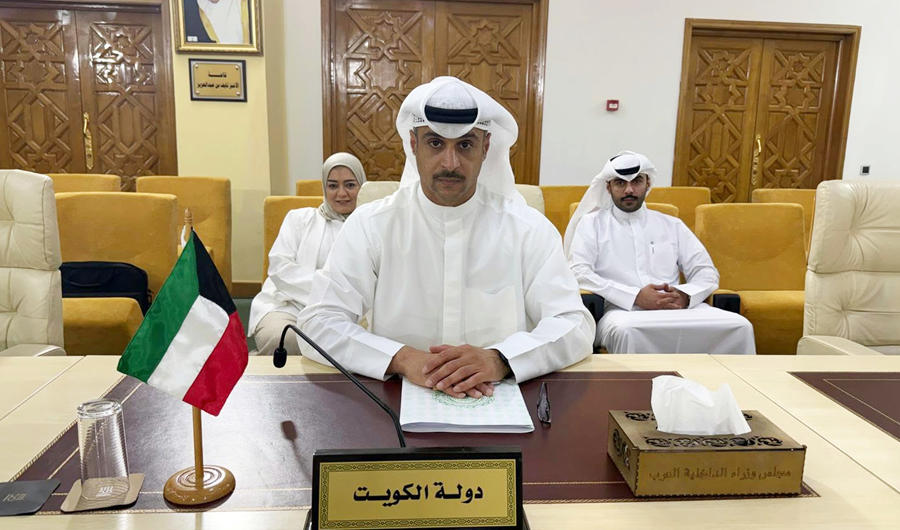
Kuwait reaffirmed its commitment to developing its security framework and combating cybercrime through cooperation with Arab countries and the use of artificial intelligence.
Translated by Qiyas from سرمد — Original source
(KUNA) — Kuwait reaffirmed on Wednesday its commitment to developing its security framework to combat cybercrime, and to strengthening cooperation and the exchange of information and expertise with Arab countries to address security challenges arising from the rapid evolution of criminal methods, particularly transborder cybercrimes.
This was stated by Colonel Hamad Al-Humoud, Assistant Director of the Cybercrime Combating Department at the Kuwaiti Ministry of Interior and head of the State of Kuwait’s delegation participating in the Third Conference of Officials Responsible for Confronting Information Technology Crimes in Arab Interior Ministries, in a statement to the Kuwait News Agency (KUNA).
Colonel Al-Humoud added that the General Directorate of Criminal Investigation, represented by the Cybercrime Combating Department, possesses specialized and trained human resources equipped with the latest methods of electronic investigation and inquiry, as well as the collection and analysis of digital evidence. The department handles various types of cybercrimes through continuous training, enhancing the efficiency of specialized security teams, and developing their technical capabilities in proactive monitoring and detecting emerging criminal patterns and methods.
He noted that the Cybercrime Combating Department is working to develop security monitoring and analysis mechanisms and to leverage artificial intelligence technologies for the early detection of criminal indicators. This is complemented by the establishment of joint virtual rooms with relevant commercial companies and government entities to enhance coordination, information exchange, proactive monitoring of cybercriminal activities, and the analysis of fraud indicators, thereby taking preventive measures to curb such incidents.
He emphasized that the State of Kuwait pays special attention to combating online fraud and scamming through coordination with government bodies, financial institutions, and telecommunications companies. This involves strengthening security, technical, regulatory, and legislative measures to confront emerging fraud methods and protect society.
In this context, he referred to a presentation by First Lieutenant Engineer Sultan Al-Anzi from the Cybercrime Combating Department, which outlined Kuwait’s efforts in combating online fraud and scamming in 2026. These efforts included registering 493 cases of online fraud and scamming, suspending services for 1,090 phone numbers used in fraudulent operations, blocking 790 fraudulent websites, recovering more than 300 electronic accounts, and providing technical assistance.
Al-Humoud highlighted that Kuwait’s participation addresses prominent criminal methods, including impersonation of official entities, direct financial fraud, and investment and commercial fraud. It also covers newly introduced security initiatives, foremost among them the creation of joint virtual rooms with relevant commercial companies and government entities, the development of a unified platform for reporting phone fraud, and enhancing proactive monitoring capabilities using artificial intelligence technologies. Furthermore, it showcases regulatory and legislative initiatives related to the anticipated E-Commerce Law and the fight against bank forgery and phone billing fraud.
Colonel Al-Humoud concluded his statement by stressing that confronting transborder cybercrimes requires the integration of Arab security efforts, enhanced exchange of information and technical expertise, and the development of human and technical capacities. This entails transitioning from traditional counter-criminal methods to proactive security systems capable of early detection of criminal activities and taking necessary measures to prevent crimes and mitigate their impact, thereby contributing to strengthening cybersecurity and protecting Arab societies.
The conference, held at the headquarters of the General Secretariat of the Arab Ministers of Interior Council in Tunis over two days, is discussing several key topics, including the preparation of a model organizational structure for specialized agencies combating information technology crimes, the utilization of artificial intelligence technologies in combating electronic financial fraud, the presentation of emerging criminal methods and cases monitored by member states, and the exchange of security experiences and expertise to enhance the capabilities of these agencies.
The specialists. Representing the State of Kuwait at the conference, alongside Colonel Hamad Al-Humoud, are Major Abbar Bahbahani from the General Directorate of International Relations, and First Lieutenant Engineer Sultan Al-Anzi from the Cybercrime Countermeasures Department.
