Egyptian Warning of Piracy and Ship Hijackings in 3 Sea Lanes - Sarmad
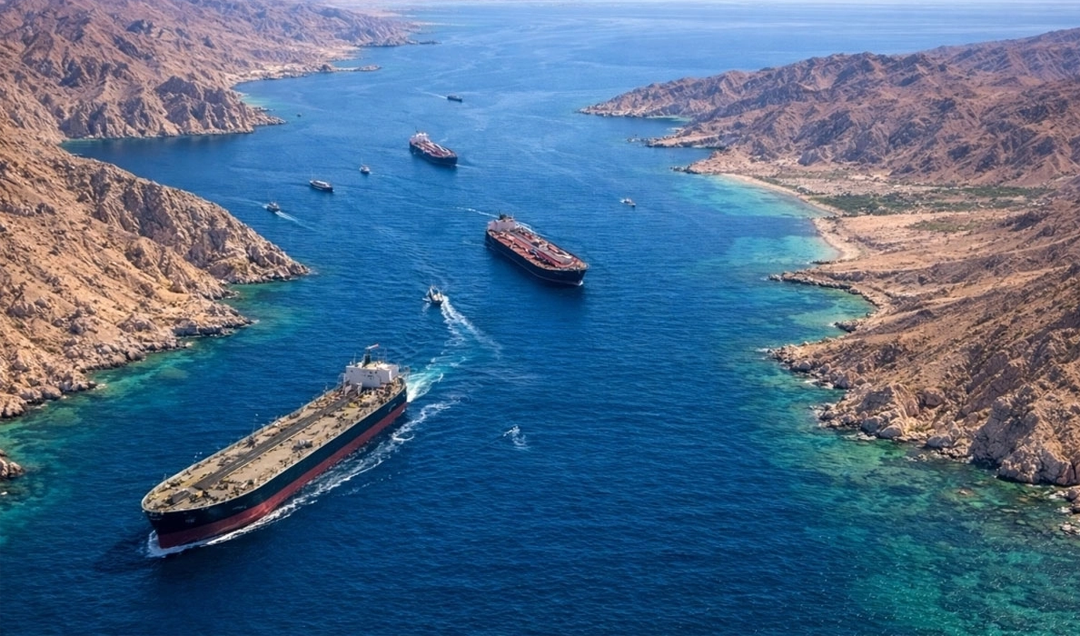
Egyptian Authority warns of security risks in the Arabian Gulf, Red Sea, and Black Sea
Translated by Qiyas from سرمد — Original source
The Egyptian Authority for Maritime Safety issued an urgent warning to the Seafarers’ Officers Syndicate, directing the enforcement of heightened precautionary measures and navigation security protocols to protect the lives of Egyptian seafarers, following reports of commercial vessels facing security threats and the kidnapping of several crew members.
Captain El-Sayed El-Shazly, head of the Seafarers’ Officers Syndicate and representative of the International Transport Workers’ Federation in Egypt, emphasized that the Authority stressed the necessity for seafarers to stay as far as possible from high-risk areas and armed conflict hotspots to avoid threats that could endanger their lives or the safety of the ships they serve on.
Mandatory implementation of precautionary measures by all vessels
The syndicate head also noted that official directives have mandated all vessels and their crews to fully implement the precautionary measures stipulated in the International Convention for the Safety of Life at Sea (SOLAS), strictly adhere to the International Ship and Port Facility Security (ISPS) Code, and comply with the Maritime Labour Convention, which safeguards seafarers’ rights and ensures their safety while performing their duties, according to Al Arabiya Net.
He warned that any negligence in taking preventive measures before or during sailing could entail legal consequences and liabilities, depending on the circumstances of each incident.
Regarding maritime zones and routes classified as dangerous, El-Shazly clarified that the International Transport Workers’ Federation currently designates three regions worldwide as war zone operations areas. This classification grants civilian seafarers direct rights and compensation for their protection. The first area includes the Arabian Gulf, the Strait of Hormuz, and the Gulf of Oman, where seafarers are entitled to a 100% wage bonus, along with the right to immediately refuse sailing and be repatriated at the shipowner’s expense, plus two months’ salary.
He added that the second area covers the southern Red Sea, the Bab el-Mandeb Strait, and the Yemeni coast. In this zone, rights include doubled compensation for death and disability, full wage bonuses, and the application of Security Level 3, which represents the highest and most stringent level of precautionary security under the ISPS Code, declared when there is an imminent or confirmed threat of a security incident or armed terrorist attack.
“War zone operations area and high risks”
In such cases, movement and entry are restricted, and all ship access points are completely closed. Unauthorized boarding or disembarkation is prohibited, except in exceptional circumstances. Rigorous and intensive security inspections are conducted on all parts of the vessel, equipment, cargo, and personnel. Loading, unloading, bunkering, and provisioning operations are suspended, and preparations are made to leave the dangerous area immediately.
The third area, according to El-Shazly, comprises the northern Black Sea, Ukrainian ports, and the Sea of Azov, classified as a “war zone operations area and high risk.” This classification guarantees seafarers the same rights and compensation applicable in the Middle East region, without any discrimination.
These developments come weeks after an incident in the maritime zone of the Gulf of Aden and the Red Sea, where the commercial oil tanker “MT Eureka” was subjected to armed robbery and kidnapping off the coast of Shabwa Governorate in Yemen. Armed men successfully boarded the vessel and forcibly steered it under gunpoint toward Somali territorial waters and coastlines, imposing a siege on the crew and demanding a large ransom for their release.
Egyptian seafarers detained
Aboard the detained tanker were eight Egyptian seafarers from various governorates, including Dakahlia, Sharqia, Gharbia, and Damietta.
In response, the Egyptian Ministry of Foreign Affairs and the relevant national authorities intensified their efforts and mobilized their diplomatic and security communications to closely monitor the case of the detained sailors and coordinate with active international and regional actors. These efforts ultimately led to the successful release of all the detained Egyptian sailors, who were freed safely after a harrowing detention period at sea that lasted several months.
