Qatar: Iran or Others Cannot Dictate How We Relate to Other Countries - Sarmad
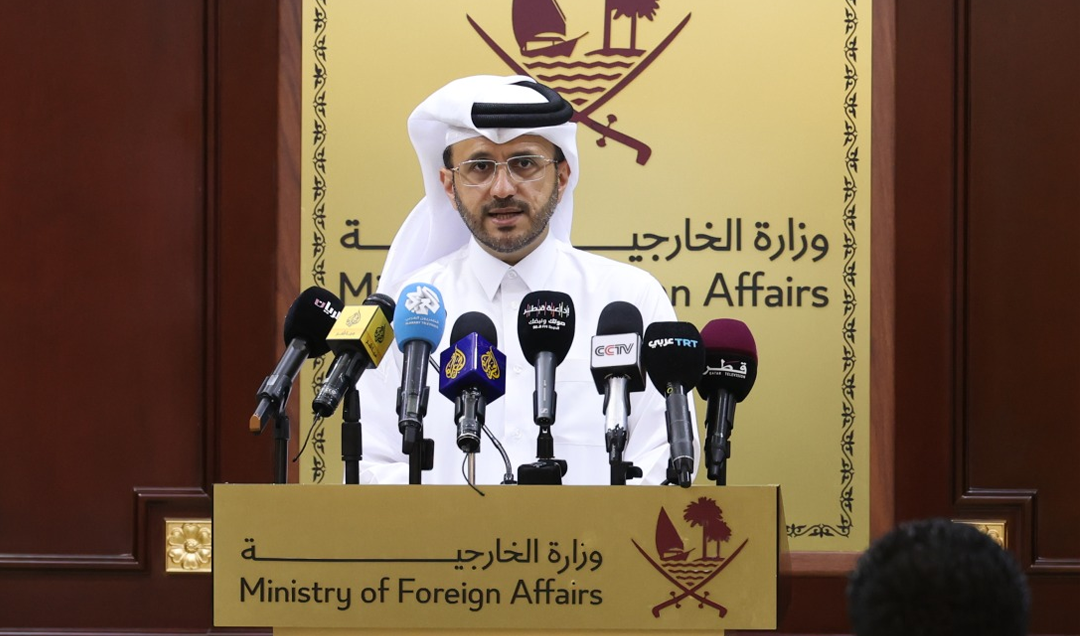
Qatari Foreign Affairs Advisor rejects Iran's interference in relations and reaffirms support for Saudi Arabia
Translated by Qiyas from سرمد — Original source
Dr. Majid bin Mohammed Al-Ansari, advisor to the Prime Minister’s Office and the official spokesperson for the Qatari Ministry of Foreign Affairs, affirmed that Qatar will not accept dictates from Iran or any other country regarding the nature of its relations with other states, emphasizing his country’s full solidarity with Saudi Arabia and its support for Riyadh’s measures to defend its sovereignty and deter attacks against it.
Speaking in an interview with Al Arabiya, Al-Ansari stated that the region needs a comprehensive regional security architecture encompassing all its countries, based on clear principles. He noted that Gulf armed forces have demonstrated their success during the regional war crisis, which, in his view, reflects the defensive partnership with the United States.
He added that Gulf states are currently focusing on supporting mediation efforts between the United States and Iran, while continuing to defend their countries against any external aggression. He stressed that Gulf diplomatic openness “is not a sign of weakness or laxity in defending our countries.”
Al-Ansari clarified that Iran’s decision to target Gulf states has heightened the sense of threat among regional countries, transforming their relationship with Tehran from that of a neighbor with whom normal relations are hoped for, into a source of threat requiring a response to what he described as “reckless Iranian behaviors.”
He pointed out that Gulf states play a key role in mediating several international crises, including the Russian-Ukrainian war, as well as in Latin America and Asia, noting that their footprint is evident in diplomatic efforts aimed at resolving crises through peaceful means.
He emphasized that the first option for Gulf states when facing crises is to reach diplomatic solutions, explaining that regional countries have engaged in diplomatic tracks even amid war.
Al-Ansari stressed that Gulf positions focus on rebuilding the regional security architecture and enhancing Gulf leadership at the regional level, alongside expanding communication with countries in the region and beyond. He explained that what the region is experiencing is not a temporary crisis, but rather concerns its future and the future of international security and peace.
He said that “peace is a very expensive commodity,” and that achieving it requires someone to bear its cost. He added that Qatar has shouldered significant burdens since day one in the pursuit of peace across various files, but that “does not in any way mean that we accept such attacks on our country.”
