More than 340 children martyred in Gaza since ceasefire announcement
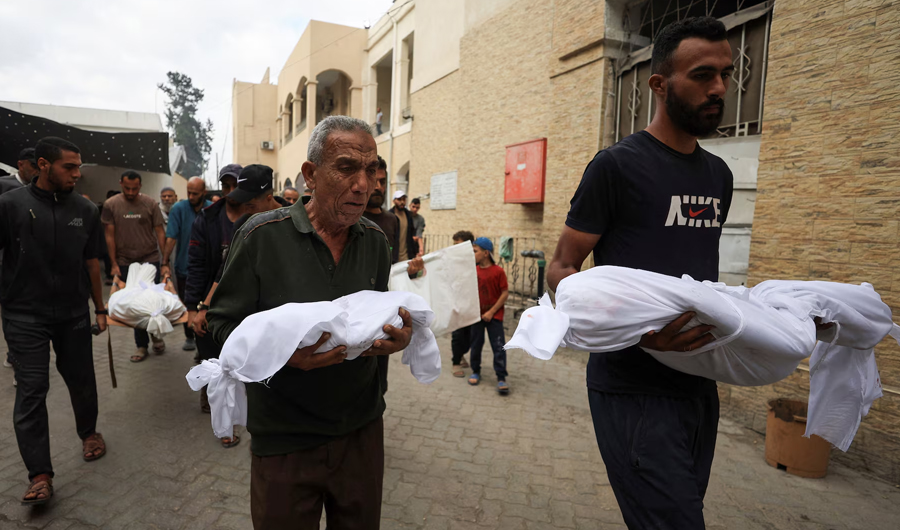
UNICEF warns of continued child casualties as Gaza suffers from a severe shortage of services.
Translated by Alqyas from Sarmad — Original source
(KUNA) — The United Nations Children’s Fund (UNICEF) announced on Friday that more than 340 children have been killed and hundreds others injured in the Gaza Strip since the ceasefire was declared more than a year ago, warning of continued child casualties and worsening humanitarian and living conditions in the territory.
Ricardo Perez, the acting spokesperson for the organization, said during a media briefing in Geneva that the past two weeks saw the deaths of seven children and injuries to at least 33 others in serious condition due to Israeli air raids, drone attacks, and gunfire by Israeli occupation forces. Two other boys also died from injuries sustained earlier.
Perez added that a new report issued by UNICEF today on “The Heavy Human Cost of War on Children” showed that approximately 800,000 children remain displaced in the Strip, living in harsh humanitarian conditions amid a severe shortage of shelter and basic services. He noted that the number of children who have lost one or both parents is estimated at around 60,000, and that the majority of children in Gaza require some form of psychosocial support to recover from the war’s effects.
In response to a question from Kuwait News Agency (KUNA) regarding the potential repercussions of the decision by the Israeli occupation government’s coordinator of government activities in the Palestinian territories (COGAT) to ban the entry of commercial goods into Gaza’s markets, Perez warned that continued restrictions on the entry of supplies would exacerbate the suffering of children and families. He stressed the urgent need to ensure a steady flow of commercial goods and humanitarian aid into the Strip and to prevent the population from being deprived of their basic needs and rights.
He pointed out that the ceasefire had allowed for the entry of larger quantities of humanitarian aid and commercial supplies, contributing to a limited improvement in children’s food security. However, the war’s repercussions continue to cast a shadow over various aspects of their daily lives, including shelter, food, education, security, and healthcare.
Regarding education, Perez said that more than 560,000 children have returned to learning since the ceasefire came into effect, including children receiving education in more than 200 UNICEF-supported learning centers. He added that the organization has provided digital cash assistance to over 380,000 people this year and continues to provide safe water to more than one million people, alongside efforts in solid waste removal and the delivery of medical supplies.
Conversely, Perez warned of the dangerous consequences of the collapse of infrastructure and sewage networks in the Gaza Strip. He noted that all six wastewater treatment plants in the Strip remain out of service, resulting in the direct discharge of most untreated wastewater into the sea, posing a threat to public health and the environment. He also highlighted increasing risks of sewage flooding as the winter rainy season approaches, particularly in the Sheikh Radwan stormwater drainage basin, which has reached about half of its storage capacity. He warned that any overflow of polluted water from the basin could endanger the lives of children and families in residential areas located downstream.
Perez noted that the desilting of the basin could be completed within two weeks, but the Israeli occupation authorities continue to block the entry of the necessary equipment to carry out these works. In this regard, he called for adherence to the provisions of the ceasefire agreement and United Nations Security Council Resolution 2803, as well as for fulfilling the obligations stipulated under international humanitarian law. He also urged the Israeli occupation authorities to allow the entry of essential materials and equipment to repair damaged infrastructure, rehabilitate sewage networks, and restore basic services, thereby ensuring the protection of the lives of children and families in the Gaza Strip.
