Al-Marzouq: Gulf and Asian countries moving toward stronger economic horizons supported by banking partnerships, investments, and digital connectivity - Sarmad
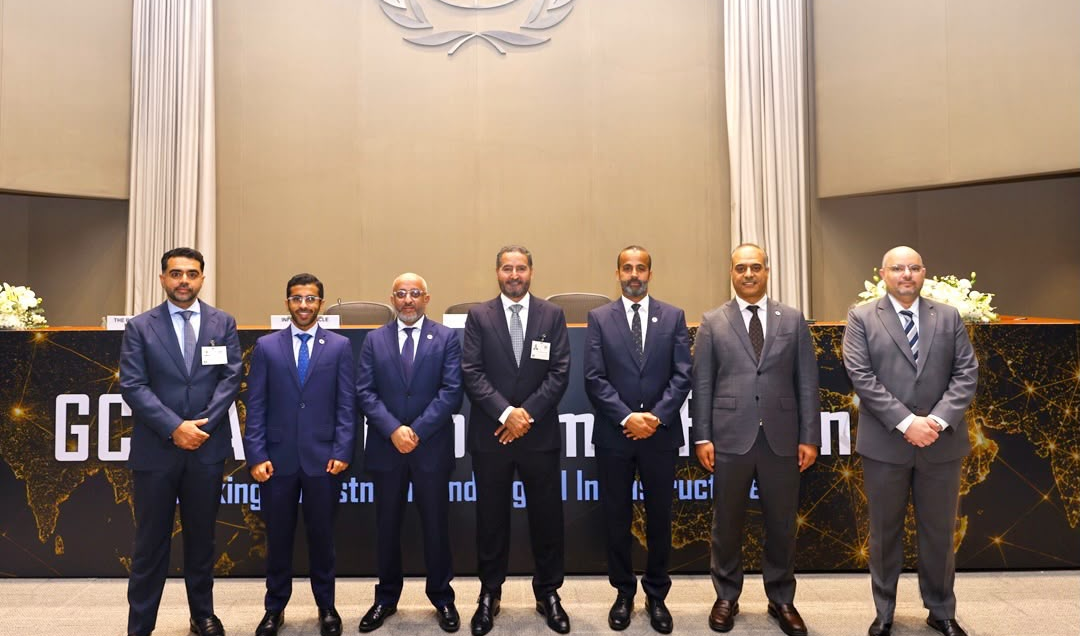
Chairman of Kuwait Finance House emphasized the role of the banking sector in enhancing economic integration with Asia, pointing to growing trade and investment volumes.
Translated by Qiyas from سرمد — Original source
Hamad Abdulmohsin Al-Marzouq, Chairman of the Board of Directors of the Kuwait Banks Association and Chairman of the Board of Directors of Kuwait Finance House, emphasized the growing strategic importance of relations between the Gulf Cooperation Council (GCC) countries and Asia, and the pivotal role played by the banking sector in enhancing economic integration between the two regions. This was stated in his opening address at the Gulf-Asia Economic Forum: Banking, Investment, and Digital Infrastructure, held in Bangkok on the sidelines of the 2026 Annual Meetings of the International Monetary Fund and the World Bank Group.
The forum was attended by a distinguished group of senior officials, including Jassem Mohamed Al-Bedaiwi, Secretary-General of the Gulf Cooperation Council; Dr. Yaqoob Youssef Al-Rifai, Kuwait’s Minister of Finance; Subajee Suthumporn, Deputy Prime Minister and Minister of Commerce of the Kingdom of Thailand; Bassel Ahmed Al-Haroun, Governor of the Central Bank of Kuwait; as well as central bank governors, ambassadors of GCC countries, and numerous leaders from the business community, banking sector, asset management, and technology industries from across the Gulf and Asia.
In his speech, Al-Marzouq affirmed that the strong ties between the GCC countries and Asia are advancing steadily toward deeper partnerships that enhance investment, trade, and economic growth, noting that both regions play an increasingly important role in consolidating stability and strengthening resilience in the face of current economic challenges.
Al-Marzouq highlighted the robustness of economic relations between the two regions, pointing out that total goods trade for GCC countries reached approximately $1.59 trillion in 2024, according to data from the Gulf Cooperation Council Statistical Center. China, India, Japan, and South Korea accounted for about $659 billion of this total trade volume.
He clarified that China led the list of GCC trading partners, with a trade volume of approximately $299 billion, followed by India at around $158 billion, Japan at approximately $114 billion, and South Korea at about $88 billion. Collectively, these four Asian economies represented roughly 41.5% of the total external goods trade of GCC countries in 2024.
He stressed that Gulf-Asian relations remain a strategic priority, supported by growing trade volumes, increasing investment flows, and the active role of financial institutions in financing infrastructure, energy projects, and broad market linkages, thereby supporting economic growth in the coming period.
Al-Marzouq also touched upon the strength of the banking sector in GCC countries, noting that total assets of commercial banks in the region reached approximately $3.9 trillion in 2025, while net foreign assets amounted to about $837 billion, according to data from the Gulf Cooperation Council Statistical Center.
He indicated that these indicators reflect the significant potential available to support trade and investment and enhance financial connectivity with Asian markets.
He added that Gulf financial institutions benefit from strong balance sheets, robust regulatory and supervisory frameworks, and high liquidity levels, which qualify them to play a pivotal role in developing Gulf-Asian partnerships by supporting cross-border investments, trade financing, and innovation in financial services.
Speaking about the advantages enjoyed by both regions, Al-Marzouq clarified that Asia offers extensive opportunities in the fields of technology and infrastructure, while Gulf Cooperation Council (GCC) countries possess long-term capital, strong risk management capabilities, and international expertise in Islamic finance. He added that the integration of these strengths creates significant opportunities to support cross-border growth, attract new investments, and achieve shared prosperity.
Meanwhile, Al-Marzouq emphasized that the objective in the upcoming phase extends beyond facilitating financial and commercial transactions to building long-term partnerships. He stressed the importance of enhancing cooperation across various areas of the financial sector, including project financing, expanding sukuk markets, supporting new investment opportunities, and developing digital systems that strengthen economic interconnectivity between the two regions.
He further noted that the integration of the strong capital base of GCC countries with technological innovation in Asia would contribute to building an integrated economic corridor that facilitates investment, stimulates innovation, and supports sustainable growth in both regions.
In conclusion, Al-Marzouq pointed out that the gathering of leaders and decision-makers at the forum represents an important opportunity to deepen cooperation, increase investments, and achieve sustainable economic benefits for GCC and Asian countries.
Khalid Youssef Al-Shamlan, Chief Executive Officer of Kuwait Finance House (KFH), participated in a panel discussion titled “Core Banking and Balance Sheet Partnerships” as part of the activities of the Gulf-Asia Economic Forum, held at the United Nations Conference Centre in Bangkok, the capital of Thailand, on the sidelines of the 2026 Annual Meetings of the International Monetary Fund (IMF) and the World Bank Group.
During his participation, Al-Shamlan affirmed that banking cooperation between GCC countries and Asia has become a tangible reality, built on the success of partnerships, growing trade flows, increasing interconnectivity between capital markets, and rising demand for Sharia-compliant financing solutions.
Tangible Evidence of Gulf-Asian Banking Integration
Al-Shamlan highlighted KFH’s experience as evidence of growing financial integration between the two regions. He noted that the group’s successful issuance of $1 billion in five-year sukuk in January 2026 serves as a clear example of the impact of banking cooperation between the Gulf and Asia.
He explained that leading Asian financial institutions, including Bank of China and Mizuho, participated in the issuance as joint lead managers, alongside GCC financial institutions. The issuance attracted strong demand from investors in Asia and the Middle East, with oversubscription exceeding twice the issue size, reflecting growing investor interest in cross-border opportunities in Islamic capital markets.
Al-Shamlan stated, “The impact of the sukuk issuance extended beyond enabling KFH to diversify its funding sources; it also provided Asian institutions with broader access to international Islamic capital markets. This confirms that the integration of capital markets in the Gulf and Asia is becoming a practical reality.”
Strategic Expansion Enhances Growth
Speaking about the bank’s international expansion strategy, Al-Shamlan clarified that KFH’s expansion into external markets is based on the Board of Directors’ vision to position the group among the top 100 banks globally and to build a more diversified and resilient financial entity.
He noted that the strategic acquisition of the United Bank in Bahrain, prior to its name change, significantly contributed to enhancing the group’s presence in 10 countries, including Bahrain, Turkey, Germany, the United Kingdom, and Egypt.
Al-Shamlan stated, “This acquisition helped strengthen the balance between corporate banking and retail banking activities, diversify revenue sources outside the Gulf region, mitigate concentration risks, and enhance profit resilience.”
“At a time when the market capitalization of Kuwait Finance House reached approximately $50 billion, the group continues to deliver strong financial performance, recording the highest net profit in the Kuwaiti banking sector and among companies listed on the Kuwait Stock Exchange.”
Sharia Governance Enables Expansion in International Markets
Al-Shamlan emphasized that differences in Sharia governance frameworks among countries do not hinder deeper financial integration between the Gulf and Asia. He pointed out that Sharia governance is an integral part of the bank’s operational model, noting that Kuwait Finance House has a long track record of successful operations across diverse regulatory environments, including the United Kingdom, Germany, Egypt, and Turkey.
He clarified that the Accounting and Auditing Organization for Islamic Financial Institutions (AAOIFI) and the Islamic Financial Services Board (IFSB) contribute to establishing Sharia-compliant standards recognized internationally. He added that these frameworks, combined with Kuwait Finance House Group’s extensive expertise in transforming conventional banking operations into Sharia-compliant business models, have enabled the group to operate successfully in multiple regulatory environments and effectively address cross-border regulatory requirements.
Al-Shamlan also highlighted the growing global significance of Islamic finance, noting that total sector assets exceeded $4.3 trillion in 2024, with projections reaching $6.9 trillion by 2029. The Gulf Cooperation Council (GCC) countries currently account for approximately 40% of global Islamic banking assets.
Growing Opportunities Between Gulf and Asian Markets
Regarding future cooperation prospects, Al-Shamlan pointed out that trade volume between GCC countries and Asia exceeds $516 billion annually, underscoring the importance of strengthening banking partnerships between the two regions.
He explained that Asian banks offer opportunities to capitalize on rapidly growing trade flows, industrial systems, and supply chain financing opportunities, while Gulf banks provide attractive investment opportunities in the region, deep local market knowledge, and expanding capital markets.
He said, “Economic ties between the two regions continue to strengthen. Financing by Chinese banks for Gulf markets has seen a notable increase in recent years, while remittance channels and trade remain key drivers of financial cooperation.”
An Integrated Gateway for Islamic Finance
Al-Shamlan stressed that establishing an integrated gateway for Islamic finance requires more than facilitating capital flows; it necessitates providing mutual market access opportunities, enabling clients on both sides to benefit from investment opportunities, financing solutions, and institutional investor bases.
He noted that sukuk markets can serve as a strategic bridge connecting sovereign entities and companies in Asia with Gulf investors, while simultaneously allowing Gulf issuers access to a broad base of Asian capital.
He stated: “Kuwait Finance House’s international network enables the group to connect Gulf companies with suppliers in Asia, empowering them to capitalize on growth opportunities in Asian markets by providing effective banking and financing solutions that support their cross-border operations.”
Enhancing Interconnectivity Between Liquidity Systems
Regarding the prospects of linking regional payment and liquidity systems between the Gulf and Asia, Al-Shamlan considered the development of an integrated liquidity network a realistic and feasible future step.
He clarified that enhancing interconnectivity among these systems would facilitate trade, improve cross-border capital flows, reduce transaction costs, and strengthen regional financial stability.
In this regard, he cited the success of the Gulf Payments System (Afaq), which connects the six central banks of the Gulf Cooperation Council (GCC) member states and dozens of participating financial institutions, viewing it as a solid foundation for broader financial integration.
Government Sukuk Law Opens New Horizons
Al-Shamlan welcomed Kuwait’s Government Sukuk Law, describing it as a significant development for local capital markets and regional financial cooperation.
He explained that this legislative framework would support the diversification of funding sources, establish a sovereign sukuk yield curve, enhance pricing transparency, increase market liquidity, and provide additional Sharia-compliant investment opportunities for investors in GCC countries and Asia. He added that the law would contribute to supporting cross-border investment flows and strengthening liquidity management capabilities within the Islamic finance system.
Measuring Success by Actual Economic Outcomes
Regarding the future of Gulf-Asian banking cooperation, Al-Shamlan emphasized that the success of such cooperation should be measured by tangible economic results, rather than the number of signed agreements.
He said: “Over the next five years, I look forward to seeing greater growth in the volume of trade, deeper financial ties, and increased levels of co-financing between Gulf and Asian banks.”
He noted that Asian markets are experiencing rapid growth, with Gulf-Asia trade volume exceeding $516 billion annually.
Al-Shamlan pointed out that infrastructure projects in GCC countries, valued at approximately $1.7 trillion by 2030, offer extensive opportunities for cooperation in energy, logistics, transport, digital infrastructure, and data center sectors.
Concluding his remarks, Al-Shamlan stated: “The true measure of success lies in increasing the number of jointly financed projects, strengthening interconnectivity between capital markets, and deepening economic integration between the GCC countries and Asia.”
