Artist Hassan Bahdhai Defies Disability with 65 Paintings Documenting Kuwaiti Heritage in First Art Exhibition - Sarmad
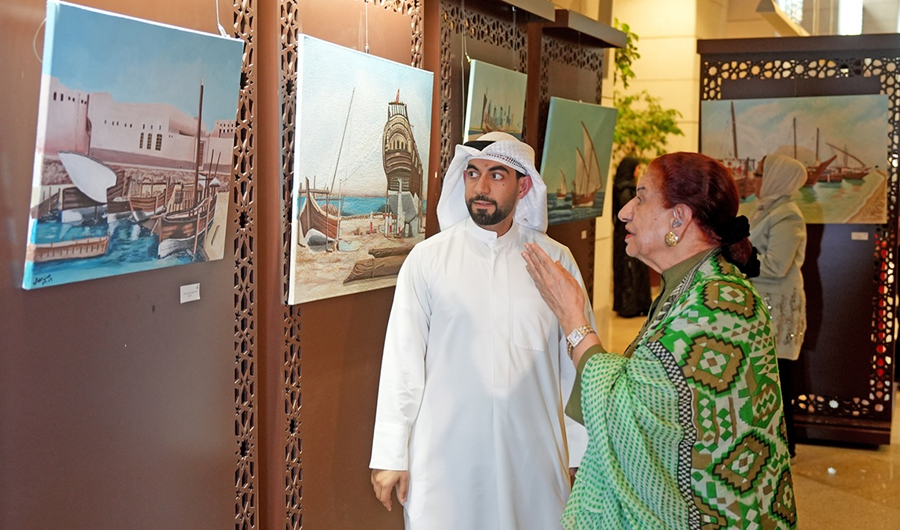
Opening of Hassan Bahdhai's first art exhibition at the Kuwait National Library, supported by the National Council for Culture, Arts and Letters
Translated by Qiyas from سرمد — Original source
(KUNA) – Kuwaiti visual artist Hassan Bahdah, who has an intellectual disability, has transformed his passion for art into 65 paintings that evoke the features of Kuwait’s past and narrate stories of authentic customs and traditions, through his brush, colors, and determination to overcome challenges. He emphasized that “creativity is not bounded by disability” and that talent can surmount difficulties. This was evident during the opening of his first visual arts exhibition, titled “In the Heart of Kuwaiti Heritage,” organized by the National Council for Culture, Arts and Letters at the Kuwait National Library. The three-day exhibition features a diverse range of artworks that reflect aspects of Kuwaiti identity and its cultural and social heritage.
Artist Hassan Bahdah told the Kuwait News Agency (KUNA) on Tuesday that the exhibition represents the fruit of years of work and artistic experience, comprising 65 paintings inspired by the Kuwaiti environment, societal customs, and traditions. He noted that each painting tells a unique story reflecting a facet of the lives of Kuwaitis. He explained that the exhibited works are divided into five artistic themes: the marine environment, the terrestrial environment, buildings and architecture, people with disabilities, and other topics related to Kuwaiti heritage. He employed various artistic techniques and materials, including oil paints, oil pastels, and soft pastels.
Bahdah added that his journey with painting began in 2007 through simple attempts and spontaneous drawings, before his talent gradually developed through enrollment in specialized art courses and self-learning, which helped refine his skills and master several artistic techniques, particularly perspective, proportion, and portrait drawing. He affirmed that his intellectual disability did not hinder his artistic ambitions; rather, he continued to develop his abilities and work toward realizing his dream of holding a solo exhibition showcasing the results of his artistic experience.
He expressed his happiness at holding his first solo exhibition with the support of the National Council for Culture, Arts and Letters, which provided him the opportunity to display his works to the public and shed light on his artistic experience.
