Syrian Sovereign Wealth Fund Takes Control of $50 Billion in Assad Assets
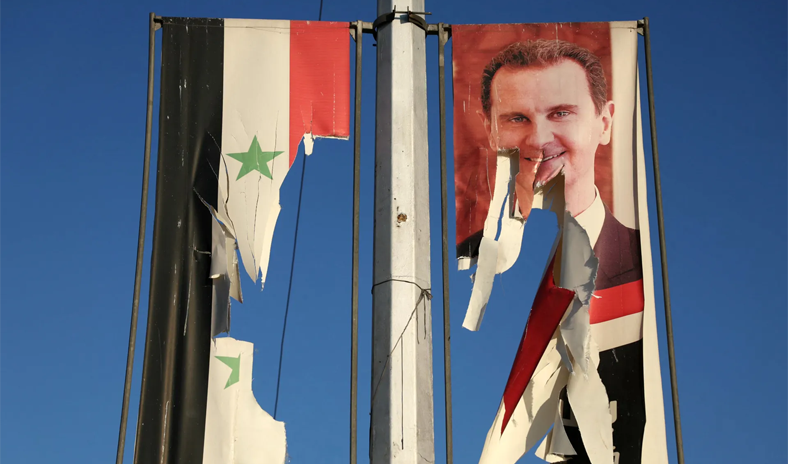
The Syrian Sovereign Wealth Fund takes control of assets worth $50 billion seized from the former Assad regime, aiming to attract Gulf investments and restructure the Syrian economy through partnerships with international companies.
Translated by Qiyas from سرمد — Original source
(Bloomberg) – The Syrian government has consolidated assets and companies worth $50 billion seized from businessmen linked to the former Bashar al-Assad regime into a state-owned fund, in an effort to transform one of the country’s largest ownership portfolios into a tool for reshaping the economy and attracting Gulf capital.
The Syrian Sovereign Fund, established by President Ahmed al-Sharaa last year, now controls a wide network of assets spanning the real estate, industrial, banking, and telecommunications sectors, according to insiders and officials who spoke to the Financial Times.
The fund, which is rapidly becoming a pivotal player in Syria’s new economy, has not yet disclosed detailed lists of its holdings or financial data, nor does it identify its chief executive on its website.
$50 Billion in Assets
Syrian Finance Minister Thair al-Laham estimated the fund’s assets at around $50 billion last year. Its portfolio includes government properties, companies, and assets seized from figures associated with the former regime.
These assets range from factories, shopping malls, and real estate to stakes in banks. The fund states that the companies under its purview employ more than 40,000 people.
This scale makes the institution one of the most significant economic powerhouses in Syria. Thair al-Laham, Director General of the Syrian Business Council, described the fund as the country’s “most influential” and wealthiest economic entity at present, according to the British newspaper.
The fund’s importance extends beyond the value of the assets registered under its umbrella. Its control over companies and properties across multiple sectors gives it the power to influence the identity of investors and partners entering the Syrian market, as Damascus seeks to attract the capital needed to rebuild an economy devastated by years of war and sanctions.
The fund does not appear to be merely a repository for seized assets, but rather a gateway used by the government to bring in foreign investors into sectors requiring substantial capital, while retaining state influence within these projects.
“Zain” Enters the Syrian Market
The telecommunications sector offers a prime example. Kuwaiti company Zain won a license to operate a mobile telecommunications network in Syria for 20 years for $747 million. The Kuwaiti group holds a 75% stake in the new operating company, while the Syrian side holds a 25% stake.
Zain plans to invest more than $800 million over the next decade to expand and upgrade the network using fifth-generation (5G) technologies and digital technologies powered by artificial intelligence.
The Financial Times reports that the 25% stake in the licensed Syrian entity belongs to the Sovereign Fund, illustrating a model that combines attracting Gulf investors with the fund retaining a direct stake in new assets.
The fund’s activities extend to other sectors as well. According to the newspaper, it has signed agreements with international companies, including Turkish firm Triaky Agro and Saudi Arabia’s Riyadh Cables Group, to develop and manage some of its assets.
It has also established new ventures, including a payments company operating with Visa in the Syrian market, as well as a local car manufacturing company.
What Happened to the Assad Regime’s Assets?
A significant portion of the wealth now managed by the fund consists of assets seized from individuals linked to the former regime.
The Financial Times quoted a government committee tasked with recovering illicitly acquired assets, stating that the fund participated in managing 32 entities in sectors including trade, services, and banking, which previously belonged to businessman Samer Fawaz. It also managed a shopping mall in Damascus seized from businessmen Mohammad and Waseem Qattan.
However, the transfer of ownership of these assets is not entirely smooth. Authorities are facing disputes over the legal ownership of some properties, including claims from asset owners who say the former regime seized them before they were later transferred to businessmen close to him.
The fund stated that all revenues generated from these assets belong to the Syrian state.
A powerful fund… with limited disclosure
The expanding portfolio puts governance under an early test; the fund does not yet publish full details about its assets, revenues, or financial statements. The institution told the Financial Times that it is still in its formative stage and is gradually building a governance system and aligning it with international practices for sovereign wealth funds.
According to three people who met with him and spoke to the newspaper, the fund is managed by Ibrahim Sukarieh, a Lebanese-Australian whose name does not appear on the institution’s website. The newspaper noted that Sukarieh is subject to Australian sanctions over allegations of joining a group previously linked to al-Qaeda. The newspaper was unable to obtain a comment from him.
The fund’s board of directors is chaired by the Minister of Tourism, and the institution is directly subordinate to the Presidency, according to the report.
Jihad Yazji, editor of Syria Report, believes that the lack of transparency raises questions about building trust between the state and citizens, but it may not necessarily represent the same obstacle for Gulf investors, who might see a practical advantage in dealing with a single entity that can streamline government procedures.
Redrawing the map of the Syrian economy
The rise of the fund comes as Syria seeks to transition from an isolated economy due to war and sanctions to a market once again seeking to attract foreign capital.
This transition accelerated after US President Donald Trump announced last year the lifting of sanctions on Syria, at the request of Saudi Crown Prince Mohammed bin Salman. In a meeting between Trump and the Syrian president, the latter spoke of his ambition to transform his country into a trade bridge between the East and the West, and called on US companies to invest in the oil and gas sectors.
This grants the sovereign fund a sensitive position in the new equation: it manages a massive economic legacy from the Assad era, while simultaneously serving as a partner to the state in billion-dollar deals with new investors.
