Turkish Foreign Minister: 'Mecca Pact' Defensive, Not Offensive - Sarmad
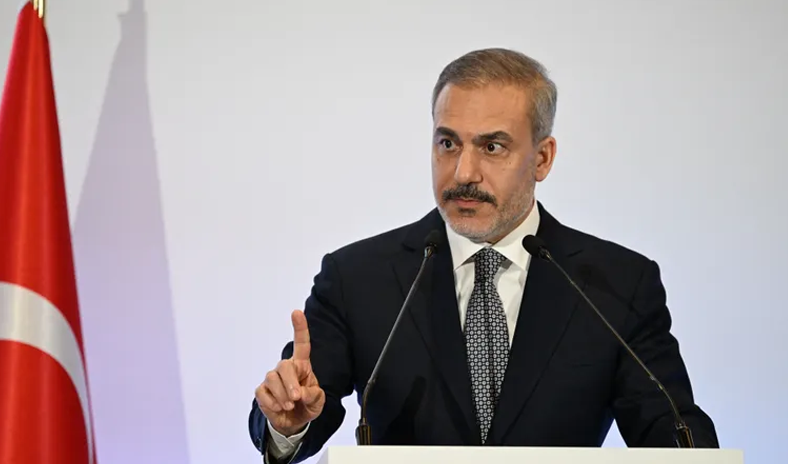
(KUNA) – Turkish Foreign Minister Hakan Fidan stated that the “Makkah Alliance” agreement is defensive in nature and not offensive, adding that “Turkey will not send troops to another country’s territory to launch an attack from it.”
During a press conference with Hungarian Deputy Foreign Minister Anita Urban in Ankara, Fidan elaborated, “When a state party to the Makkah Alliance agreement is attacked, we stand by it to defend it; it is not an agreement for aggression.”
He noted that the necessary procedures to refer the “Makkah Alliance” agreement to the Turkish Parliament have been completed, and pointed out his participation in a meeting of the Strategic Political and Defense Committee of the “Makkah Alliance” three days ago in Riyadh.
Fidan explained that the Riyadh meeting addressed “the attacks faced by Saudi Arabia and the important decisions that need to be taken regarding the institutional structure, including the military headquarters structure, the establishment of the General Secretariat, and the appointment of the new Secretary-General, among the items related to the institutional structure.”
Regarding the Russian-Ukrainian war, Fidan stressed the necessity of preventing the Black Sea from becoming a new conflict front, noting that this war remains one of the most prominent threats to regional and global stability.
He added, “We have made significant efforts since the beginning of the war to prevent the escalation of clashes into the Black Sea. Our strict implementation of the Montreux Convention on the Straits and the Black Sea Grain Initiative are concrete examples of this approach.”
He also warned that the increasing attacks on civilian ships pose a serious threat to life, property, navigation, and the environment in the region, calling on the region and the international community not to allow the Black Sea to become a new conflict front.
On the Gaza file, Fidan emphasized the need to take steps to end the humanitarian tragedy in the Strip, including delivering the maximum possible amount of humanitarian aid, allowing the Palestinian National Authority to enter the Strip to assume its administration, and deploying an international stabilization force there.
He also warned that the Israeli occupation is not showing significant interest in implementing the peace plan for Gaza, stressing the paramount importance of exerting new international pressure to end the ongoing tragedy in the Strip.
For her part, Hungarian Foreign Minister Anita Urban affirmed that her country does not view relations between Turkey and the European Union solely from an economic perspective, emphasizing the need to update the customs union agreement between the two sides.
She noted that Hungary is one of the major importers of natural gas via the “TurkStream” pipeline, pointing out that the two countries enjoy good dialogue not only in the energy sector but also in defense industry innovations.
Urban also announced the launch of direct flights by the Hungarian airline “Wizz Air” between Budapest and Ankara, pledging to continue strengthening transport links between the two countries. She cited tourism figures from Hungary to Turkey, noting that 250,000 Hungarians visited Turkey last year.
