Al-Sabah: Developing AI technologies a strategic necessity to enhance sovereignty and protect national security - Sarmad
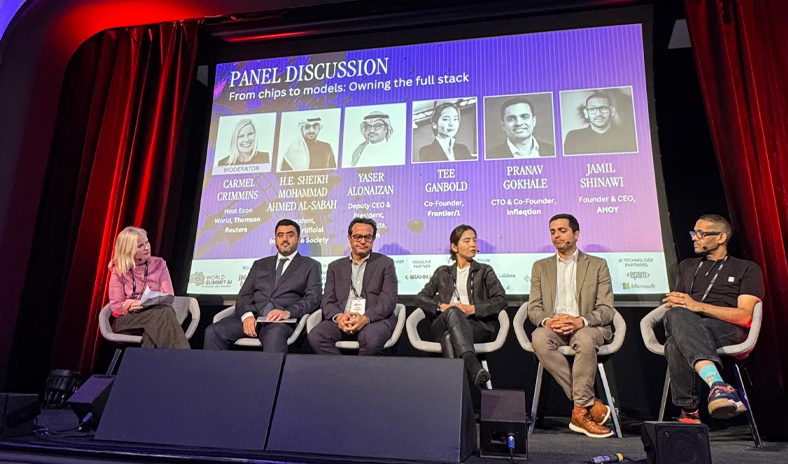
(KUNA) – Sheikh Mohammed Ahmed Al-Sabah, President of the Kuwaiti Association for Artificial Intelligence of Things (AAIoT), affirmed that possessing national capabilities to develop artificial intelligence technologies, rather than merely using them, has become a strategic imperative to enhance technological sovereignty, safeguard national security, and support the transition toward a knowledge- and innovation-based economy.
Speaking to the Kuwait News Agency (KUNA) on Thursday while participating in the World Artificial Intelligence Summit in Amsterdam, the capital of the Netherlands, Sheikh Mohammed Ahmed Al-Sabah stated that the rapid advancements in AI compel nations to reconsider the concept of technological sovereignty, shifting from investing solely in infrastructure to building an integrated national system encompassing education, scientific research, computing capabilities, and cybersecurity.
He added that AI sovereignty rests on three main pillars: control over data, its inputs, and its outputs; ownership of local computing capabilities; and the development of scientific and research competencies capable of independently building and developing AI models.
He noted that while establishing data centers and providing computing capacities are essential steps, the greater challenge lies in possessing the knowledge and expertise required to develop advanced models, emphasizing that “access to AI models does not necessarily equate to owning the technology itself.”
He stressed the importance of investing in the qualification of Kuwaiti youth, clarifying that the next phase requires transitioning from programs focused on teaching the use of AI applications to specialized programs in building, training, and developing AI systems.
He affirmed that cultivating a generation of national experts capable of producing and developing technology represents a long-term investment in the future of Kuwait, contributing to enhanced economic competitiveness and reduced reliance on external technologies.
Regarding national security, Sheikh Mohammed Ahmed Al-Sabah warned of the growing risks associated with the use of advanced AI technologies in cyberattacks targeting critical infrastructure, including electricity, water, and telecommunications networks, as well as financial and industrial systems.
He highlighted the importance of prioritizing the enhancement of cybersecurity for critical facilities and strategic systems, alongside cooperation with international institutions and organizations to develop governance frameworks and security controls for handling more advanced AI models.
He explained that the expansion in the use of autonomous AI systems necessitates establishing clear regulations regarding their authorities and operational boundaries, stressing that ultimate responsibility for the use of these technologies remains human.
On the future of technology, Sheikh Mohammed Ahmed Al-Sabah stated that quantum computing represents a significant strategic opportunity for Kuwait and the Gulf Cooperation Council (GCC) countries, noting that global competition in this field may become comparable to or even surpass current competition in artificial intelligence.
He called for proactive investment in education and scientific research, and the building of international partnerships in quantum computing, enabling regional countries to participate in the development of this technology from its early stages rather than merely relying on its applications in the future.
He revealed his vision for a roadmap to enhance technological sovereignty, which consists of two phases. He clarified that the first phase, spanning one to three years, should focus on localizing AI infrastructure and computing capabilities, and strengthening the cybersecurity of industrial, urban, and security systems.
He added that the second phase, spanning three to five years and beyond, must focus on developing specialized education in AI technologies, strengthening scientific research, and preparing national cadres capable of competing and contributing to global innovation.
He also proposed the establishment of a regional association for AI institutions, bringing together research centers, universities, and technical institutions in Gulf and friendly countries, with the aim of exchanging expertise, research, talent, and technological advancements, and building shared capacities that enhance the region’s standing in this strategic sector.
He emphasized that achieving technological sovereignty does not mean operating in isolation from the world, but rather requires building strategic partnerships based on knowledge exchange and shared interests, while preserving the national capacity to make independent technical decisions.
Sheikh Mohammed Ahmed Al-Sabah concluded his statement by stressing that the future of nations in the AI era will not be determined solely by the scale of their technology investments, but by their ability to build knowledge, develop national capabilities, and protect their infrastructure. He underscored the importance of starting today to build the capacities that will ensure Kuwait plays an active role in shaping the technological future.
Earlier, Sheikh Mohammed Ahmed Al-Sabah participated in a panel discussion titled “From Microchips to Models: Mastering the Integrated Technical Ecosystem,” as part of the World AI Summit in Amsterdam, alongside several senior officials and international experts from advanced technology companies. (End) A.M.S.
