Communications Authority: Agentic AI Opens New Horizons for Innovation and Technical Solutions - Sarmad
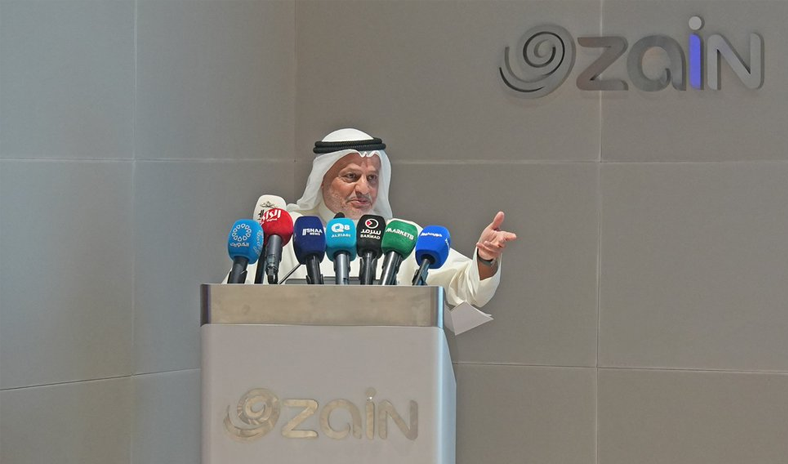
(KUNA) – Dr. Khaled Al-Zamil, Chairman of the Board of Directors of the Public Authority for Communications and Information Technology (STC), affirmed on Tuesday the importance of responsible adoption of Agentic AI technologies, which contributes to supporting innovation and developing technological solutions that serve society and enhance the capabilities of national talents.
This came during Dr. Al-Zamil’s speech at the launch event of the “Agentic AI Experience 2026” program, organized by ETLAQ, which focuses on practical applications of Agentic AI, with participation from Zain Kuwait and the Sabah Al-Ahmad Center for Talent and Creativity.
He stated that AI has become capable of assisting in executing tasks requiring multiple steps, ranging from searching for and analyzing information to using applications and completing specific functions.
He clarified that Agentic AI relies on systems with defined objectives, equipped with the necessary tools and permissions to operate under supervision of their results. He noted that major global companies announced in September last year tools that enable the development of applications and their integration with institutional data, thereby opening broader opportunities for innovators and entrepreneurs to test and develop their solutions.
Dr. Al-Zamil highlighted that the Authority’s role in this field relates to regulating information technology services and protecting users and their data privacy. He pointed out that Agentic AI may access user information and execute actions on their behalf, making the determination of its permissions and accountability for its actions a fundamental requirement.
He explained that the Authority contributes to guiding the responsible adoption of these technologies through data protection frameworks and AI ethics guidelines, in coordination with relevant authorities. He expressed his aspiration to see local talents build solutions that serve society and carry Kuwait’s name to broader horizons of competition.
For his part, Steven Butler, Chargé d’Affaires of the U.S. Embassy in Kuwait, affirmed in his speech the Embassy’s support for the program as a direct investment in the potential of Kuwaiti youth and the future of the national economy.
Butler stated that modern AI systems are no longer limited to answering questions but have become capable of planning, taking actions, and completing tasks, contributing to opening new fields of creativity in science, medicine, and various sectors.
He clarified that the program will, over five weeks, equip Kuwaiti youth with the necessary skills to understand and use these tools, describing it as an investment in the next generation of innovators and entrepreneurs who will help shape Kuwait’s digital future.
He emphasized that the United States seeks to be a partner for Kuwait in the technology sector, contributing to building skills and strengthening ties that support the growth of the digital economy and achieve the goals of “New Kuwait 2035,” noting the importance of investing in human capital to support economic diversification.
For his part, Nawaf Al-Ghrabli, CEO of Zain Kuwait, stated in his speech that AI technologies offer companies opportunities to increase efficiency, reduce costs, and streamline procedures, while stressing the necessity of preserving the human element and corporate culture as key factors for success.
Al-Ghrabli added that Zain views AI as a tool to support humans, not replace them, calling on participants to start from real challenges and work on finding solutions using the skills acquired during the program, while measuring the added value derived from them.
He emphasized the importance of data as the foundation for artificial intelligence applications, clarifying that institutions are required to protect their data, preserve their sovereignty, and prepare it for utilization, while Zain’s role lies in providing the necessary technical infrastructure, platforms, and data platforms for this purpose.
He stressed the importance of observing ethical guidelines and the boundaries of AI use, as well as its impact on institutional culture, and affirmed that ethical values and principles must precede the use of technological tools.
For his part, Nida Al-Daihani, Director General of the Sabah Al-Ahmad Center for Talent and Creativity, said in a speech that the Center, which is one of the centers under the Kuwait Foundation for the Advancement of Sciences, launched this year a strategy focused on supporting talents through building technological capacities and fostering innovation pathways.
Al-Daihani added that the program integrates both axes by enabling participants to use AI tools and nurturing promising young entrepreneurs and innovators, noting that the Center offers services including idea development, acceleration of existing projects, legal support, and prototype development.
For his part, initiative owner Engineer Khaled Al-Zanki said in a speech that AI agents are not limited to chatbots but are based on a system of specialized agents working together to achieve specific goals and tasks.
Al-Zanki explained that the efficiency of this system depends on the skills and data on which the agents are trained, clarifying that the program aims to empower non-technical professionals to acquire the necessary skills to build and use these systems.
He noted that AI was also used in the application process for the program by evaluating and classifying applications, followed by personal interviews to select 40 participants to join the program.
