ALECSO Director General: Arab Countries Must Keep Pace with Rapid Transformations in Education - Sarmad
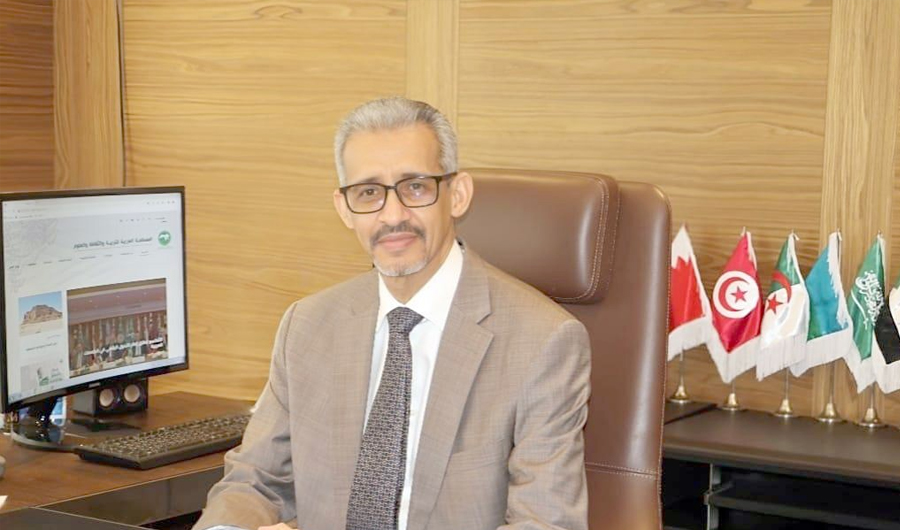
ALECSO Director General Mohamed Ould Ahmed emphasized the necessity for Arab countries to keep pace with rapid educational transformations, especially with the development of digital learning and artificial intelligence, during his participation in a high-level meeting organized by the Arab Bureau of Education for Gulf Countries.
Translated by Qiyas from سرمد — Original source
(KUNA) – The Director-General of the Arab League Educational, Cultural and Scientific Organization (ALECSO), Mohamed Ould Ahmed El-Moctar, affirmed on Monday that Arab countries are called upon to keep pace with the rapid transformations taking place in the field of education worldwide, particularly with the advancement of digital learning tools and artificial intelligence.
In a statement, ALECSO noted that these remarks were made during his video participation in a high-level meeting organized by the Arab Bureau of Education for the Gulf Countries (ABEGC) on “Improving Student Learning Outcomes in the Gulf, Middle East, and North Africa region,” attended by a number of senior officials, experts, and specialists in the field of education.
The Director-General emphasized that education is undergoing a profound shift in the concept of quality and the nature of skills required by learners. He considered that the success of an education system is no longer measured solely by its ability to provide education and expand access opportunities, but by its capacity to ensure genuine learning and empower learners to apply knowledge, engage in critical thinking, solve problems, learn independently, and adapt to a rapidly changing world.
He clarified that learning outcomes have become the most significant indicator of the quality of an education system, as they represent the culmination of curriculum quality, teacher effectiveness, educational leadership efficacy, assessment validity, learning environment, the ability to leverage technology and data, alongside the capacity of educational policies to translate resources and investments into tangible impacts on student learning.
He highlighted the importance of the results of the Programme for International Student Assessment (PISA), conducted every three years and overseen by the Organisation for Economic Co-operation and Development (OECD), which measures the skills and competencies of 15-year-old students in vital areas for real life, including science, mathematics, and reading, as well as a new domain related to learning in the digital world. More than 760,000 students from 91 countries participated in the assessment.
He explained that these results revealed challenges facing student performance in Arab countries in several areas, while simultaneously demonstrating the capacity of some education systems to achieve progress, thereby confirming that learning outcomes can be improved when reforms are based on a clear vision, consistent policies, and continuous investment in education quality.
The Director-General underscored the importance of joint Arab efforts in the field of education, clarifying that what is required is not the adoption of a single model for Arab education, but rather building a shared Arab capacity to learn from experiences, analyze data, exchange knowledge, document impactful practices, and link educational research with policy-making.
He stressed that ALECSO’s participation in this meeting comes within the framework of its commitment to supporting Arab dialogue on issues related to education development and improving learning outcomes, and to enhancing cooperation with the Arab Bureau of Education for the Gulf Countries and all educational institutions in our Arab countries, in order to contribute to the development of evidence-based educational policies and the advancement of education quality and its outcomes in the Arab region.
