Nabeda receives law faculty students as part of field training program - Sarmad
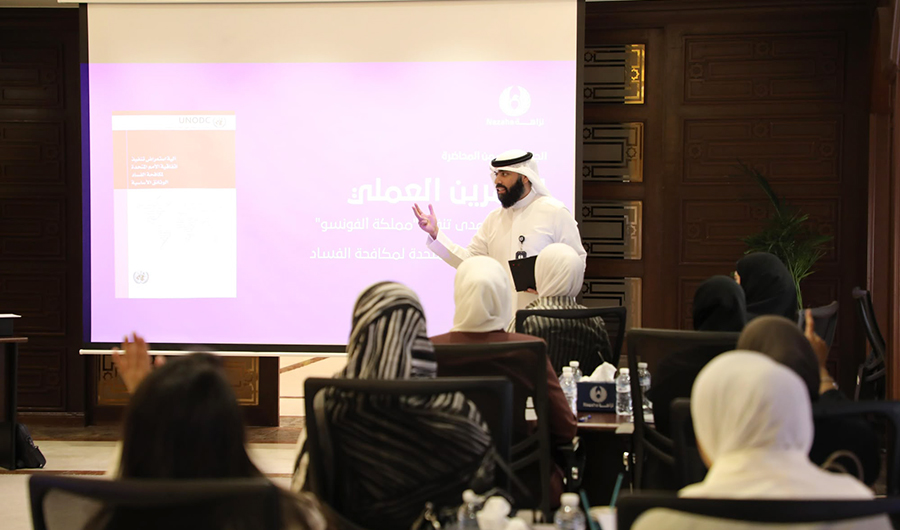
The Public Authority for Combating Corruption receives law students from Kuwait University in a training program aimed at enhancing legal awareness and combating corruption.
Translated by Qiyas from سرمد — Original source
In line with the Public Authority for Combating Corruption’s (Nazaha) commitment to enhancing legal awareness among youth and linking academic knowledge with practical application, the Authority is hosting, for the fourth consecutive year, students from the College of Law at Kuwait University as part of the field training program for the first semester of the 2026/2027 academic year. The program began on Thursday, September 24, 2026, and will continue until December 24, 2026.
The program includes a series of specialized lectures delivered by experts from various organizational units within the Authority, aiming to familiarize students with Nazaha’s mandate and its role in preventing and combating corruption, while enriching their legal knowledge in several areas relevant to the Authority’s work. Key topics include the law establishing the Public Authority for Combating Corruption, the United Nations Convention against Corruption and its implementation review mechanism, an overview of corruption offenses, investigations, evidence collection, and related procedures, conditions for submitting reports and how to prepare complaint memoranda, monitoring corruption crimes, and protecting whistleblowers.
The program also covers the financial disclosure system, the law on the right to access information, contracts of various types, corruption prevention and corruption risks in legal practice, strategic planning, digital corruption, cybersecurity, the professional code of conduct, and corporate governance.
Organizing this program aligns with Nazaha’s efforts to strengthen cooperation with academic institutions, promote values of integrity and transparency among students, and develop their legal and practical knowledge and skills, thereby contributing to the preparation of national cadres who are aware of their role in preventing corruption and reinforcing the principles of integrity in society.
