Alliance for Climate Action Summit Declaration Emphasizes Importance of Respecting International Law on Transboundary Rivers - Sarmad
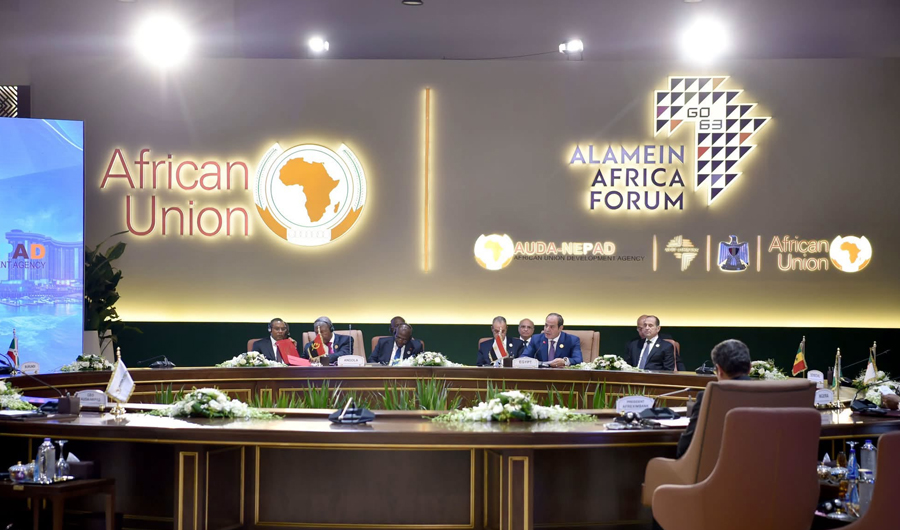
The four leaders emphasized the importance of cooperation and adherence to international law in water issues and regional security
Translated by Qiyas from سرمد — Original source
(KUNA) — The joint Alexandria Declaration issued today, Sunday, by the Quadrilateral Consultative Summit between Egypt, Sudan, Eritrea, and Somalia underscored the importance of respecting international law regarding transboundary rivers, including the Nile, particularly the principle of no significant harm and the necessity of cooperation through prior notification, consultation, and agreement.
The declaration stated that the summit, held in the new city of Alexandria at the invitation of Egyptian President Abdel Fattah el-Sisi and attended by Eritrean President Isaias Afwerki, Somali President Hassan Sheikh Mohamud, and Sudanese Transitional Sovereignty Council Chairman General Abdel Fattah al-Burhan, featured intensive fraternal consultations on current regional and international issues and ways to enhance political, commercial, and economic cooperation among the four countries and coordinate their efforts.
The declaration noted that the leaders emphasized a complete rejection of any unilateral measures that harm the existing water uses of the Nile Basin downstream countries. They affirmed the necessity of adhering to the fundamental principles and pillars of international law as the basis for regional stability and cooperation, particularly respecting the sovereignty, independence, and territorial integrity of states, upholding the values of good neighborliness, rejecting interventions in the internal affairs of countries in the region under any pretext, and working to support national institutions and promote political and peaceful solutions to conflicts.
The declaration pointed to discussions on coordinating joint efforts to achieve regional stability and create a favorable climate for shared and sustainable development, elevating economic, commercial, and cultural relations to contribute to economic integration and interdependence, sustainable development, and strengthening ties among the peoples of the participating countries, based on shared goals and common destiny.
Regarding Sudan, the leaders affirmed support for the unity, sovereignty, territorial integrity, and national institutions of the Republic of Sudan, rejected the establishment of any parallel entities, encouraged the resumption of the political process under Sudanese ownership and leadership, supported national institutions, and completely rejected any support for mercenaries.
Regarding Somalia, they affirmed support for Somalia’s unity and sovereignty, rejected any intervention or measures targeting its territorial integrity and national sovereignty, and rejected any recognition or support for the so-called “Somaliland,” considering that such actions undermine the sovereignty and territorial integrity of the Federal Republic of Somalia.
The leaders also affirmed support for Somalia’s efforts in combating terrorism and enabling state institutions to extend their control over its entire territory, calling on regional and international partners to provide adequate, sustainable, and predictable funding for the African Union Support and Stabilization Mission in Somalia (AUSSOM), thereby supporting the security transition process and enabling the mission to implement its mandate to facilitate the orderly transfer of security responsibilities to Somali forces.
Regarding the Red Sea, the declaration affirmed the principle of freedom of navigation, emphasizing that the governance of the Red Sea is the exclusive responsibility of the riparian states.
The leaders reiterated the importance of respecting international law governing transboundary rivers, including the Nile, particularly the principle of no significant harm and the necessity of cooperation through prior notification, consultation, and agreement, along with a complete rejection of any unilateral measures harming the existing water uses of the Nile Basin downstream countries.
The leaders also affirmed continuing to enhance consultation and coordination among the four countries and other sister African nations.
The leaders agreed to establish a mechanism to follow up on the outcomes of the consultative summit, with the summit to be held periodically and as needed, to enhance consultation and coordination among them.
