Advisor Al-Sani: Kuwait has strengthened its legal framework to combat emerging crimes
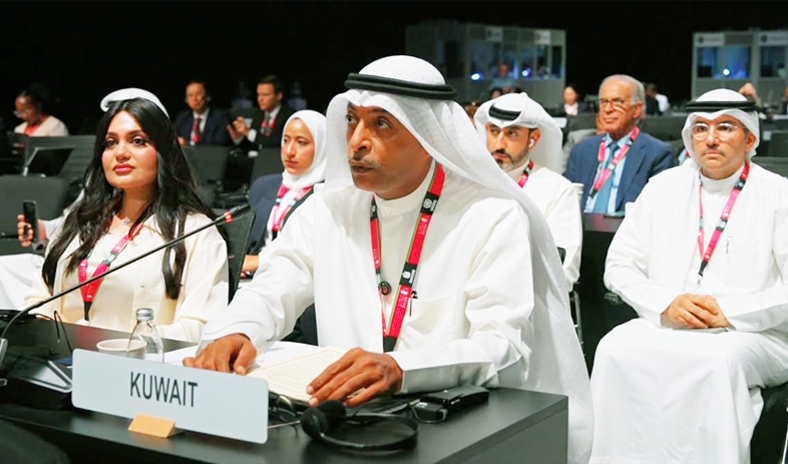
Advisor Saud Al-Sani emphasized the importance of enhancing international cooperation and legislation to combat emerging crimes during the UN conference in Abu Dhabi.
Translated by Qiyas from سرمد — Original source
• Emphasized the importance of training specialists in preserving and analyzing electronic evidence to track criminal proceeds
(KUNA) – Advisor to the Court of Appeal and Deputy Director of the Kuwait Institute for Judicial and Legal Studies for Continuous and Specialized Training, Saud Al-Sanea, stressed the importance of enhancing international cooperation and developing legislation and preventive capacities to combat organized crime, terrorism, and cross-border cybercrimes, alongside developing mechanisms for legal assistance and the exchange of evidence and information among countries.
This came during two interventions delivered by Al-Sanea today, Thursday, on the fifth and sixth items of the agenda of the 15th United Nations Congress on Crime Prevention and Criminal Justice (Abu Dhabi 2026).
Al-Sanea said that the evolution of methods used by organized crime and terrorism, and the exploitation of information networks to promote prohibited materials, transfer funds, and conceal criminal proceeds, requires strengthening the capacities of justice agencies to detect these activities early, collect electronic evidence, and establish links among perpetrators within and outside the country.
He noted that Kuwait has strengthened its legal framework to address emerging crimes through a number of laws related to combating information technology crimes, terrorism, drugs and psychotropic substances, and human trafficking, affirming Kuwait’s support for international efforts to combat cybercrime and cross-border crime.
He emphasized the importance of enhancing cooperation among criminal justice institutions and national authorities, and developing regional and international partnerships, technical assistance, and training, particularly in the fields of mutual legal assistance, extradition, exchange of electronic evidence, and tracking criminal proceeds.
He clarified that Kuwait has issued legislation regulating international judicial cooperation in criminal matters and has worked to enhance training and capacity building, in addition to signing memoranda of understanding and partnerships with national, regional, and international entities to exchange expertise and support the fight against human trafficking, as well as developing legislation and legal research.
Al-Sanea stressed the importance of training specialists in preserving and analyzing electronic evidence and exchanging necessary information to track criminal proceeds and protect victims of trafficking and exploitation, especially women and children, while respecting national laws and state sovereignty.
The 15th United Nations Congress on Crime Prevention and Criminal Justice concludes its work today in Abu Dhabi after six days of specialized sessions and discussions.
