Director of Arab Planning Institute urges Arab countries to anticipate global economic shifts - Sarmad
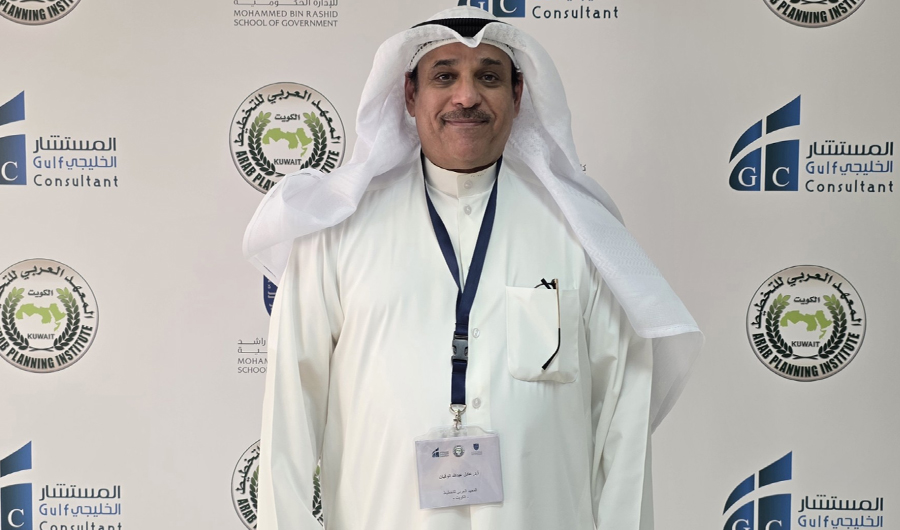
The Director General of the Arab Planning Institute in Kuwait, Dr. Adel Al-Waqian, called on Arab countries on Monday to move beyond merely tracking the transformations affecting the global economy to anticipating them and preparing early through more flexible policies, more adaptive institutions, and more productive, diversified, and competitive economies.
This came during Al-Waqian’s opening address at the scientific conference on “Finance and International Trade under the New Protectionism,” held at the Mohammed bin Rashid School of Government in Dubai. The event is a collaboration between the Arab Planning Institute, the school, and the Gulf Consultant for Consulting and Training in the United Arab Emirates, and will continue until tomorrow, Tuesday.
Al-Waqian stated that the global economy is undergoing profound and rapid transformations that have impacted trade and investment flows, capital movements, and global supply chains, noting the resurgence of trade protectionism and considerations related to economic security at the forefront of the international landscape.
He clarified that the value of imports by the Group of Twenty (G20) countries subject to trade restrictions reached approximately 22 percent of their total imports, exceeding four trillion dollars, according to estimates by the World Trade Organization. Meanwhile, growth in global goods trade is expected to slow from 4.6 percent in 2025 to 1.9 percent this year.
He added that foreign direct investment (FDI) rose to 1.6 trillion dollars in 2025; however, more than 80 percent of it was concentrated in just 20 countries, reflecting an uneven recovery and a widening gap between advanced and developing economies.
Al-Waqian pointed out that protectionism in its new form is no longer limited to tariffs and direct import restrictions but now includes technical, environmental, and health standards, regulatory measures, support for local industries, restrictions on investment and technology, data flows, as well as controls related to supply chains and security considerations.
Al-Waqian noted that Arab economies are not immune to these transformations, explaining that intra-Arab exports accounted for only about 14 percent of total goods exports in 2024, meaning a significant portion of Arab trade is linked to external markets and affected by the restrictions and changes occurring there.
He highlighted that FDI inflows to Arab countries declined by approximately 10 percent in 2025, reaching nearly 119 billion dollars, while global inflows rose by 6 percent. However, he emphasized that these transformations present opportunities that Arab economies can leverage to enhance their competitiveness.
He stressed that the issues discussed at the conference are no longer isolated academic topics detached from reality but have become part of the economic environment in which countries, institutions, and companies operate, requiring a rethinking of policies, tools, and mechanisms for dealing with the global economy.
Al-Waqian expressed his hope that the conference’s work would yield practical, actionable insights and recommendations for policymakers and relevant institutions, enhancing the ability of Arab economies to respond to transformations, anticipate the future, and convert current challenges into opportunities for development, integration, and enhanced competitiveness.
In a statement to the Kuwait News Agency (KUNA) after the conference’s opening, Al-Waqian said the scientific conference, organized by the Institute in collaboration with the Mohammed bin Rashid School of Government, focuses on “new economic protectionism” and its impact on trade and commercial exchanges between countries.
He added that the conference discusses, over two days, the resilience of Arab economies in the face of new protectionism, trade financing, export diversification, new forms of trade restrictions, and the role of governments in supporting productive sectors and adapting to declining external demand.
He noted that discussions also cover the differing impacts of these transformations on countries of the Maghreb and Mashreq, as well as Gulf Cooperation Council (GCC) states, alongside trade diplomacy, economic integration, and the possibility of reaching solutions that help mitigate protectionist restrictions.
Regarding the conference outcomes, Al-Waqian said that recommendations resulting from dialogue sessions would be made available via the website, confirming the Institute’s readiness to cooperate with Arab countries to benefit from them.
