Kuwait: Natural diversity opens horizons for sustainable eco-tourism
Janan Bahzad and Mubarak Al-Hajri shed light on the foundations of eco-tourism and geological tourism in Kuwait
Translated by Alqyas from Sarmad — Original source
(KUNA) – Despite the common perception of Kuwait as a flat desert environment, its expanse from the desert to the coastlines, encompassing islands, mudflats, salt marshes, and coral reefs, constitutes natural treasures and foundations for eco-tourism that open avenues for sustainable development.
These assets range from birdwatching and visiting protected areas to marine tourism, island tourism, desert and coastal exploration, and geological tourism, which offers visitors the opportunity to read the Earth’s history through rocks, landforms, sediments, and fossils.
Eco-tourism is based on enjoying natural areas in a responsible manner that respects the protection of ecosystems and biodiversity, minimizes the impact of visits, and enhances visitors’ knowledge of the place and its environmental and cultural value.
Eco-tourism in Kuwait stands out as a promising field for leveraging the country’s natural diversity and raising awareness about the importance of preserving the environment and its resources, coinciding with World Tourism Day, which falls on September 27 of each year.
World Tourism Day, established by the United Nations World Tourism Organization, aims to enhance awareness of the importance of tourism and its social, cultural, and economic roles globally.
In this context, Janan Bahzad, Secretary General of the Kuwait Environment Protection Society (KEPS), told the Kuwait News Agency (KUNA) on Sunday that the Kuwaiti environment is rich in natural diversity, which can serve as a promising foundation for developing eco-tourism, thereby contributing to linking recreation with environmental education and preserving the country’s natural heritage.
Bahzad added that the country boasts multiple eco-tourism assets, with natural reserves at the forefront. The Al-Jahra Reserve, in particular, serves as a practical model providing a sanctuary for resident and migratory birds, protecting biodiversity, and featuring a network of ponds, vegetated areas, and coastal environments.
She noted that Al-Jahra has recorded no fewer than 250 bird species, granting it special significance for birdwatching, environmental photography, and educational programs.
She clarified that the Public Authority for Environmental Affairs has opened the reserve to the public through an organized visit system and advance booking, allowing enjoyment of nature and wildlife observation within regulations that protect the site from disturbance and encroachment.
Bahzad mentioned that Bubiyan Island and the Mubarak Al-Kabeer Reserve represent another dimension of eco-tourism. The reserve is listed on the Ramsar List of Wetlands of International Importance, covering an area of 50.948 hectares, and includes salt marshes, shallow lakes, mudflats, and water channels.
She stated that Bubiyan holds global importance for migratory birds as a breeding station, while its marine and coastal environments play a crucial role for fish, shrimp, and various marine organisms. This makes any future tourism activity there dependent on protection, regulated visits, and designated zones to avoid harming the ecosystem.
The Secretary General of KEPS pointed out that Kuwait’s islands and marine environment constitute a significant part of the country’s natural capital. Organized marine activities, birdwatching, wildlife observation, coral reefs, and coastal environments offer a tourism model distinct from traditional recreational activities.
She explained that Kuwait possesses natural sites that combine multiple values in one location. Failaka Island is a clear example, where the coastal environment meets history, archaeology, and heritage, allowing for the development of routes that integrate eco-tourism, cultural tourism, and geological tourism.
Regarding geological tourism, a component of eco-tourism, Bahzad stated that she published the first peer-reviewed scientific study documenting geologically significant sites for tourism in the journal "GeoHeritage." The study included 14 natural and geological sites, including Jale Al-Zour, Failaka, Al-Khiran, Wadi Al-Batin, and Anqawa Beach, as well as several Kuwaiti islands.
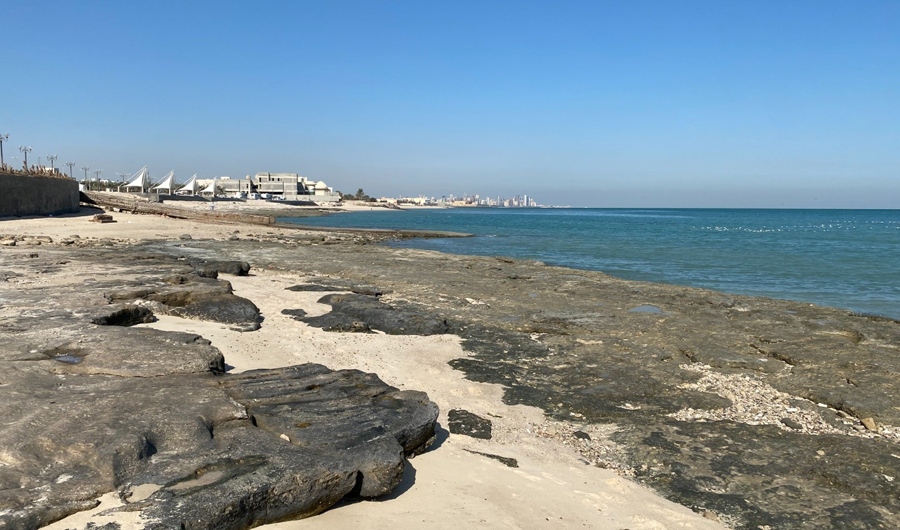
The study revealed that Kuwait possesses geological and natural diversity that can be utilized for educational and tourism purposes. Jale Al-Zour serves as an open record of geological layers and formations, while the Al-Khiran highlands provide evidence of ancient coastal changes. Anqawa Beach offers the opportunity to study sedimentary structures and fossils in an easily accessible site within an urban environment.
Bahzad noted that natural sites can be linked with schools, universities, and scientific programs to transform visits into educational experiences and recreational activities, involving environmental institutions, civil society, and the private sector in developing related programs and services.
Regarding current assets in the country, she indicated the potential to develop a national eco-tourism map that connects reserves, islands, coastlines, deserts, and geological sites into various routes. The nature of permitted activities at each site would be determined based on its environmental sensitivity and carrying capacity.
She explained that this map could include routes for birdwatching and geological heritage, programs for exploring the marine environment and islands, as well as educational desert and coastal trips, integrating digital technologies, interactive maps, and applications that introduce sites and their natural stories.
Bahzad emphasized that eco-tourism is not measured by visitor numbers nor does it begin solely with building facilities; rather, it starts with the ability to introduce people to what the country possesses, fostering a deeper understanding of the place and a greater commitment to its protection, before presenting it to visitors responsibly.
She affirmed that Kuwait has places that offer visitors a different image of the country, combining desert, sea, islands, birds, biodiversity, and Earth’s history. These are natural treasures and notable eco-tourism assets in themselves, inviting understanding, enjoyment, and participation in their preservation for future generations.
For his part, Dr. Mubarak Al-Hajeri, Chairman of the Board of Directors of the Kuwait Society for Earth Sciences, told KUNA that the Kuwait Geopark project achieved notable success in its first season, representing a qualitative addition to domestic tourism in the country.
Dr. Al-Hajeri added that the Geopark has evolved from a strategic project of the Society into a unique initiative supported by coordinated state agencies, marking an exceptional and qualitative step in the state’s journey toward protecting natural heritage and revitalizing eco-tourism.
He clarified that this project serves as a vital platform highlighting rare geological landmarks and the unique biodiversity of the Kuwaiti environment, making it an educational, tourism, and environmental destination of major strategic value.
He noted that efforts to register and develop the project according to global standards (within the Global Geoparks Network under UNESCO) place Kuwait on the global eco-tourism map and reflect its commitment to international agreements on sustainable development, biodiversity conservation, and desertification control.
He praised the attention given by the government and its various institutions to the tourism file in general and the Geopark project in particular, commending the appreciated efforts of Kuwait Oil Company in supporting the project and mobilizing all resources to make the visitor experience enjoyable and beneficial.
For her part, Fada Al-Moslem, a board member of the Kuwait Society for Earth Sciences and head of the Society’s media committee, stated in a similar remark that the focus in eco-tourism has shifted toward how to protect the environment, reduce carbon emissions, and invest in sustainable infrastructure resilient to climate change.
She added that the Kuwait Geopark is not merely a recreational project or a protected geographical space, but a national vision that combines protecting the past, utilizing the present, and building a sustainable future. She considered supporting and developing this project a genuine investment in Kuwait’s natural and human resources.
In this regard, she pointed to the "Aziza" rock, one of the geological jewels and the icon of the Geopark, which sparked the project’s launch. It received care and protection for nearly nine years, from 2016 to 2025, due to its scientific importance and unique rock formation, before being returned to its original location in the Geopark.
