China isolates No. 2 in Central Military Commission after Xi - Sarmad
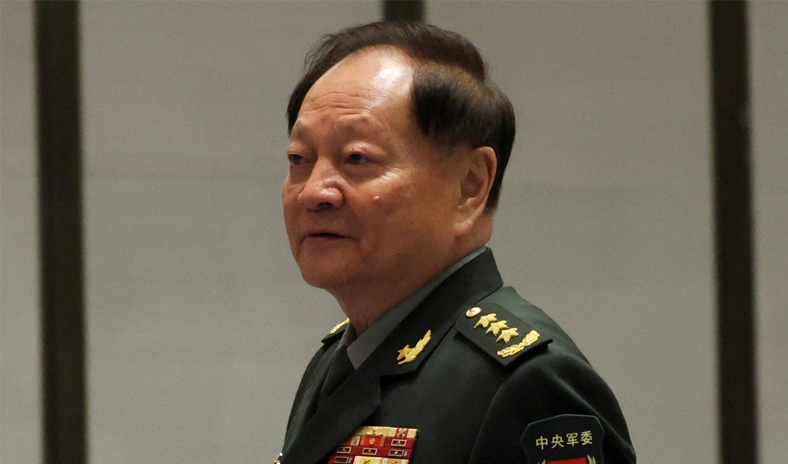
(Reuters) – An official statement issued on Monday said China has expelled two of its top military leaders, Zhang Youxia and Liu Zhenli, from the Communist Party and the military on charges of disloyalty, corruption, and other serious disciplinary violations.
Zhang was the second-highest-ranking figure in the leadership after President Xi Jinping, serving as Vice Chairman of the Central Military Commission, the highest military command body, and had long been regarded as Xi’s closest ally within the military. Liu was a member of the Central Military Commission and Chief of the Joint Staff Department.
Investigations into Zhang and Liu were announced in January, and both were removed from the Central Military Commission in late August.
Since assuming power in 2012, Xi has waged one of the broadest anti-corruption and discipline-improvement campaigns in modern Chinese history. Millions of individuals within China’s vast bureaucratic apparatus have been investigated to varying degrees, and the campaign has toppled dozens of senior officials in the party, government, and military.
The military has increasingly become a primary target of this broader campaign in recent years. A series of investigations and expulsions has left only two active members on the Central Military Commission, one of whom is Xi himself, who holds the position of Chairman. The commission previously comprised seven members.
“Disloyal”
China’s leadership accused the two former military leaders of disloyalty to the party, abandoning its principles, and failing to enforce strict party discipline or supervise their subordinates and family members.
Xinhua News Agency, citing official documents, reported that Zhang and Liu “seriously violated political discipline and political rules, formed cliques and factions, and were disloyal and unfaithful to the party.”
The documents stated that the two former leaders “crossed red lines and fundamental boundaries. Their political and economic violations were intertwined, and the accumulation of wealth through corruption was accompanied by dereliction of duty and abuse of position.”
The documents added, “The amounts involved were exceptionally large, the nature of their conduct was extremely serious, and the impact was devastating.”
