Greenland and Denmark: Security agreement with the US does not involve a waiver of sovereignty - Sarmad
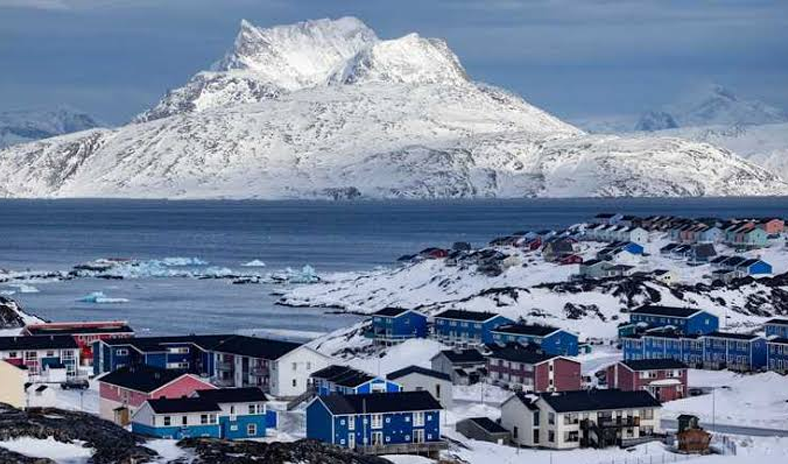
(Reuters) – Denmark and Greenland said on Saturday that any agreement with the United States would not affect Greenland’s sovereignty, after U.S. President Donald Trump stated that the deal would grant Washington “permanent control” over the security of the Arctic island, leaving its precise scope unclear.
The United States, Denmark, and Greenland said late Friday that they had reached an agreement allowing the U.S. to develop a significant military presence in Greenland, while prohibiting the establishment of military bases by Washington’s adversaries on the island.
Key details of the agreement remain undisclosed, including the size of the U.S. military presence in the Danish autonomous territory and whether any official authorities regarding foreign policy or resources will be transferred to Washington.
Denmark and Greenland expressed hope that the agreement, expected to be signed during next week’s United Nations General Assembly meetings, will put an end to months of uncertainty fueled by Trump’s threats to take control of Greenland.
Danish Foreign Minister Lars Løkke Rasmussen said in a statement posted on Facebook on Saturday, “Next week could be a good week for Greenland, Denmark, and the United States.”
He added, “We hope that the period of ambiguity will give way to a binding agreement that enhances security in the Arctic and the North Atlantic, and thereby our shared security within the North Atlantic Treaty Organization (NATO) and Europe, while respecting the red lines of the Kingdom of Denmark.”
Denmark and Greenland have repeatedly emphasized that Washington must respect the sovereignty of the Kingdom of Denmark and accept that Greenland is not for sale.
Trump’s vision for the Greenland agreement
Trump said on the Truth Social platform late Friday that under the agreement, “the United States will forever have the full ability to do whatever is necessary in Greenland to ensure and defend the security of Greenland and the United States of America.”
He added that the agreement “grants the United States permanent control over security and all other needs in Greenland,” clarifying that it will not allow any hostile party to establish a base or military presence in Greenland, or to carry out sensitive investments there, without Washington’s explicit written consent.
Trump’s announcement came after Reuters exclusively reported that the United States and Denmark were close to reaching an agreement.
Mikkel Weidby Rasmussen, a professor of political science at the University of Copenhagen, said, “This is probably not the end of President Trump’s ambitions regarding Greenland, and certainly not the end of U.S. strategic interest in the region and its resources.”
He explained that if Copenhagen cedes any official authorities to Washington, it raises the question in Greenland of whether “this is the beginning of replacing the colonial relationship with Denmark with a colonial relationship with the United States.”
Greenlandic Prime Minister Jens-Frederik Nielsen said on Saturday that he was pleased with the proposed agreement, adding in a Facebook post, “The agreement recognizes the sovereignty and territorial integrity of our Kingdom and the right of the Greenlandic people to self-determination.”
Trump’s threats, which peaked in January, triggered a diplomatic crisis that damaged relations within NATO and prompted Denmark and Greenland to enter negotiations aimed at containing the pressure.
A NATO spokesperson said on Saturday that the alliance welcomes the agreement, which will help “strengthen security, stability, and cooperation in this vital region.”
