US Congress Passes Law Mandating Data Centers to Cover Energy Costs
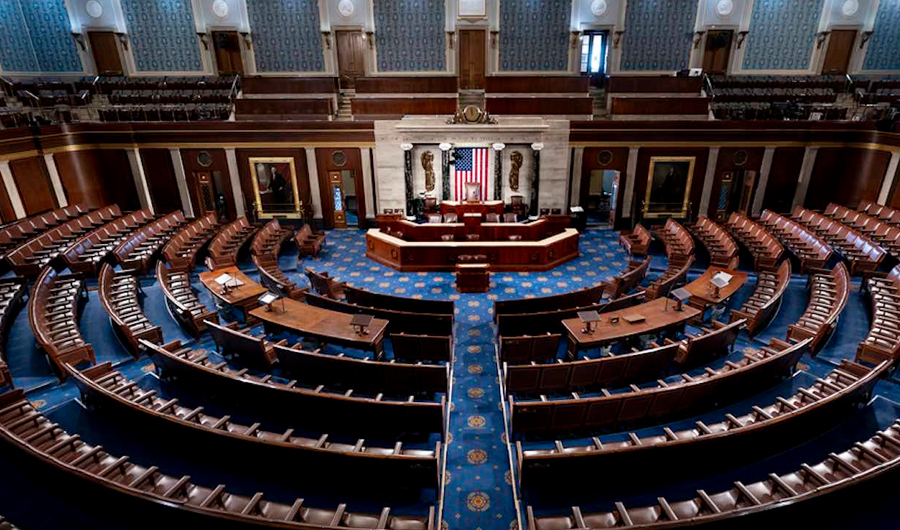
The U.S. House of Representatives approved a bill aimed at requiring data centers to bear a larger share of electricity consumption costs, amid growing debate over the massive energy demand driven by the artificial intelligence boom, which has itself become a prominent issue ahead of the November midterm elections.
The “Electricity Billpayers Protection Act” received broad support, passing with a vote of 417 in favor to just three against.
The legislation mandates state public utility commissions to consider rules ensuring that data centers cover the costs of new power generation plants, transmission lines, and electricity grid upgrades necessary to serve them, rather than shifting these burdens onto citizens.
Following its passage in the House, the bill will be sent to the Senate, where several lawmakers are urging expedited approval.
The legislation responds to growing concerns about the costs borne by American households due to the rapid expansion of data centers used to power AI applications.
Supporters of the bill noted that the increasing electricity demand from data centers has contributed to higher costs for one of the largest power grids, which serves approximately 67 million customers, with expenses rising by about $9.3 billion in a single year.
House Administration Committee Chairman Republican Brian Staba said, “It’s simple: families should not be burdened with the costs of data centers.”
However, objections to these centers extend beyond energy consumption, encompassing concerns about water usage, pollution, noise, and tax incentives granted to major technology companies.
Data centers have become part of election campaigns, with candidates from both the Republican and Democratic parties using the issue in their advertising in more than 20 races across at least 18 states.
While U.S. President Donald Trump continues to support the rapid expansion of AI infrastructure to compete with China, calls within both parties for greater regulation of the sector are mounting.
In Texas, Republican Governor Greg Abbott, who is seeking re-election in November, has frozen new data center projects pending a study of their impact on electricity and water supplies, while New York state has imposed a one-year moratorium on the construction of new large-scale data centers.
In Ohio, Republican Senator John Husted faced criticism from his Democratic challenger, Sherrod Brown, over his previous support for data centers.
The vote also comes amid an expanding debate in Congress over the risks of artificial intelligence, after recent polls showed that a significant portion of Americans fear that advanced AI systems pose a future threat.
In this context, Republican Senator John Kennedy is seeking to pass legislation requiring AI companies to provide an “emergency stop” button that would allow dangerous systems to be shut down, although his Republican colleague Rand Paul blocked the bill’s rapid passage on Wednesday, arguing it requires further study.
Republican Senator John Curtis and Democratic colleague Lisa Blunt Rochester have called for urgent public hearings bringing together lawmakers and AI developers to explore ways to regulate the sector.
